The Egocentric Data Business: Indian Workers Record Their Labor to Train Robots
In India, thousands of workers in factories, hair salons, and homes record their movements with body cameras to generate 'egocentric data'. This material, vital for training humanoid robots, is sold to global tech companies, generating local income but also uncertainty about the future of employment.
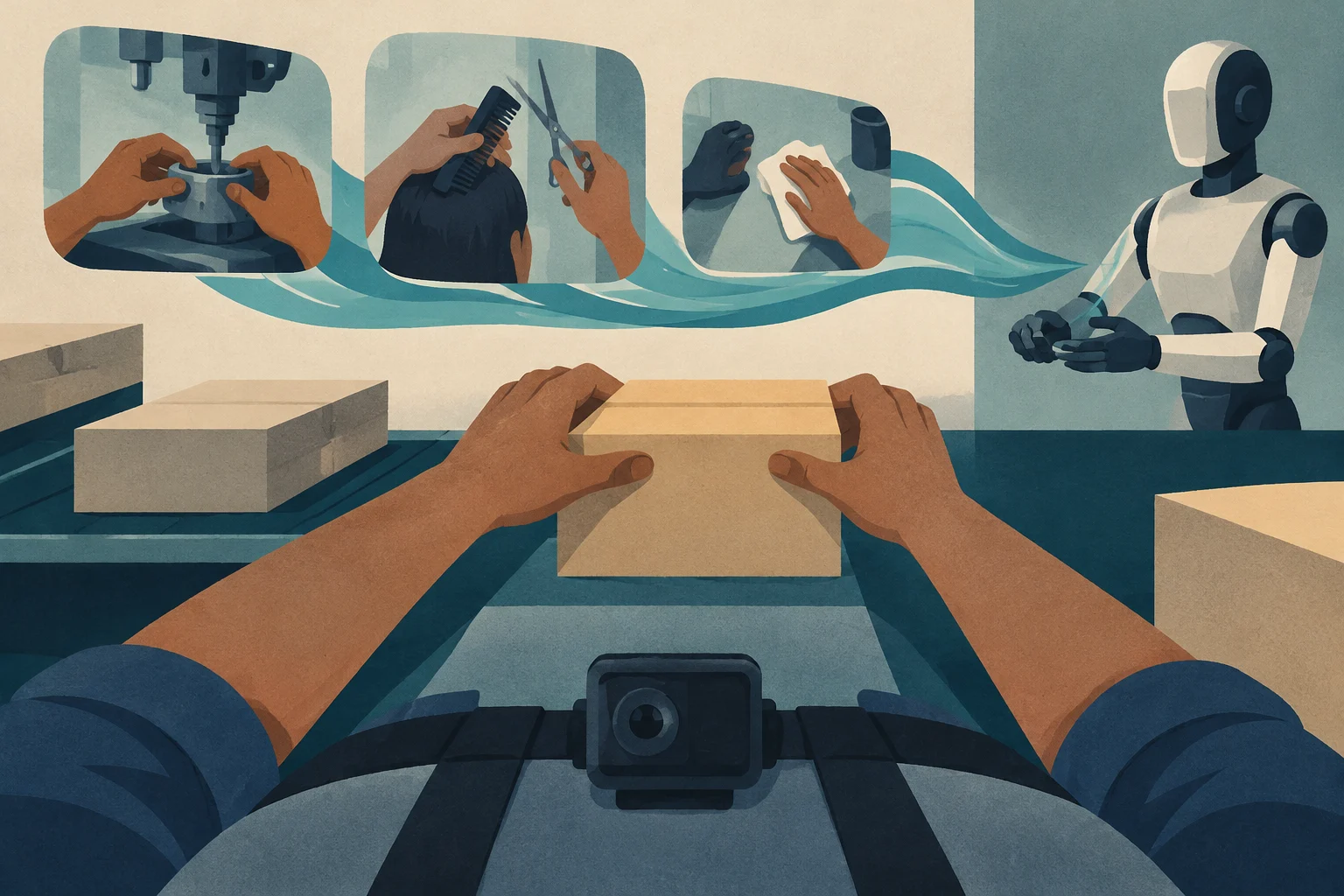
The artificial intelligence industry has reached an inflection point: language models process text with ease, but teaching a machine to move in the real world is a massive technical and logistical challenge. To overcome this barrier, robotics companies are turning to an untapped source of data: everyday human activity. In India, this effort has become an emerging labor sector where workers from various trades record their hands and movements to feed the humanoid robots of the future.
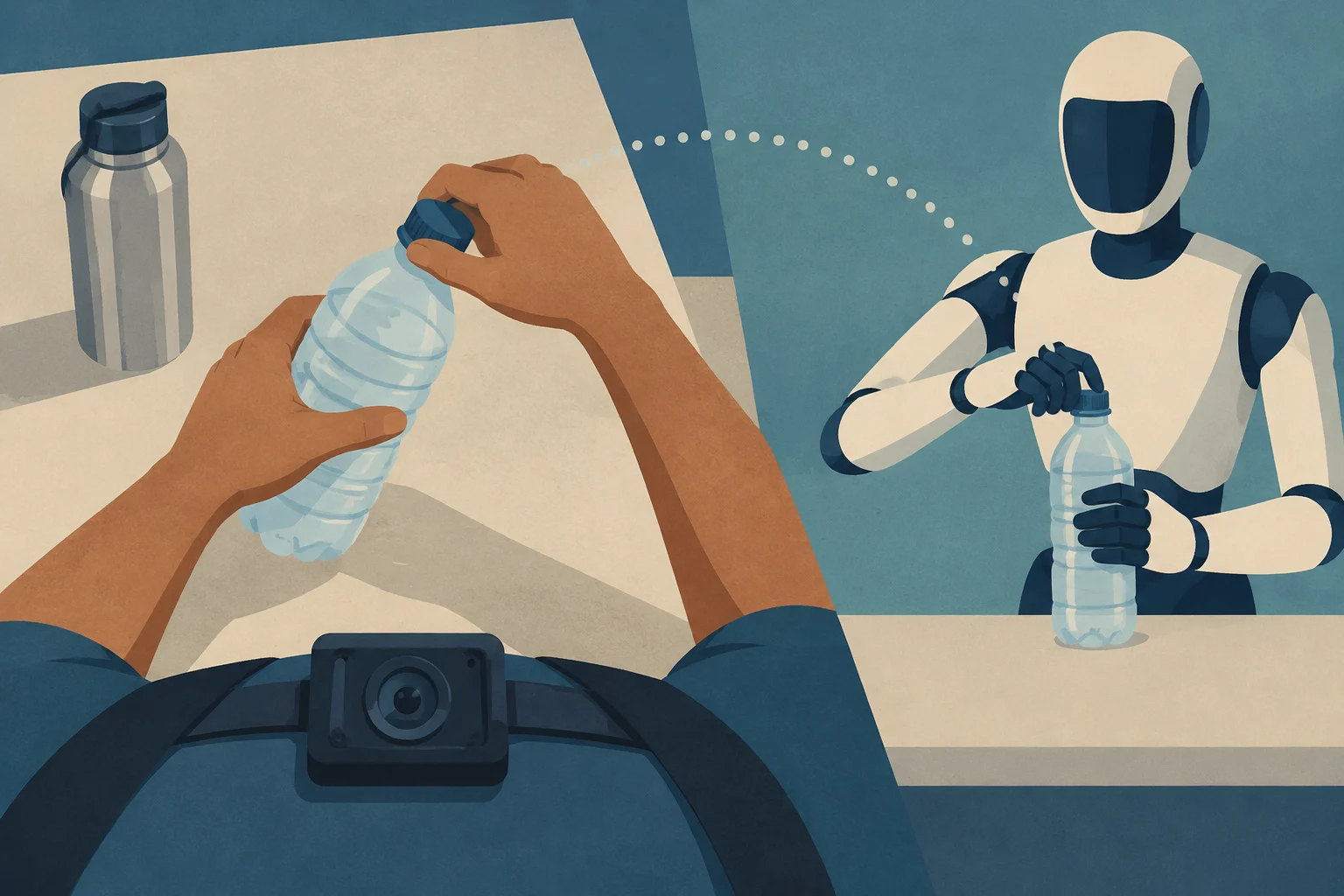
This material, known as egocentric data, consists of first-person recordings that capture the force, grip, and dynamics of human gestures. Unlike computer simulations, these recordings provide high-quality signals on how the body interacts with physical objects, an essential requirement for robots to perform reliable tasks in unstructured environments.
An Expanding Collection Ecosystem
India has positioned itself as a crucial hub in the global race to collect this data. The combination of high labor density, the diversity of industrial tasks, and lower labor costs attracts a growing ecosystem of companies. Among the key players are Rashdan Technologies, Objectways, EgoLab, Humyn Labs, and Labellerr AI.
Collection takes place in multiple contexts:
Textile and garment factories: Workers in cities like Karur, Gurugram, and Bangalore record tasks such as sewing, labeling, and ironing.
Homes and studios: Housewives and students record domestic tasks like cooking, folding clothes, or cleaning.
Small businesses: Hairdressers, potters, and artisans record their specialized techniques.
According to Shahil Baig, co-founder and CEO of Rashdan Technologies, each robotics company seeks specific data: "Industrial tasks, agriculture, household chores, small business work like pottery, garment making, embroidery, candle making. We go where the task is". The company pays between 5 and 10 dollars for 8 to 10-hour recording shifts, a significant figure in the local economy.
AI-generated conceptual illustration · Edition Business
The Technical Value of Egocentric Data
The need for this data is not trivial. Manish Agarwal, founder of Humyn Labs, explains that physical tasks require high-quality signals on the movement of limbs, fingers, wrists, elbows, shoulders, and the application of dynamic force. "For example: applying the correct grip force so that a plastic bottle does not get crushed compared to a steel one," Agarwal details.
Until recently, there was no internet archive of embodied human activity. There was no dataset of a kitchen being cleaned or a car being assembled by hands that know exactly how much force to apply. "That data has to be captured from scratch, in the real world, in diverse environments," Agarwal states. His company currently has 96,000 data collectors in Latin America and Southeast Asia, filtering thousands of hours of video to select the most useful content and label it for clients.
Labor Conditions and Privacy
The implementation of these recordings raises ethical and labor issues. In many factories, workers do not receive direct compensation for generating the data; rather, the company that provides access to the plant receives payment. Lalita, a garment worker in Gurugram, recounts that she is sometimes given a soft drink, but no additional payment for the video. "I am still not clear if it is because we are recording images or because the heat in Delhi is unbearable," she comments.
Companies argue that factories are already being compensated for facilitating the recordings. However, critics point out that this obscures who the true producer of the data is. Puneet Jindal, founder of Labellerr AI, warns: "The demand for egocentric data is skyrocketing... By the time that is reflected in the supply chain, the workers who generate the data usually end up with nothing".
Regarding privacy, companies implement measures such as face blurring and the exclusion of names or contact details. Shahil Baig of Rashdan Technologies emphasizes: "We record hands, not faces... Nothing that personally identifies them goes into what we deliver". However, clients are requesting more complex setups, such as four to six cameras around the head to cover the entire scene, which complicates worker consent and comfort.
The Future Labor Dilemma
The central paradox of this business is that workers are training the machines that could replace them. Bino Paul, senior professor at the School of Management and Labour Studies at the Tata Institute of Social Sciences (TISS) in Mumbai, notes that it is too early to know the final impact. "For some workers, AI could be a useful tool, but robots could automate other jobs... The problem is that if machines start taking control, there will be little workers can do about it".
Many workers see this opportunity as a form of survival. Mohammed Arman, a textile worker in Bangalore, sums it up: "For me, it is simple. This is survival. I have a family in Bihar and every rupee I send matters... It costs me nothing. I am already doing the sewing, I am already doing the cutting. Now I am just paid a little more for it".
The Indian government, through the think tank NITI Aayog, has examined how AI can help or harm trades such as cobblers, sewer cleaners, or farmers. The report highlights that most debates focus on white-collar professions, but little attention has been paid to how AI can affect India's 490 million informal workers, the backbone of its economy.
David's Bridal and K&F Growth Acquisition Corp. II signed a non-binding letter of intent to convert Pearl, its AI-powered wedding planning platform, into an independent public company. The transaction, which values Pearl at $350 million, aims to accelerate digital growth while the physical chain retains the brand through a licensing agreement.
The ECB's September survey records the second consecutive monthly increase in 12-month inflation expectations. Three- and five-year forecasts remain stable, while nominal income and spending expectations also rise.
Following Antonio Garamendi's initial announcement, the employers' organization has decided not to legally appeal the call, considering that the unions have included valid labor reasons. The CEOE reserves the option to act after the protest if minimum services or the right to work are violated.