CEOE rules out challenging the November 11 general strike before its date
Following Antonio Garamendi's initial announcement, the employers' organization has decided not to legally appeal the call, considering that the unions have included valid labor reasons. The CEOE reserves the option to act after the protest if minimum services or the right to work are violated.
The Spanish Confederation of Business Organizations (CEOE) has confirmed that it will not file a legal appeal against the call for the general strike scheduled for November 11 before it takes place. This decision partially reverses the public stance of its president, Antonio Garamendi, who days earlier had announced the challenge, considering the protest to have an "electoral" rather than labor character.
From the announcement of a challenge to legal caution
The change in strategy occurred after analysis by the employers' organization's legal team. CEOE sources indicate that, although the mobilization was initially deemed "unacceptable" for pursuing legislative and budgetary changes regarding housing, the unions have also linked the strike to purely labor demands. These include wage recovery, the fight against illegal overtime, and the demand for a state-level collective bargaining agreement.
The employers' organization's stance: "victims" of housing issues
Despite not appealing the call, the CEOE maintains its criticism of the protest's core. The organization emphasizes that business owners are the "payers or victims" of a strike centered on the housing problem, an issue they do not consider their direct responsibility.
In this regard, the employers' organization recalls that there is also the right to work and to guaranteed minimum services. The CEOE has expressed its confidence that the day will proceed in a "peaceful and civic" manner, although it has made clear that it will monitor the event and adopt "the corresponding measures" depending on how the protest unfolds, without ruling out subsequent legal actions if rights are violated.
The unions: an "atypical" strike and a warning on remote work
For their part, the general secretaries of UGT and CCOO, Pepe Álvarez and Unai Sordo, have acknowledged the "atypical" nature of the strike, given that its main demand is housing. They have placed the key to its success in the massiveness of the afternoon demonstrations rather than in the total stoppage of work.
The unions have issued a direct warning to companies: they must not use remote work as "modern scabbing" to avoid the impact of the strike. Furthermore, they have demanded that the CEOE sit down to negotiate the State Collective Bargaining Agreement (AENC), with the aim of achieving annual wage increases between 4% and 7% in the next three years.
David's Bridal and K&F Growth Acquisition Corp. II signed a non-binding letter of intent to convert Pearl, its AI-powered wedding planning platform, into an independent public company. The transaction, which values Pearl at $350 million, aims to accelerate digital growth while the physical chain retains the brand through a licensing agreement.
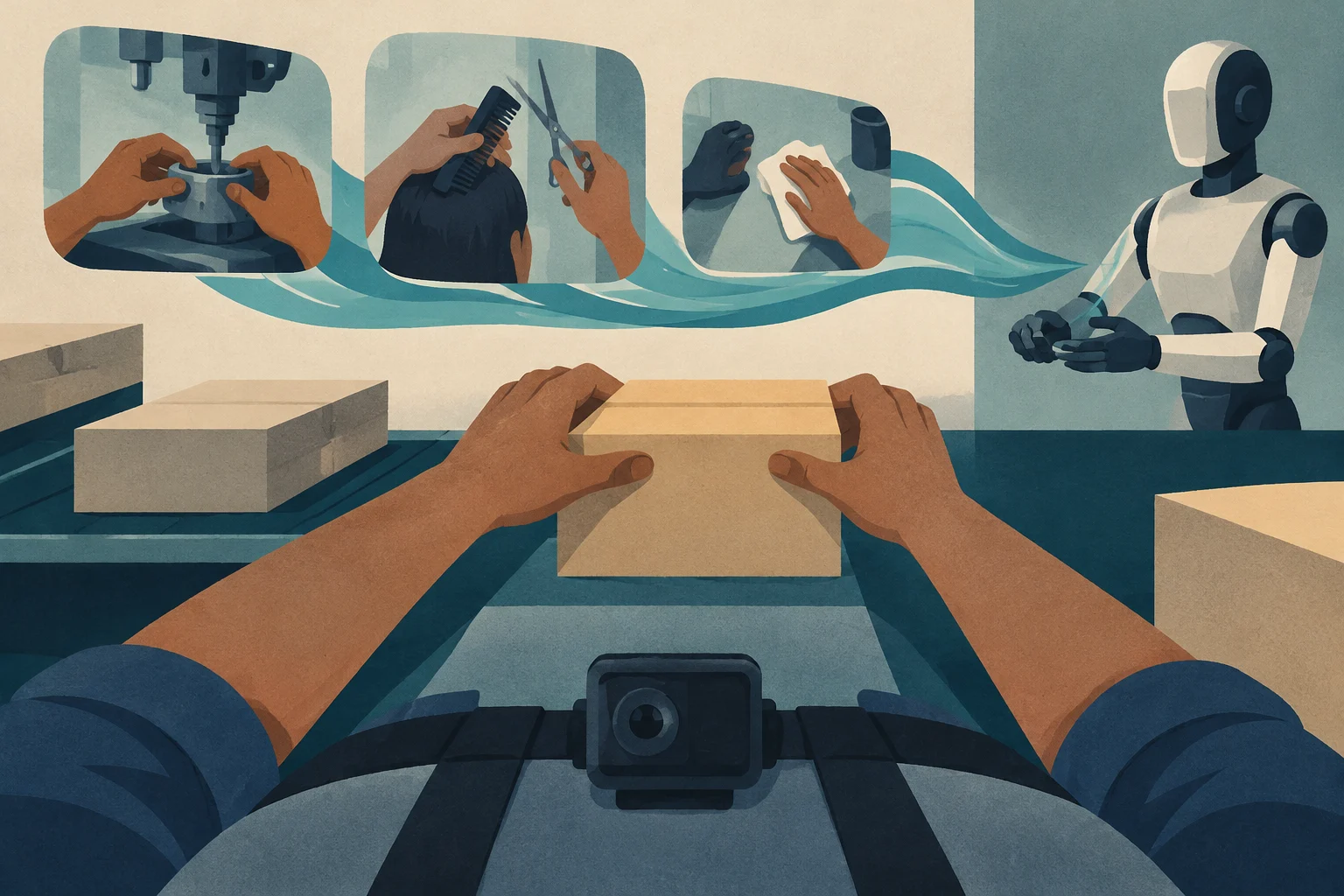
In India, thousands of workers in factories, hair salons, and homes record their movements with body cameras to generate 'egocentric data'. This material, vital for training humanoid robots, is sold to global tech companies, generating local income but also uncertainty about the future of employment.
The ECB's September survey records the second consecutive monthly increase in 12-month inflation expectations. Three- and five-year forecasts remain stable, while nominal income and spending expectations also rise.