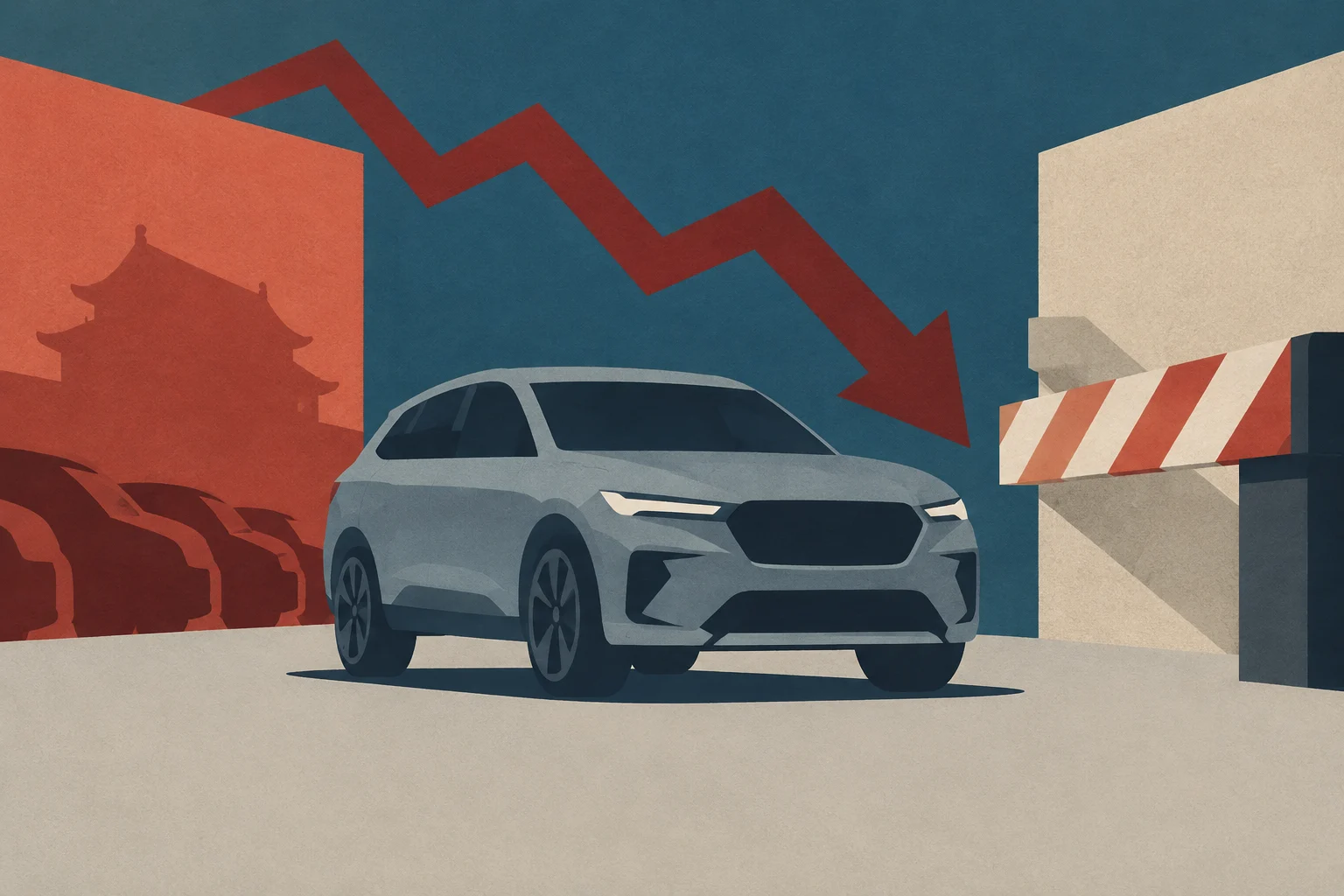
Volvo Cars shares plunge 24% after losses and a collapse in sales in China
The Swedish automaker, controlled by Geely, reported a net loss of 4.6 billion kronor in the first nine months of 2026. Its share price fell amid asset impairments, intense competition in China and US tariffs, which have prompted the company to cut 2,500 jobs.
Volvo Cars shares fell 24.23% on the Stockholm Stock Exchange after the company published its results for the first nine months of 2026. The company reported a net loss of 4.6 billion Swedish kronor (approximately 414 million euros), a 77% increase in losses compared with the same period the previous year.
Financial performance was weighed down by several structural and short-term factors. The company reported an asset impairment of 11.4 billion kronor (1.015 billion euros), which had already affected its second-quarter results because of US tariffs and delays to the launch of the EX90 model. In addition, total revenue fell 17% to 217.2 billion kronor (19.536 billion euros), while the operating loss (EBIT) doubled to 3.2 billion kronor (288 million euros).
The challenge of the Chinese market and local competition
The main source of pressure on the Swedish automaker has been the Asian market. According to the company’s report, revenue in China halved because of intense competition from new local alternatives in the premium segment. This trend has eroded the market share of European brands, which face Chinese manufacturers offering more aggressive pricing and technology.
Håkan Samuelsson, Volvo Cars’ chief executive, described the results as “very disappointing” and issued a direct warning to the rest of the automotive industry: “Nobody will succeed in selling European cars in China.” His statement underscores how difficult it is to maintain profitability in a market where localizing products and quickly adapting to consumer demand are decisive.
US tariff pressure and workforce cuts
The US market has also contributed to the deterioration in results. The company said its US operations were affected by the ongoing impact of tariffs and the removal of tax incentives for electric models. These factors have made the final product more expensive and reduced demand in one of the brand’s key markets.
To address the situation, Volvo Cars has announced a restructuring plan that includes cutting 2,500 jobs, equivalent to around 6% of its total workforce. Of these job cuts, 2,000 involve employees in Sweden. The measure is intended to generate an additional saving of 5 billion Swedish kronor (450 million euros) and improve the company’s cost structure.
Outlook for 2026 and annual context
In the third quarter of 2026, Volvo reported a net loss of 5.7 billion kronor (513 million euros), compared with a profit of 4.5 billion kronor in the same period of 2025. Quarterly deliveries fell 11%, totaling 141,000 vehicles.
On an annual basis, 2025 figures had already shown warning signs: revenue fell 7%, and the company went from a net profit of 15.9 billion kronor in 2024 to a loss of 3 billion kronor in 2025. Håkan Samuelsson forecast that 2026 would be a “challenging” year for the industry, citing contraction in the premium market, pricing pressure, regulatory uncertainty and declining consumer confidence as key factors that will limit sector growth.
Apollo Go began testing its RT6 vehicles in Brent alongside Freenow, the Lyft platform. Commercial service is targeted for 2027, but depends on regulatory approvals.
Hilton shares will stop trading on the New York Stock Exchange after the close on November 4, 2026, and begin trading on Nasdaq the following morning. The company says shareholders do not need to take any action and that the move does not change its strategy.
The IGAE rose 3.5% year over year on a seasonally adjusted basis, driven by construction, manufacturing and wholesale trade. The result improves the short-term outlook, although slower growth in services and weakness in some activities point to an uneven picture.