Essential Glossary: Unifying Logistics and Sustainability Language in the Agri-Food Supply Chain
Unifying technical terminology between purchasing, logistics, and quality departments is key to reducing operational errors and improving traceability. This glossary synthesizes fundamental concepts such as the cold chain, cross-docking, ABC inventory management, and ESG criteria, facilitating more precise and efficient communication in the agri-food sector.
The management of the agri-food supply chain involves the coordination of multiple actors, from the producer to the final consumer, passing through logistics operators, carriers, and distributors. In this complex environment, the lack of a common language can generate costly misunderstandings, errors in documentation, and failures in the execution of critical processes. Unifying technical and operational terminology is not just a matter of academic precision, but a strategic tool to improve the efficiency, safety, and sustainability of operations.
This glossary compiles and organizes the most relevant terms extracted from specialized sources such as the FAO, DSV, FM Logistic, EAE Business School, and the ANECOOP Sustainability Observatory. The objective is to provide a practical reference that allows company teams to interpret offers, negotiate services, analyze costs, and comply with current regulations in a coherent manner.
Operational and Logistics Fundamentals
The basis of any effective logistics operation lies in the correct planning and execution of material flows. Understanding these concepts allows for the optimization of resource use and the reduction of idle times.
Procurement and Inventory Management
Procurement is the process of planning and acquiring the resources necessary for production or commercialization. It is not limited to purchasing, but includes the determination of quantities, the selection of suppliers, the negotiation of prices, and the establishment of delivery deadlines. Adequate management must balance stock availability with the minimization of storage costs.
To manage the diversity of references, the ABC analysis is used, a classification method that divides inventories into three categories according to their economic importance or rotation:
Category A: High-value or high-rotation products. They require strict and frequent control.
Category B: Medium-value products. Subject to moderate control.
Category C: Low-value or low-rotation products. Managed with less rigorous controls to optimize administrative time.
Flow and Storage Strategies
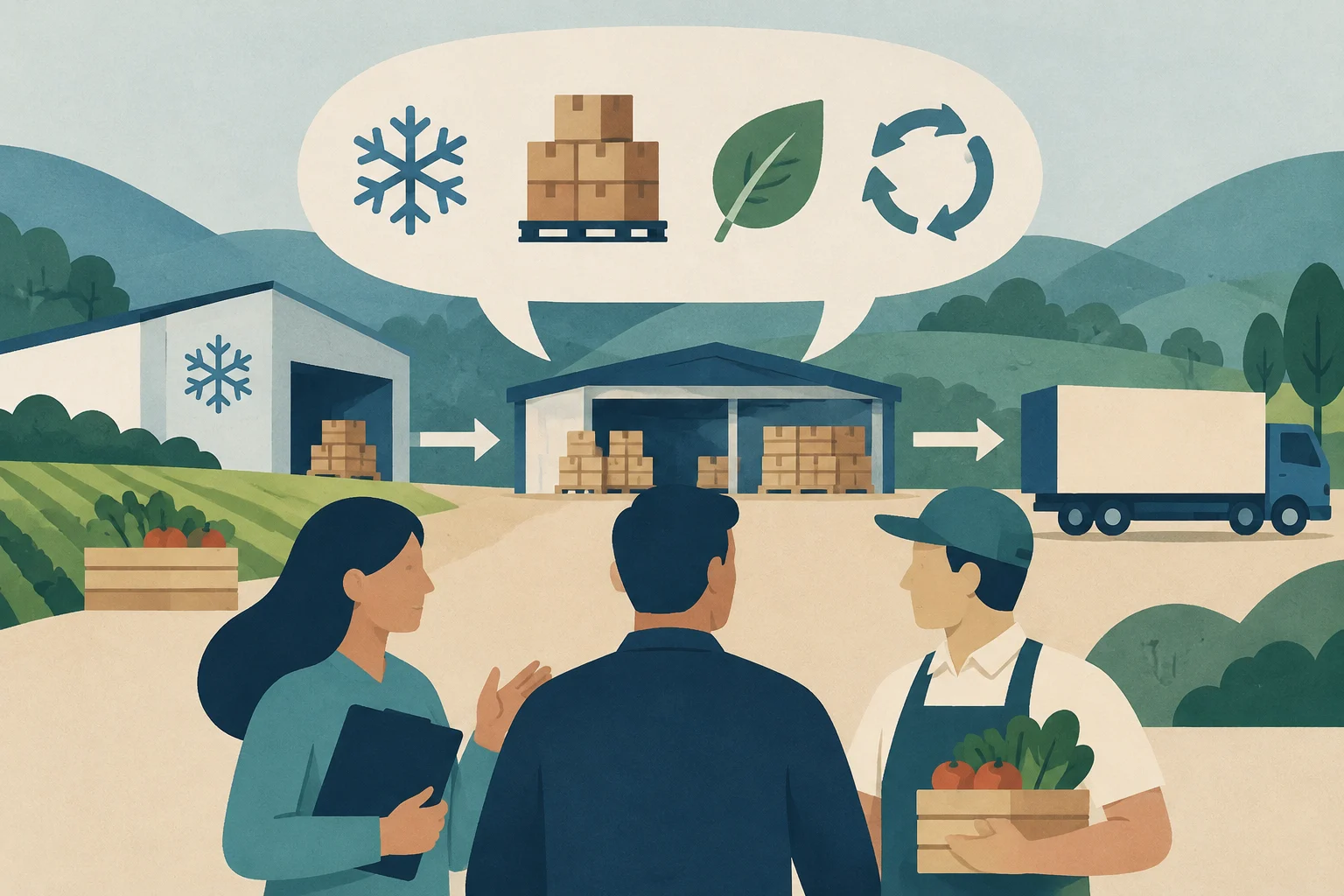
Cross-docking is a logistics strategy that seeks to maximize efficiency by minimizing or eliminating storage. In this model, goods are received in the warehouse and immediately redistributed to their final destination, without passing through shelves. This requires precise synchronization between the arrival of supplier trucks and the departure of distribution vehicles, drastically reducing handling and storage costs.
Conversely, a transit warehouse or customs depot allows goods to be kept for specific periods, often to defer the payment of taxes or duties until the products are ready for final distribution. This distinction is crucial for financial planning and liquidity management.
Cold Chain Logistics and Specialized Transport
In the agri-food sector, product integrity depends largely on temperature control. The cold chain is a refrigerated supply chain with controlled temperature that guarantees the safety and quality of food from production to consumption. Any break in this chain can compromise the hygiene of the product and generate significant economic losses.
The transport of these goods is governed by specific concepts:
FTL (Full Truck Load): Full load. The shipment exclusively occupies a truck. It is more expensive than partial load, but offers greater speed and safety for sensitive products.
LTL (Less Than Truck Load): Partial load. Several companies share the space of a truck. It is a more economical option for smaller volumes, although with potentially longer transit times.
Furthermore, it is fundamental to distinguish between hazardous cargo and dangerous goods. While the former is classified by its effects on health, the latter includes physical or chemical risks such as fires, explosions, or corrosion, which requires specific handling and transport protocols.
Editorial illustration · Edition Business
Traceability, International Trade, and Documentation
The ability to track a product throughout its entire life cycle is an increasingly strict regulatory and market requirement. Traceability allows identifying the origin, history, and location of a product at any time. This is vital for managing recalls, verifying authenticity, and complying with food safety regulations.
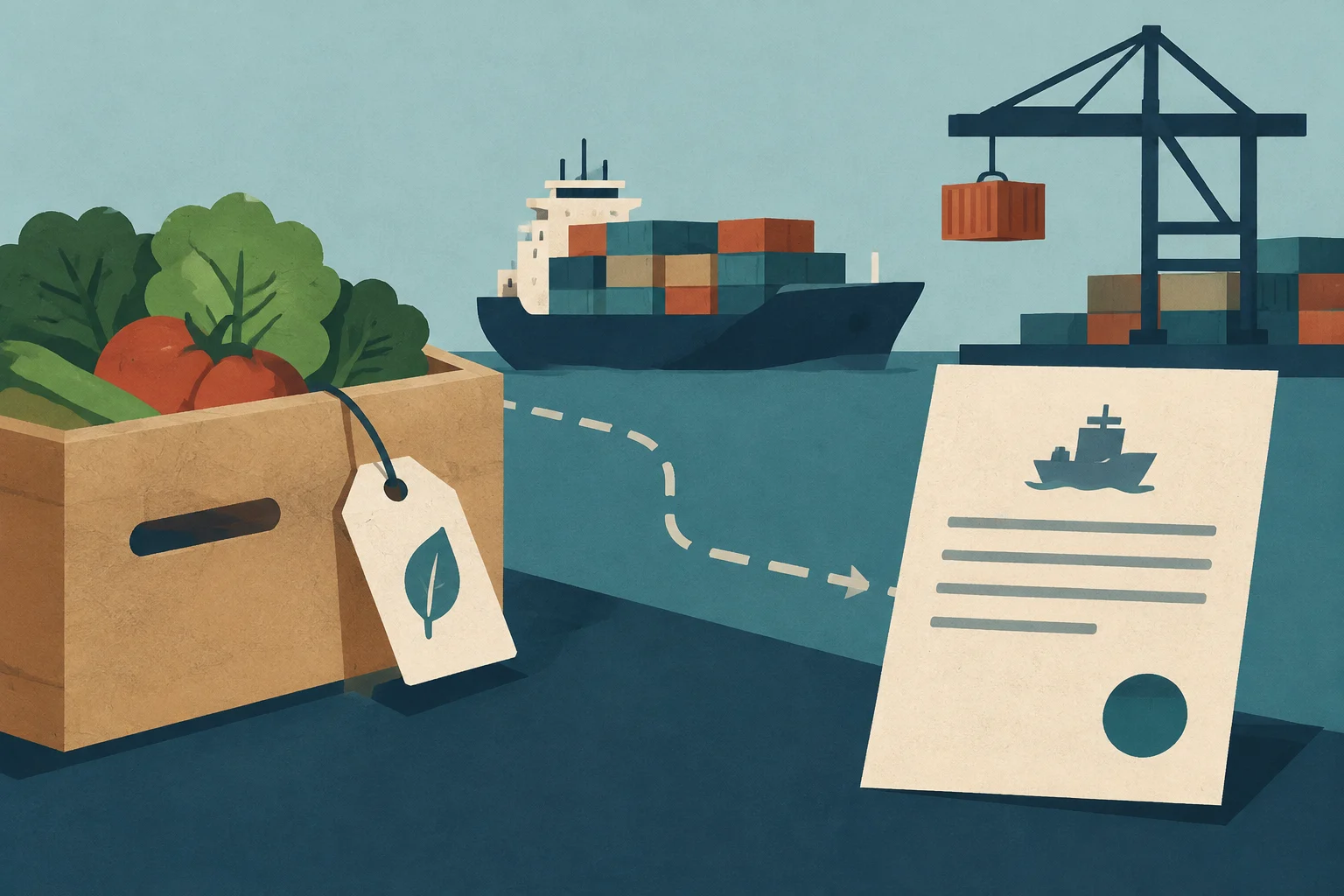
In the field of international trade, correct documentation is the pillar of the operation. The B/L (Bill of Lading) or bill of lading is a key document that details the cargo transported by sea. It acts as a contract of carriage, receipt of the goods, and, in some cases, title of ownership. Its correct issuance avoids disputes and delays at customs.
Incoterms (International Commercial Terms) define the responsibility of the parties in delivery, risk, and transport costs. Knowing these terms is essential for negotiating international contracts and avoiding surprises in logistics costs.
Sustainability and ESG Criteria
The sustainability dimension has ceased to be an added value to become a requirement for access to markets and financing. The ESG (Environmental, Social, and Governance) framework groups the non-financial criteria with which an organization's performance is evaluated.
Key Concepts in Sustainability
Materiality: Principle that determines which ESG topics are relevant for reporting. A double materiality analysis evaluates both the financial impact of a topic on the company and the impact of the company on the environment.
Green Taxonomy (EU Taxonomy): European classification system that defines which economic activities are environmentally sustainable. Financial entities use it to determine the conditions for sustainable financing.
Due Diligence: Process of identifying, preventing, and mitigating negative impacts in the value chain. It is central in regulations such as the CSDDD (Corporate Sustainability Due Diligence Directive).
Greenwashing: Practice of communicating an environmental commitment that does not correspond to reality. European regulations are tightening the proof requirements for any sustainability claim.
Carbon Footprint and Resources
The carbon footprint measures the greenhouse gas emissions associated with the company's activities. In the agri-food sector, this includes not only production, but also logistics and transport. Efficient management of the cold chain and the optimization of transport routes are direct strategies to reduce this footprint.
Practical Application in the Company
The implementation of this glossary should not be limited to reading, but must be integrated into daily processes. It is recommended to:
Cross-training: Conduct training sessions where purchasing, logistics, and quality teams review key terms together to align their expectations.
Documentation Update: Review contracts, purchase orders, and operational procedures to ensure that the terminology used is precise and coherent.
Key Performance Indicators (KPIs): Define KPIs based on these concepts, such as the percentage of cold chain compliance or the cost per unit in cross-docking operations.
The adoption of a common vocabulary is not an end in itself, but a tool for continuous improvement. By eliminating ambiguities, companies can focus on the optimization of their processes, the reduction of costs, and the improvement of customer service quality. In a globalized and regulated market, precision in communication is as valuable as efficiency in execution.
A guide to interpreting latency, errors, CPU, memory, saturation, throughput, and availability, and relating those signals to capacity, scaling, and service commitments.
A step-by-step procedure for SMEs to identify applicable legislation, distinguish harmonized standards, and manage conformity assessment, technical documentation, and CE marking before marketing in the European Union.
Clear definitions of the AfCFTA, Regional Economic Communities, and rules of origin to help SMEs interpret the regulatory framework and plan their entry into the African market.