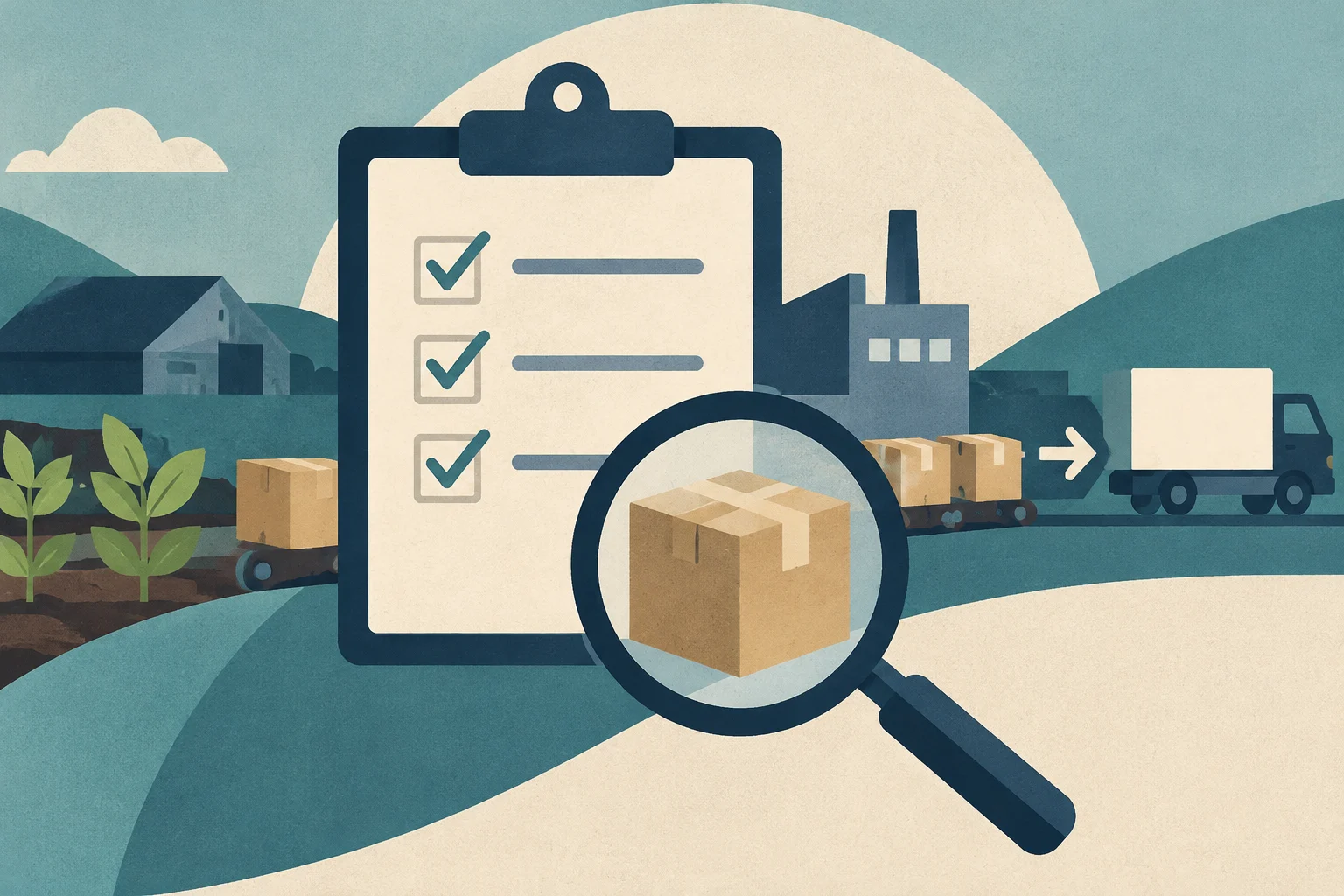
Checklist for auditing traceability and regulatory compliance in the supply chain
Practical guide based on Regulation (EC) 178/2002 and Law 17/2011 to verify origin records, internal processes, and distribution. Includes criteria for passing inspections and reverse traceability drills.
Food traceability is not just a documentary requirement, but the operational capacity of a company to reconstruct the journey of a product throughout the entire supply chain. In the Spanish and European context, this system is the main tool to guarantee consumer safety and protect the operator against possible health inspections or public health incidents.
This checklist is designed for quality managers and directors of food companies in Spain to verify that their records comply with the legal principle of "one step back and one step forward." The structure is divided into three blocks of operational verification and a section on documentary integration.
1. Upstream traceability: Input control
The first verification point is the ability to identify the origin of each raw material or product received. According to Regulation (EC) 178/2002, each operator must be able to indicate who supplied the food.
Verification points:
Supplier identification: Is there an updated record with the name and contact details of each supplier?
Product description: Is it clearly specified what was received (type of food, feed, or substance)?
Batch data and quantity: Is the batch number or product identification and the exact quantity received recorded?
Entry date: Is the date and time of reception in the warehouse or production area noted?
Accompanying documentation: Are invoices, delivery notes, and certificates of analysis that link the received batch with the supplier kept?
2. Internal traceability: Process and transformation control
Once inside the company, the system must allow tracking the product through the different stages of transformation, storage, or packaging. This is the most complex link, as it requires linking ingredients with the final product.
Verification points:
Internal batch management: Is a unique batch assigned to each production or transformation lot?
Process records: Are the applied processes (cooking, refrigeration, packaging) and critical parameters (temperatures, times) documented?
Equipment and production lines: Is it identified which equipment or zones were used for each batch?
Responsible parties: Is it recorded who performed each operation and on what date?
Allergen management: Is there specific control to avoid cross-contamination and record the presence of allergens in each batch?
Integration with the HACCP (Hazard Analysis and Critical Control Points) system is fundamental here. Internal traceability allows identifying critical points, controlling deviations, and applying corrective measures precisely, as required by Regulation (EC) 852/2004.
Editorial illustration · Edition Business
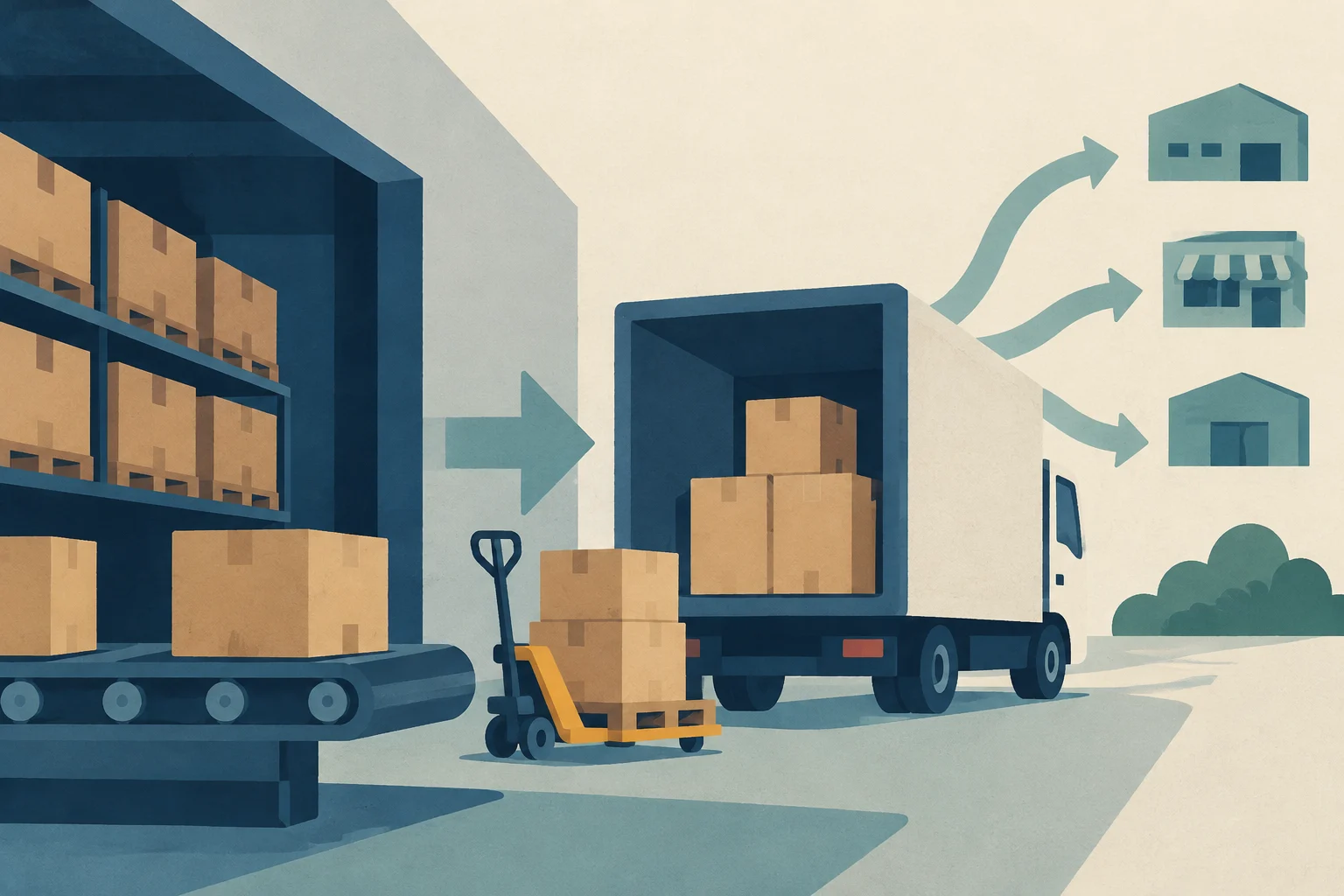
3. Downstream traceability: Output and distribution control
The last block verifies the company's ability to know to whom the final product was delivered. This is crucial for executing withdrawals or recalls quickly and limited to the affected batches.
Verification points:
Customer identification: Is the name and address of the customer or final recipient recorded?
Delivery date: Is the exact date on which the product left the company noted?
Delivered product and batch: Is it specified which product and under which batch number it was dispatched?
Transport conditions: Are transport conditions (cold chain, type of vehicle) recorded if they are relevant to food safety?
Carrier data: Is the identity of the transport company kept if the product is sent to third parties?
4. Documentary verification and response capacity
Beyond daily records, the audit must evaluate the company's ability to respond to a health authority or a customer within a short timeframe.
Verification points:
Integration with the RGSEAA: Is the company correctly registered in the General Health Register of Food Companies and Foods (RGSEAA)? This register, regulated by Royal Decree 191/2011, is the basis for the administration to locate the operator.
Reverse traceability drill: Is the company capable of performing a reverse traceability test (from a final product to its raw material) in less than 4 hours? This is a key requirement for voluntary certifications such as IFS or BRC, highly demanded by large distribution chains.
Staff training: Is handling staff trained to apply the traceability system? Regulation (EC) 852/2004 obliges staff to be instructed in good hygiene practices and the self-control system.
Information accessibility: Is the documentation organized so that it can be provided to competent authorities in case of inspection without unnecessary delays?
Frequently asked questions
What is the difference between traceability and trackability?
In the Spanish and European legal field, the terms are used as synonyms. The definition in Regulation (EC) 178/2002 speaks of "traceability" as the possibility of finding and following the trail of a food. "Trackability" refers to the practical capacity to carry out that tracking. In practice, both concepts point to the same registration and control system.
Does traceability apply to all types of food companies?
Yes, the obligation affects the entire food chain, regardless of size. However, the level of detail may vary. A food industry requires complete traceability (upstream, internal, and downstream), while a retail supermarket may focus mainly on upstream traceability (suppliers) and downstream traceability (final consumer, although the latter is not always identified individually).
Is it mandatory to use a computer system or ERP?
No. The regulation does not impose a single way to comply with the obligation. Each operator can decide whether to use computer systems, manual registration sheets, labels with batch codes, or other tools. What is important is that the system is effective, verifiable, and adapted to the type of business activity. However, digital systems facilitate speed and accuracy in audits.
A guide to interpreting latency, errors, CPU, memory, saturation, throughput, and availability, and relating those signals to capacity, scaling, and service commitments.
A step-by-step procedure for SMEs to identify applicable legislation, distinguish harmonized standards, and manage conformity assessment, technical documentation, and CE marking before marketing in the European Union.
Clear definitions of the AfCFTA, Regional Economic Communities, and rules of origin to help SMEs interpret the regulatory framework and plan their entry into the African market.