A Practical Digitalisation Glossary for SMEs: APIs, Integration, Data and Cybersecurity
A plain-language guide to help management and operational teams understand digital concepts, how they connect, and what questions to ask when evaluating a solution.
From converting information to transforming processes
Business digitalisation brings together concepts that often appear side by side but do not mean the same thing. Distinguishing between them helps clarify what a tool offers and what changes it may involve for an SME.
Digitalisation: converting analogue information or processes into digital formats. For example, replacing paper forms with electronic forms.
Digital transformation: a broader, strategic change that incorporates technology to review how work is carried out, decisions are made, or customers are served. Digitising a document can be a first step, but on its own it is not the same as transforming a process.
Automation: using technology to carry out tasks or stages of a process with less manual intervention. It can reduce repetitive tasks, but does not necessarily mean that the entire process operates without human oversight.
How tools communicate
For information to flow between applications, devices and services, connection mechanisms are needed. It is useful to distinguish what each one does:
API (application programming interface): a set of rules that allows two programs to exchange requests and responses in a defined way. For example, a sales application could use an API to check another system for a product’s availability. The specific connection depends on both services being compatible and configured to communicate with each other.
Systems integration: connecting and coordinating different applications or devices so they can exchange data or take part in the same workflow. An API can be used for this connection, but integrating systems may also require adapting formats, permissions and processes.
Interoperability: the ability of different systems to exchange information and use it consistently. The fact that two tools are connected does not in itself guarantee that they interpret the data in the same way.
IoT (Internet of Things): a network of physical devices equipped to collect or exchange data. In a business, sensors could send information about the condition of equipment to a central platform. Their usefulness depends on what is measured and how that information is managed.
Editorial illustration · Edition Business
Data, analytics and artificial intelligence
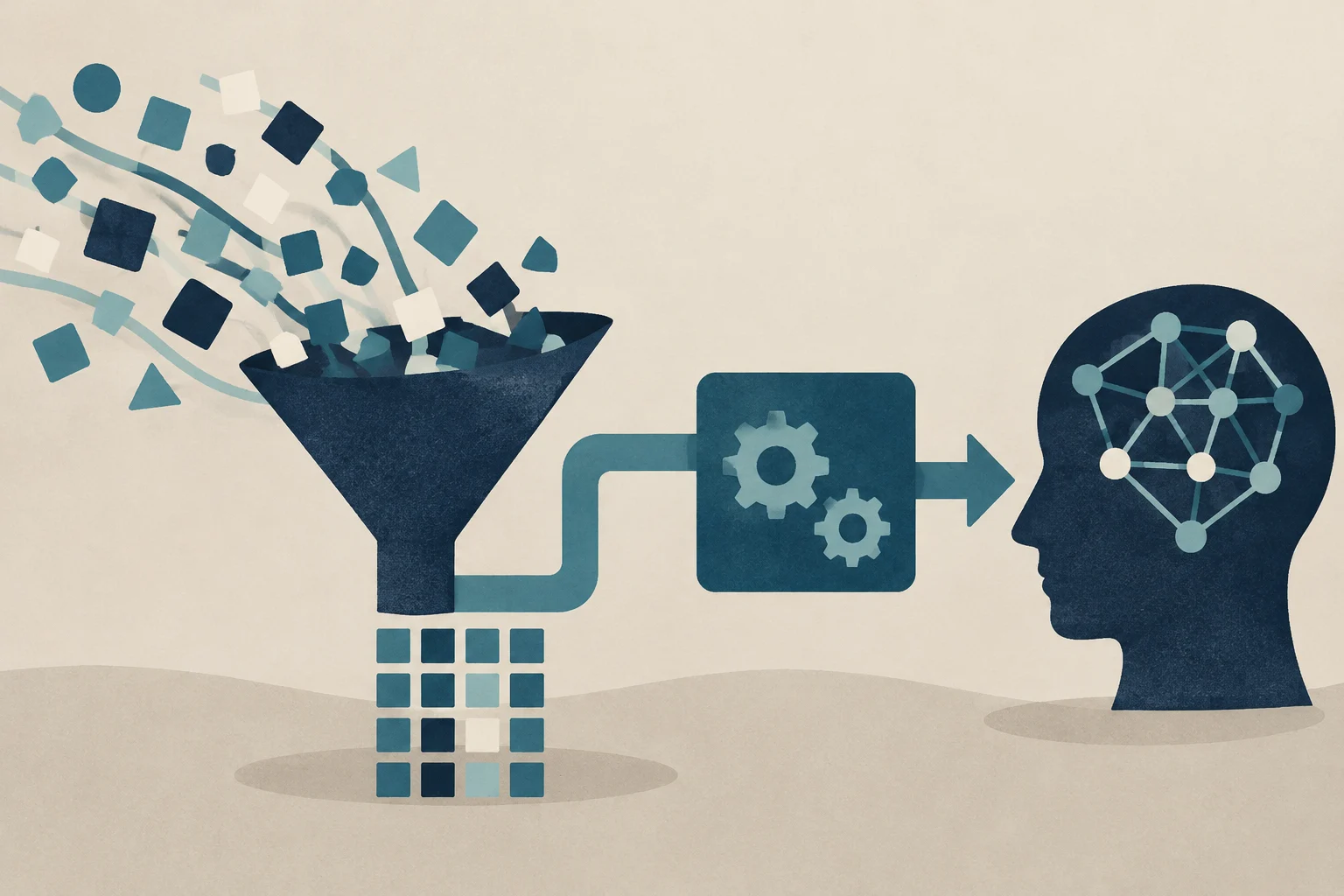
Data is useful when it is collected for a purpose, organised and interpreted with its quality and context in mind.
Real-time data: information transmitted and processed with little delay after it is generated. The term does not necessarily mean there is no delay, nor does it guarantee that the data is complete or correct. It can be useful, for example, for monitoring recent changes in inventory or equipment performance.
Dataset: an organised collection of data that can be stored, analysed or shared. To interpret it, it is important to know what each field represents and where the information comes from.
Big Data: the processing and analysis of large volumes of data, often in a variety of forms, using specialised tools and methods. It does not refer only to accumulating a lot of information: its value depends on being able to analyse it to answer specific questions.
Algorithm: a set of instructions or rules that defines how a task is carried out or information is processed. It may be simple, such as sorting records, or form part of a more complex analysis system.
Artificial intelligence (AI): techniques that enable systems to perform tasks associated with capabilities such as learning, pattern recognition or content generation. Their results depend on the data, design and use; they should not automatically be mistaken for reliable or autonomous decisions.
Services and technology structure
Some terms describe how a tool is provided or how its development is organised:
Cloud computing: the use of computing resources—such as storage or applications—through services hosted on remote servers. The specific model, access conditions and data management depend on the provider and the contract.
SaaS (software as a service): software accessed as a service, usually over the internet and through a subscription. Before signing up, a business can clarify which features are included, how data is managed and what options are available for exporting it.
Reference architecture: a framework of guidelines and components that informs the design of systems. It helps organise a solution, but does not replace the need to define the business’s specific requirements.
Cybersecurity: protecting systems and data
Cybersecurity is the protection of systems, networks, applications and data from unauthorised access, damage or disruption. It is not a single tool or an absolute guarantee: it comprises technical and organisational measures whose implementation depends on the risks and environment of each business.
In a conversation about digitalisation, the term can help raise practical questions: who will have access to the information, how accounts will be managed, what data will be shared with providers, and what procedures are in place in the event of an incident. The available references describe cybersecurity in general terms; they do not establish specific legal requirements or a universal set of controls for all SMEs.
How to use the glossary when evaluating a proposal
When a provider presents a solution, the team can ask them to explain, in concrete terms:
Which process will change and which tasks will still require human intervention.
Which systems will be connected, by what mechanism and what information they will exchange.
How often the data will be updated and how its quality will be checked.
Which analytics or AI features are included and what limitations their results have.
How the data will be hosted and protected, who can access it and what conditions apply to its export.
These questions help distinguish concepts that are often presented together. An application may digitise records, automate a task and connect to other systems, but each capability should be understood separately before assessing how well it fits into day-to-day work.
The key lies not in the tool, but in the strategy: identifying processes with the highest hidden costs, calculating ROI with real data, and ordering workflows before automating them. A practical guide for Spanish SMEs.
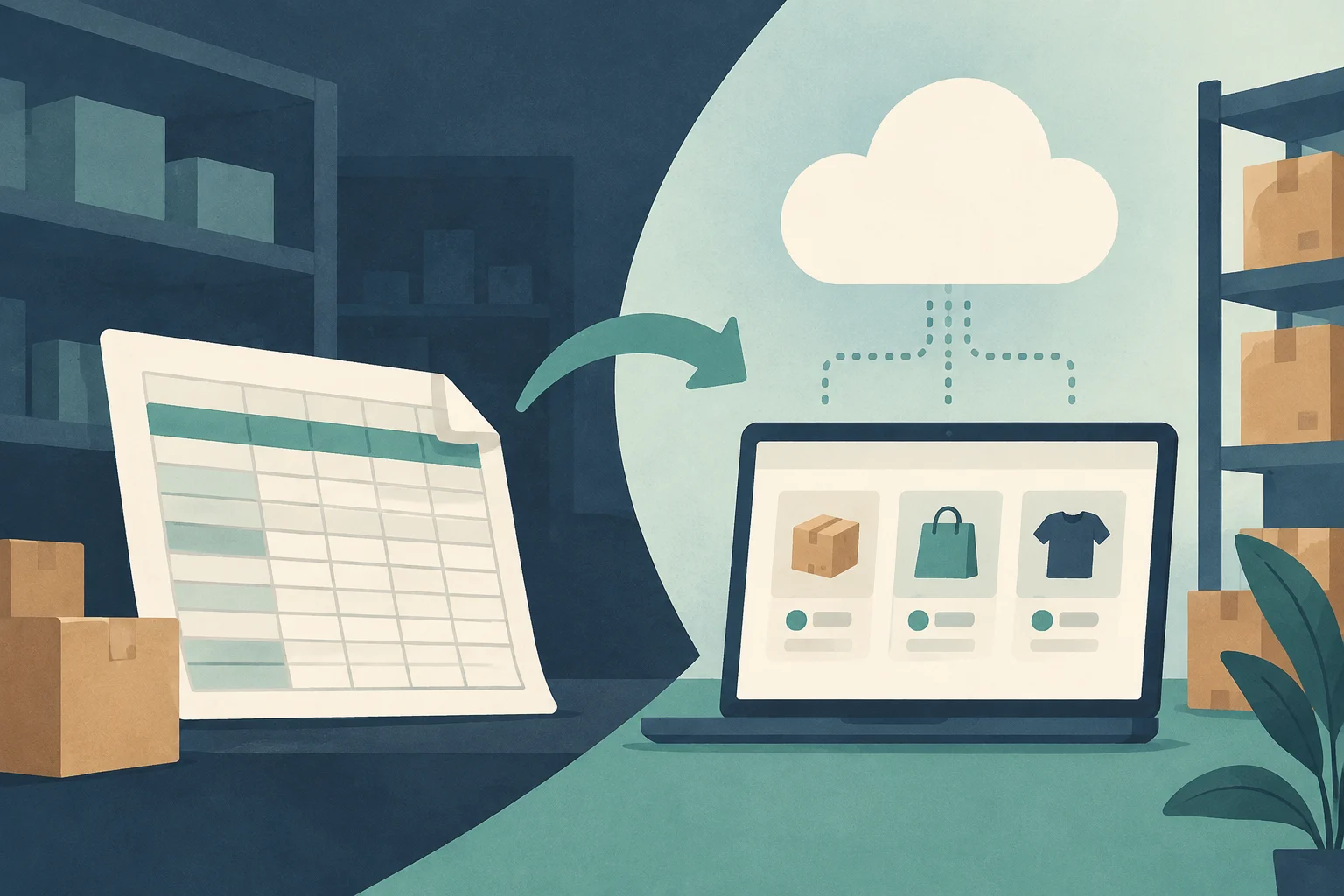
A practical guide for retail SMEs looking to overcome spreadsheet limitations. Learn how to diagnose your stock, define key needs, and select the right cloud software to reduce shrinkage and improve decision-making.
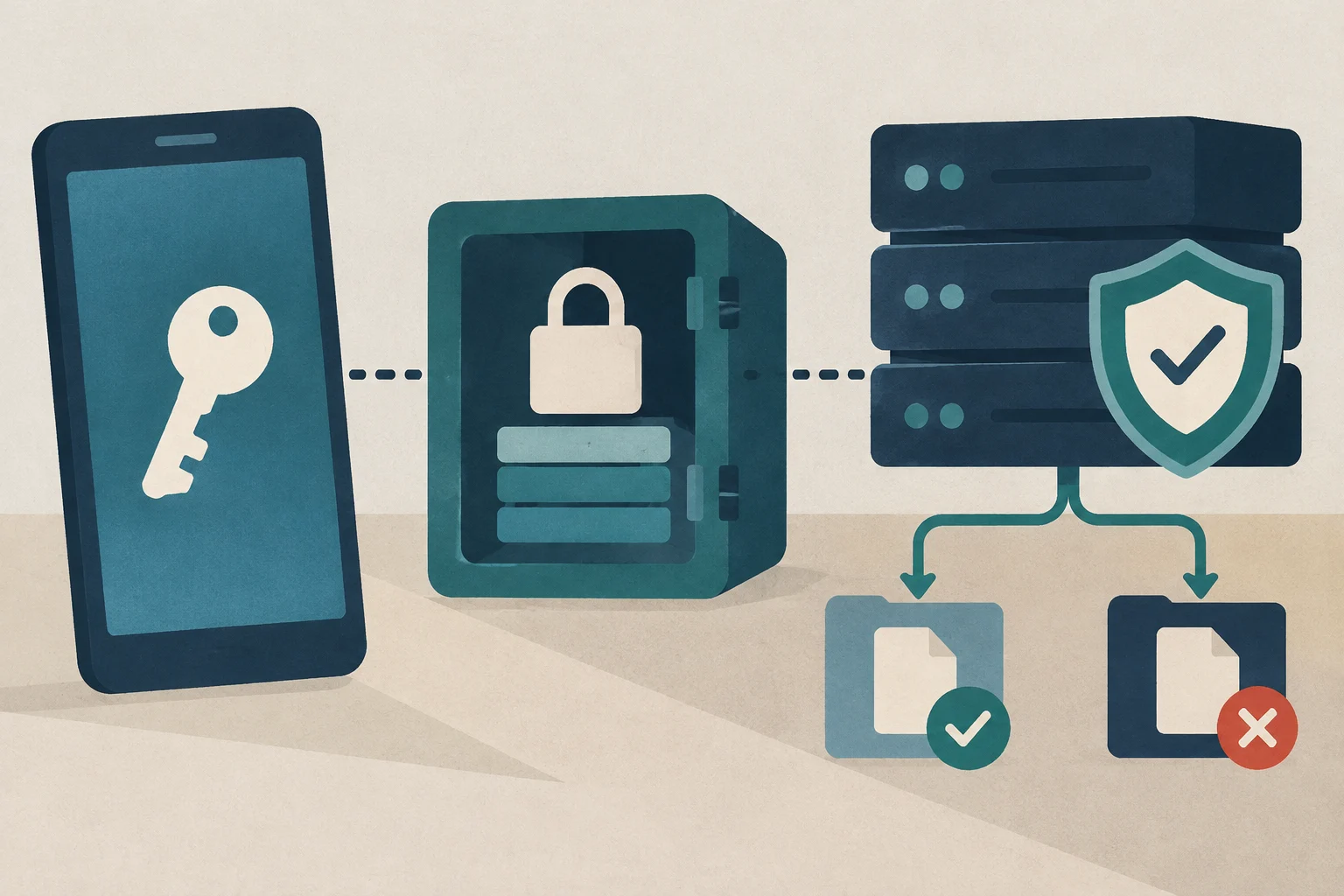
Practical guide to verifying critical vulnerabilities in the software development lifecycle (SDLC), covering authentication, token management, secure storage, and server-side permission validation.