Essential Glossary: AfCFTA, RECs, and Rules of Origin for Doing Business in Africa
Clear definitions of the AfCFTA, Regional Economic Communities, and rules of origin to help SMEs interpret the regulatory framework and plan their entry into the African market.
For businesses considering expansion across the African continent, technical vocabulary can be as complex as the commercial geography itself. This glossary breaks down the fundamental regulatory and economic concepts needed to interpret official sources and plan a market strategy precisely.
The continental framework: AfCFTA
The African Continental Free Trade Area (AfCFTA) is the world’s largest free trade agreement in terms of the number of signatories. Its goal is to create an integrated market for trade in goods and services, as well as the free movement of people and capital. With an estimated combined GDP of $3.4 trillion and a population of 1.3 billion people, the pact aims to transform Africa into an industrialized and cohesive player on the global stage.
It is crucial to distinguish the AfCFTA from a customs union. Unlike a customs union, the AfCFTA does not adopt a common external tariff on third countries. Instead, it operates as a free trade agreement (FTA) that substantially liberalizes trade among participating countries. Members are initially required to eliminate tariffs on 90% of goods, with the ultimate goal of allowing duty-free access to at least 97% of goods and most services.
Regional Economic Communities (RECs)
The Regional Economic Communities (RECs) are economic integration blocs that bring together countries from specific regions of Africa. The AfCFTA builds on the existence of these eight RECs to create a single continental market. For an SME, understanding the RECs is vital because many trade barriers and integration opportunities are first managed at the regional level before expanding to the continental level.
Businesses are often more aware of their countries’ participation in these regional communities than of the AfCFTA itself. This suggests that regional integration is the first practical step toward becoming familiar with preferential trade mechanisms.
Editorial illustration · Edition Business
Rules of origin: The key to tariff preferences
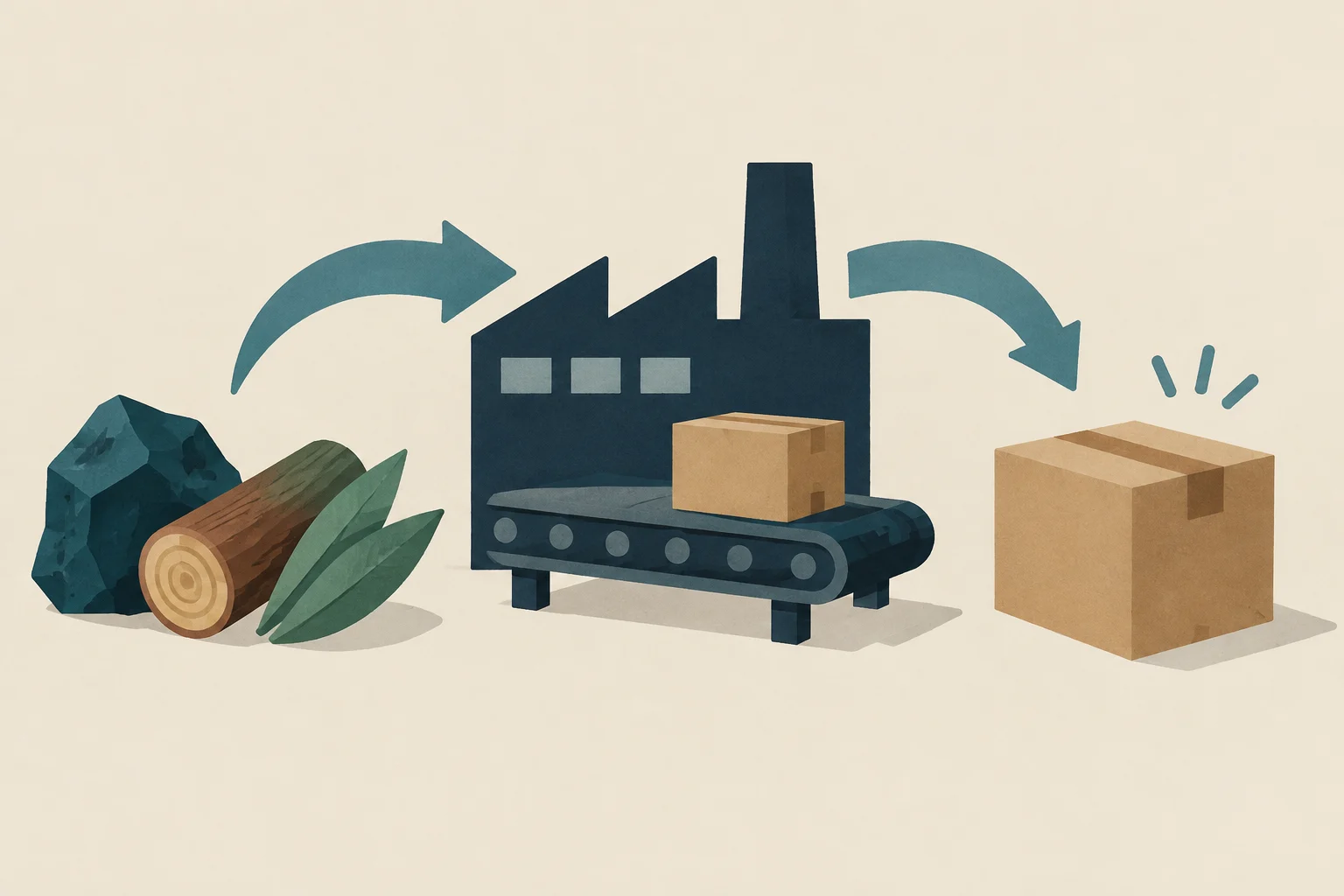
Rules of origin are the criteria used to determine a product’s country of origin. In the context of the AfCFTA, these rules determine whether an exported good qualifies for duty-free or preferential import tariffs.
According to the AfCFTA Business Index (ACBI), compliance with rules of origin is the most binding constraint for African businesses. Their complexity can be especially burdensome for informal traders and small and medium-sized enterprises (SMEs). For the AfCFTA to deliver its expected benefits, these rules must be simple, practical, and business-friendly while encouraging industrial transformation and value addition.
The AfCFTA Business Index (ACBI)
The ACBI is an assessment tool created by the United Nations Economic Commission for Africa (UNECA), with support from the European Union. Unlike other indices that use secondary data, the ACBI is based on private-sector perceptions collected through primary surveys.
The index measures the ease of doing business and trading from the perspective of businesses. It focuses on three main dimensions:
Ease of trade in goods: Assesses tariff, technical, and sanitary barriers.
Awareness and use of FTAs: Measures businesses’ awareness of free trade agreements and how easy they are to use.
Business environment: Covers investment, trade in services, intellectual property, and competition policy.
The results of the ACBI’s first round, which covered seven countries (Angola, Côte d’Ivoire, Gabon, Kenya, Nigeria, Namibia, and South Africa), revealed that businesses had a neutral perception (a score of 5 on a scale of 0 to 10) of the environment for cross-border trade. This indicates that, although the legal framework exists, support mechanisms are lacking to help businesses identify strategic opportunities.
Practical challenges and non-tariff barriers
Beyond tariffs, businesses face significant operational challenges. The ACBI identified unauthorized charges (such as bribes at border posts) and additional fees (statistical taxes, import licenses, and price controls) as frequent obstacles. Interestingly, businesses perceive sanitary and phytosanitary measures and technical barriers as less restrictive than some experts might predict, suggesting that these are not currently the main constraints on intra-African trade.
Frequently asked questions
Is the AfCFTA a customs union?
No. The AfCFTA is a free trade agreement. It does not establish a common external tariff for products imported from countries outside Africa. Each member country maintains its own tariff policy toward third countries.
When did trade under the AfCFTA begin?
Trade under AfCFTA rules began on January 1, 2021. However, full implementation has been gradual because negotiations on rules of origin and other protocols needed to be completed.
What is the Guided Trade Initiative?
It is a pilot launched in October 2022 that allows preferential trade under the AfCFTA among eight member countries (Cameroon, Egypt, Ghana, Kenya, Mauritius, Rwanda, Tanzania, and Tunisia) for a specific list of 96 products. It aims to demonstrate the system’s viability and facilitate the transition to full continental trade.
A guide to interpreting latency, errors, CPU, memory, saturation, throughput, and availability, and relating those signals to capacity, scaling, and service commitments.
A step-by-step procedure for SMEs to identify applicable legislation, distinguish harmonized standards, and manage conformity assessment, technical documentation, and CE marking before marketing in the European Union.
Unifying technical terminology between purchasing, logistics, and quality departments is key to reducing operational errors and improving traceability. This glossary synthesizes fundamental concepts such as the cold chain, cross-docking, ABC inventory management, and ESG criteria, facilitating more precise and efficient communication in the agri-food sector.