A mechanism in dispute during the campaign
Brazil's Finance Minister, Dario Durigan, defended the split payment mechanism provided for in the tax reform, after Daniella Marques, economic coordinator of Flávio Bolsonaro's presidential campaign, proposed eliminating it if he reaches the government. The debate contrasts two concerns: reducing tax evasion and preventing the automatic collection of taxes from limiting the cash available to businesses.
In statements made on October 7, Durigan argued that the system would increase transparency and make fraud schemes more difficult. Marques, for her part, argued that it could harm working capital, especially in small businesses. These are the positions of the protagonists of the debate, not yet verified results of the mechanism's application.
How split payment would work
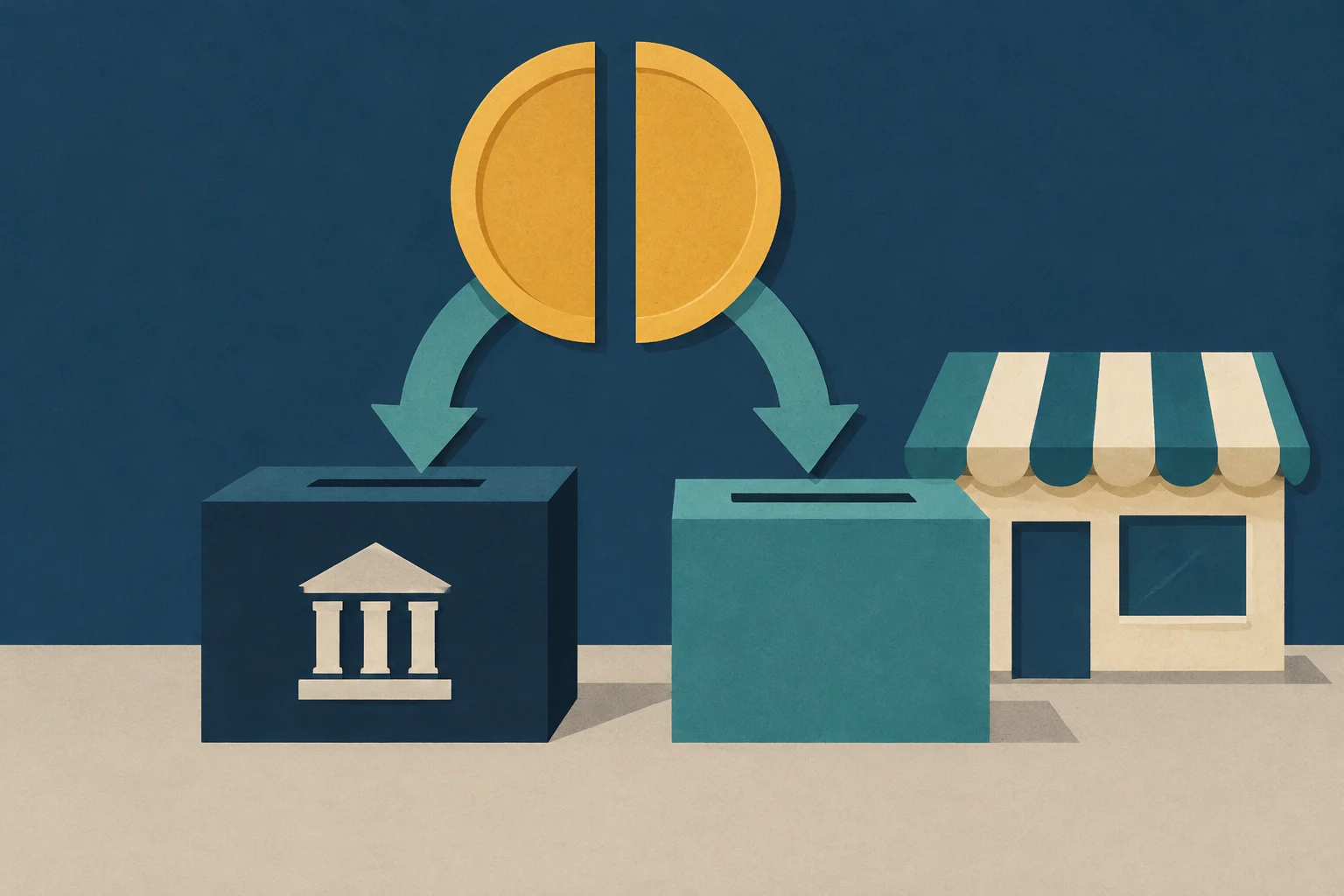
In covered operations, the tax would be automatically separated when the payment is settled: the corresponding portion would be sent to the tax authority, and the supplier would receive the net amount. Additionally, the buyer could only use the tax credit from the previous stage once the tax payment is confirmed.
The design aims to prevent an operation from generating a tax credit for the buyer while the seller leaves the corresponding tax unpaid. Durigan claims that this would reduce the space for so-called “noteiras”, companies used to issue fraudulent tax documents. He also argues that more efficient revenue collection could contribute to reducing the general rate; that is his expectation, not a guaranteed reduction.
Gradual application and initial scope
Voluntary adoption is scheduled for the second half of 2027 and would be gradual. According to Durigan and available information on the first stage, it would begin with operations between companies, without directly affecting small retail sales to the final consumer. The reform also includes specific rules for companies under the Simples Nacional regime.
Therefore, the possible effect on liquidity will depend on the type of operation and how the system is applied. The concern of Flávio's campaign refers to the money that would no longer temporarily remain in the cash box before the company pays its taxes; the Government counters that the initial design would not directly cover retail trade facing the consumer.
The change would require a legislative decision
The mechanism is provided for in Complementary Law 214/2025. According to coverage by Congreso em Foco, eliminating it from the legislation would require a new legal amendment approved by Congress: a potential president could not unilaterally abolish it.
The political discussion, therefore, does not by itself resolve how the tool will function. Implementation also depends on technological infrastructure and coordination between the Federal Revenue Service, responsible for the CBS, and the IBS Management Committee, in which states and municipalities participate. As implementation approaches, it will be relevant for companies to know which operations will be included and how withholding and tax credits will be managed.