
Guide · 18.11.2026
How to submit and track a business registration in France
Prepare documents for France’s Guichet unique, check the signature and fees, and respond if the reviewing authority asks for a correction.
Read storyUseful journalism to understand, manage and grow a business.
SearchA practical guide to validating demand, choosing between a marketplace and your own store, and checking that your catalog, payments, shipping, and refunds are ready before accepting orders.
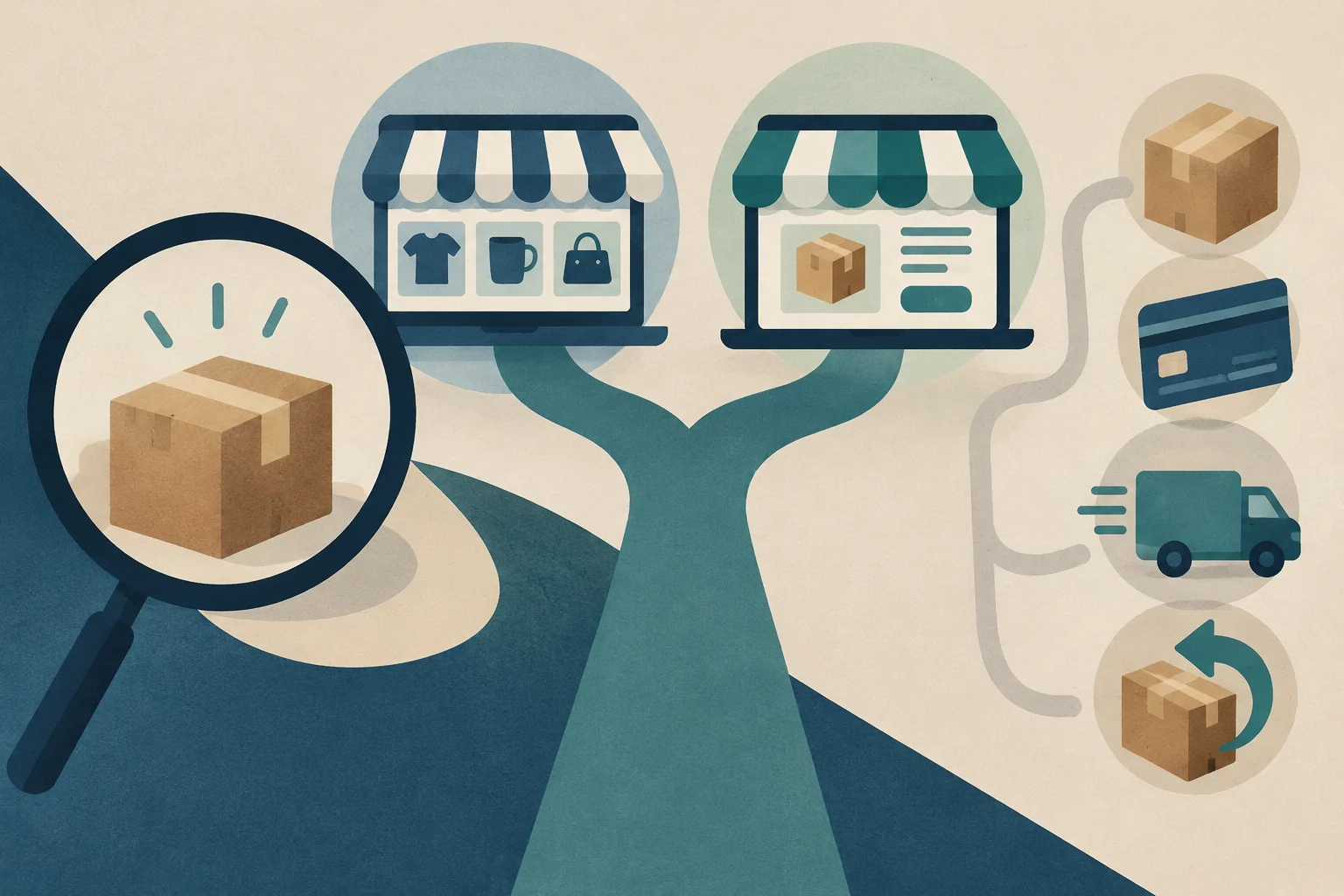
Selling online can expand a small business’s reach, but opening a website or listing products does not, by itself, prove that there is a large enough market. Before investing in a digital operation, it is worth researching who would buy, what need the offering would meet, and what alternatives those customers have.
The U.S. Small Business Administration (SBA) recommends combining market research with competitive analysis. To make specific decisions, a business can find out whether there is demand, how large the market might be, where buyers are located, how many similar offerings are available, and how much they cost. Published data help explain general trends and characteristics; speaking with potential customers can reveal specific details, such as their reaction to the product or questions that might prevent a purchase.
A hypothetical example: a business selling reusable accessories could compare available prices and options, and ask potential customers which features they value and what concerns them about shipping. This information can help refine the offering and product descriptions before committing resources to inventory or advertising.
A marketplace can provide a sales channel that consumers already know. An online store of your own gives the business a direct channel for presenting its brand and organizing the shopping experience. These options are not mutually exclusive, but they involve different needs: managing products and orders, responding to inquiries, communicating policies, and attracting buyers.
The choice should not be based solely on how easy a channel is to set up. It is worth comparing the costs and tasks involved in each channel, who controls the customer relationship, what management tools are available, and how much effort it takes to keep information and service up to date. If the business starts with one channel, it can later assess whether its processes and resources support expanding distribution.
The SBA offers business planning and resources for calculating startup costs. It also provides free or low-cost counseling and training through partner organizations, including Small Business Development Centers (SBDCs), SCORE, and Women’s Business Centers. The availability and type of support depend on the area.

As a planning guideline, identify who will own the domain, who will be able to manage it, and how you will recover access if the person or provider maintaining the store changes. When comparing platforms, prepare a list of business needs: product variants, inventory, mobile experience, payment integration, order management, and record exports. Check these features in a demonstration or authorized trial; do not assume that a subscription includes maintenance, support, or every integration.
Calculate the cost of operating the solution, as well as the cost of setting it up: domain and hosting where applicable, subscriptions, extensions, fees, and maintenance work. These are decision-making questions to compare with each provider, not a universal ranking of platforms. Keep a copy of the terms you accepted and confirm how to retrieve your data if you later change channels.
Before publishing, prepare a clear listing for each product: name, relevant features, variants, price, availability, and photos or descriptions that accurately reflect what will be delivered. Also check what happens when an item runs out, changes price, or is no longer available.
Pricing should account not only for the cost of the product, but also for the operating expenses associated with selling and fulfilling orders. The SBA recommends keeping financial records and reviewing income and expenses; separating online sales from other channels can help show how much each part of the business contributes. The figures needed will depend on the product, costs, and structure of each business.
Before payment, explain shipping costs, estimated timeframes, return terms, and how to request help. It is important to distinguish business policies set by the company—for example, how it handles a return—from any legal obligations that may apply. A published policy does not replace rights established by applicable rules.
The checkout process should be easy to understand and work from beginning to end: from selecting a product to receiving an order confirmation. Check what the buyer sees if a payment fails, whether a confirmation is sent, and how the transaction is reconciled with sales records.
Before hiring a payment processor, request its terms in writing and check what it charges per transaction, what other fees may apply, when it pays out funds, and what terms govern reserves or holds. Clarify how refunds, disputes, and chargebacks are handled, who responds to possible fraud, and what reports can reconcile orders, amounts charged, fees, and bank deposits. Use these questions to compare providers; the answers depend on the contract and do not amount to a guaranteed rate.
Payment data security requires attention to people, processes, and technology. The PCI Security Standards Council (PCI SSC) recommends training staff, establishing security practices, and properly maintaining the tools used. The risks it identifies include phishing, weak passwords, poorly protected remote access, and outdated software.
Using an outside provider to process payments may reduce the company’s direct contact with certain data, but it does not necessarily eliminate the security responsibilities that apply to the company. The scope depends on the system and how it is configured. Ask providers which components they manage, what measures you need to maintain, and what steps to take in the event of an incident; limit access to those who need it and keep the systems under your control up to date.
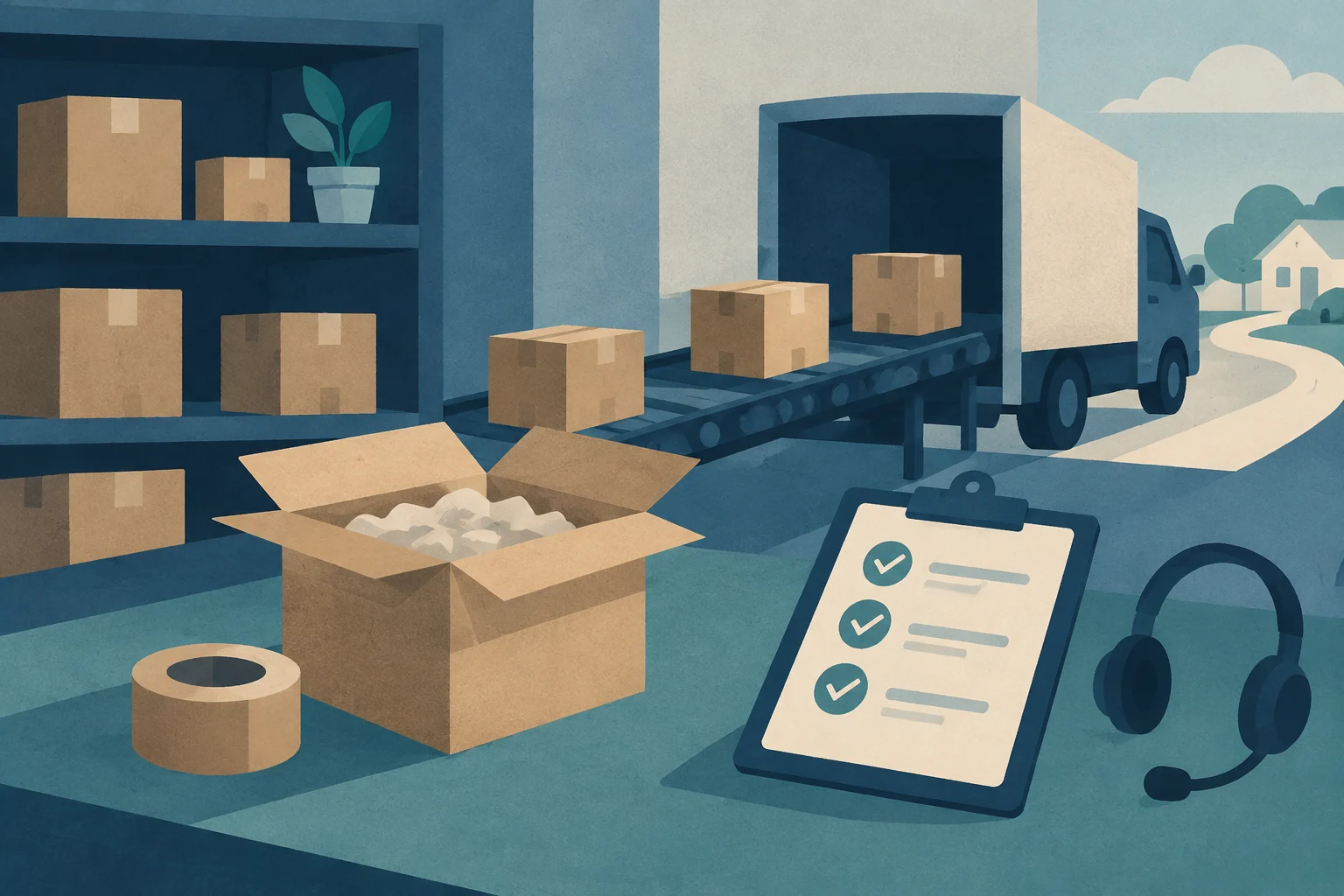
Define how each order will be prepared, who will confirm inventory, how it will be packaged, and when it will be handed to the carrier. When choosing a logistics service, compare options that fit the size, destination, and pace of your shipments. USPS is one example of a provider offering business tools for preparing labels and managing shipments; it is neither the only option nor an exclusive recommendation.
Before accepting orders, use the Federal Trade Commission (FTC) guide to mail, internet, or telephone orders to check whether your operation is covered and which rules apply. It explains how to substantiate an advertised shipping timeframe and handle delay notices, consent, and refunds. Timeframes and the form of consent depend on the circumstances: do not treat a general rule as the answer for every order or interpret silence as universal authorization. Check the specific conditions in the official document before designing your notices.
Distinguish shipping—handing the order to the carrier—from delivery to the buyer. The cited rule concerns the shipping deadline; a stated delivery date should also reflect what the operation can support. Tie both commitments to inventory, preparation, and the information available to customer service.
A business’s legal obligations depend on factors such as its location, structure, and activity. The SBA indicates that federal, state, and local tax obligations may apply, and that compliance requirements vary by business type and where it operates.
An online store should not assume that selling over the internet removes the need to review permits, taxes, or other obligations. General guidance does not determine which requirements apply to each business: check the relevant information in the jurisdictions where you operate and sell, and seek local advice if needed. Repeat this review when the product, location, or markets served change.
Before opening for sales, assign a person responsible for each area and keep evidence of the checks performed. The list can be adapted to the size of the business:
A safer launch does not depend on having a complex operation, but on having a process behind every promise made to the buyer. If an order, payment, shipping, or return test fails, fixing it before announcing the launch can reveal problems while they still do not affect a real purchase.
The SBA documents Plan your business and Manage your business can help with market research and organizing business operations. Its Local assistance directory lets users search for counseling and training from partner organizations; check with each organization about what it offers, its terms, and any costs. SBDCNet’s Selling Online for Small Business resource brings together guidance and reading on digital sales.
For payment security, consult the merchant resources from PCI SSC; its industry standards do not replace applicable laws. The FTC guide can help verify the requirements for shipping, delays, and refunds for covered orders. USPS Business presents label, shipping, and return tools from one specific carrier. Links to these seven documents appear in Sources and Methodology.
These references were consulted on November 16, 2026; that is not the publication date of every document. Keep a schedule for reviewing links and requirements, and check them again before launch and when the product, location, or market changes. This content retains its U.S. scope in all translations. It is educational editorial guidance and does not determine the legal or tax obligations of any specific business.
Prepare documents for France’s Guichet unique, check the signature and fees, and respond if the reviewing authority asks for a correction.
Read story
A first guide to starting a business in Germany. Check which steps may apply, make a cash forecast and find advice in Mössingen and Unterallgäu.
Read story
A practical guide for site directors and prevention technicians on the drafting, approval, and updating of the Health and Safety Plan (HSP) in Spain. It analyzes the difference from the Safety Study, the legal requirements of Royal Decree 1627/1997, and protocols for serious risks.
Read story