Solar self-consumption in an SME: how to assess feasibility before investing
Evaluating a photovoltaic project requires analyzing the consumption profile, available space, and estimated production. This analysis details the key technical and economic factors to determine the actual savings and profitability of the installation in Spain.
The transition towards renewable energy has turned solar self-consumption into a strategic option for small and medium-sized enterprises (SMEs) in Spain. However, the decision to invest should not be based solely on reducing the electricity bill, but on a rigorous analysis of technical and economic feasibility. This article structures the essential steps to evaluate a photovoltaic project, distinguishing between the data that must be contrasted and the assumptions that determine the return on investment.
Fundamentals of self-consumption and legal framework
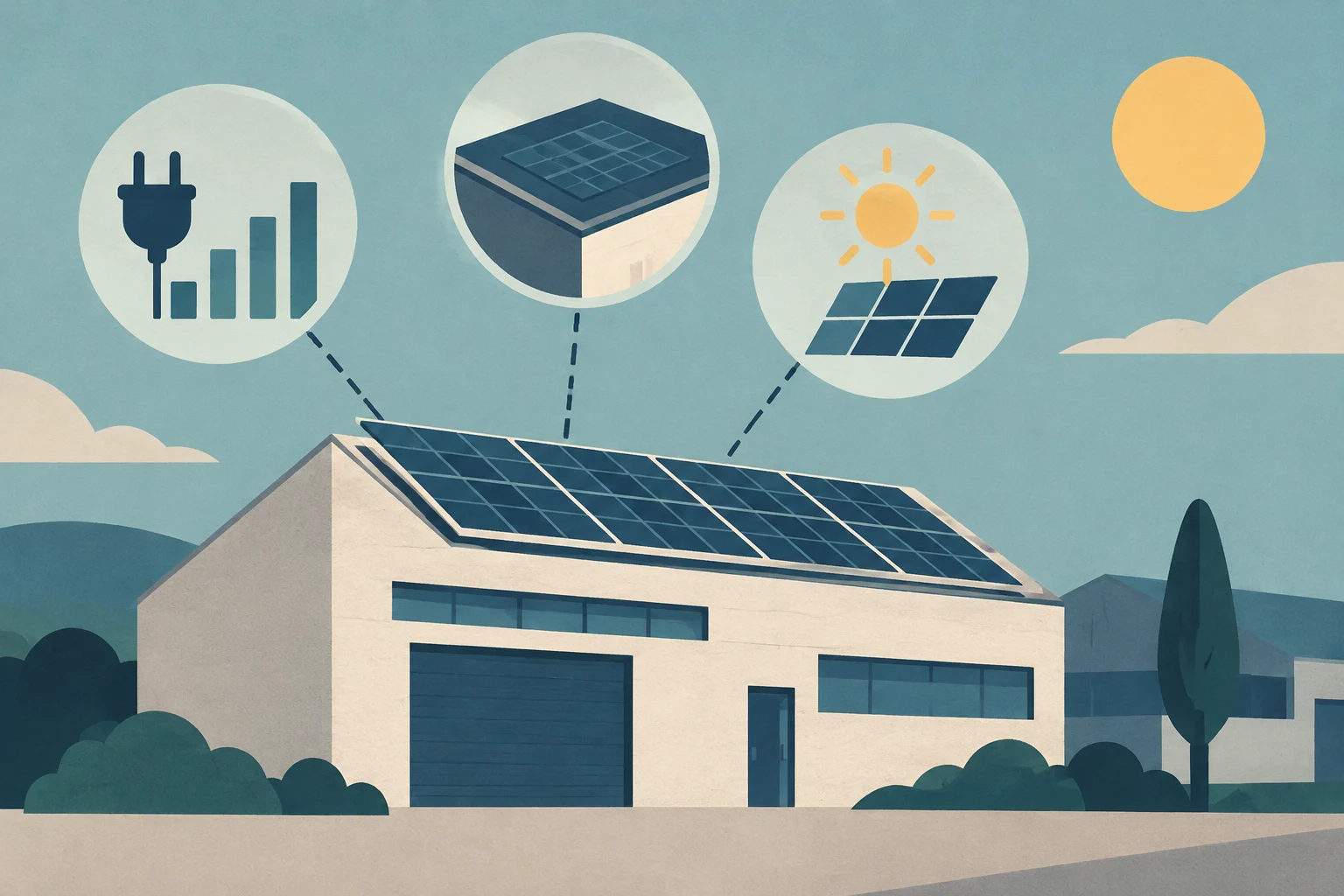
Electric self-consumption allows any company to produce renewable electricity for its own consumption by installing photovoltaic solar panels or other generation systems. According to the IDAE, these installations are legal and viable both technically and economically, and the so-called "sun tax" has been eliminated. The basic infrastructure consists of the generation part (panels), electronic equipment (inverters and protections) and the meter, connecting to the electrical grid to guarantee supply when generation does not coincide with consumption.
The regulatory framework is based on Royal Decree 244/2019, which defines the modalities of self-consumption, and Royal Decree 477/2021, which regulates the aid linked to the Recovery, Transformation and Resilience Plan. These subsidies, managed through regional calls, can significantly reduce the initial investment, with the percentage of aid varying according to the power of the installation and the type of beneficiary.
Analysis of consumption profile and time coincidence
The most determining factor for savings is the coincidence between consumption and production. The maximum benefit is obtained when the company consumes electricity during solar hours, as instantaneous self-consumption avoids paying the variable term of the bill, which includes the cost of energy, tolls and charges.
For an SME, this implies reviewing the consumption profile and activity schedules. If solar production exceeds real-time consumption, the surplus energy becomes surplus. In this scenario, it is desirable to modify consumption habits using timers to shift electrical loads to hours of highest generation. The installation of batteries allows storing energy for later use, although this increases the initial investment and must be evaluated based on the expected return.
Editorial illustration · Edition Business
Available space, orientation and shadows
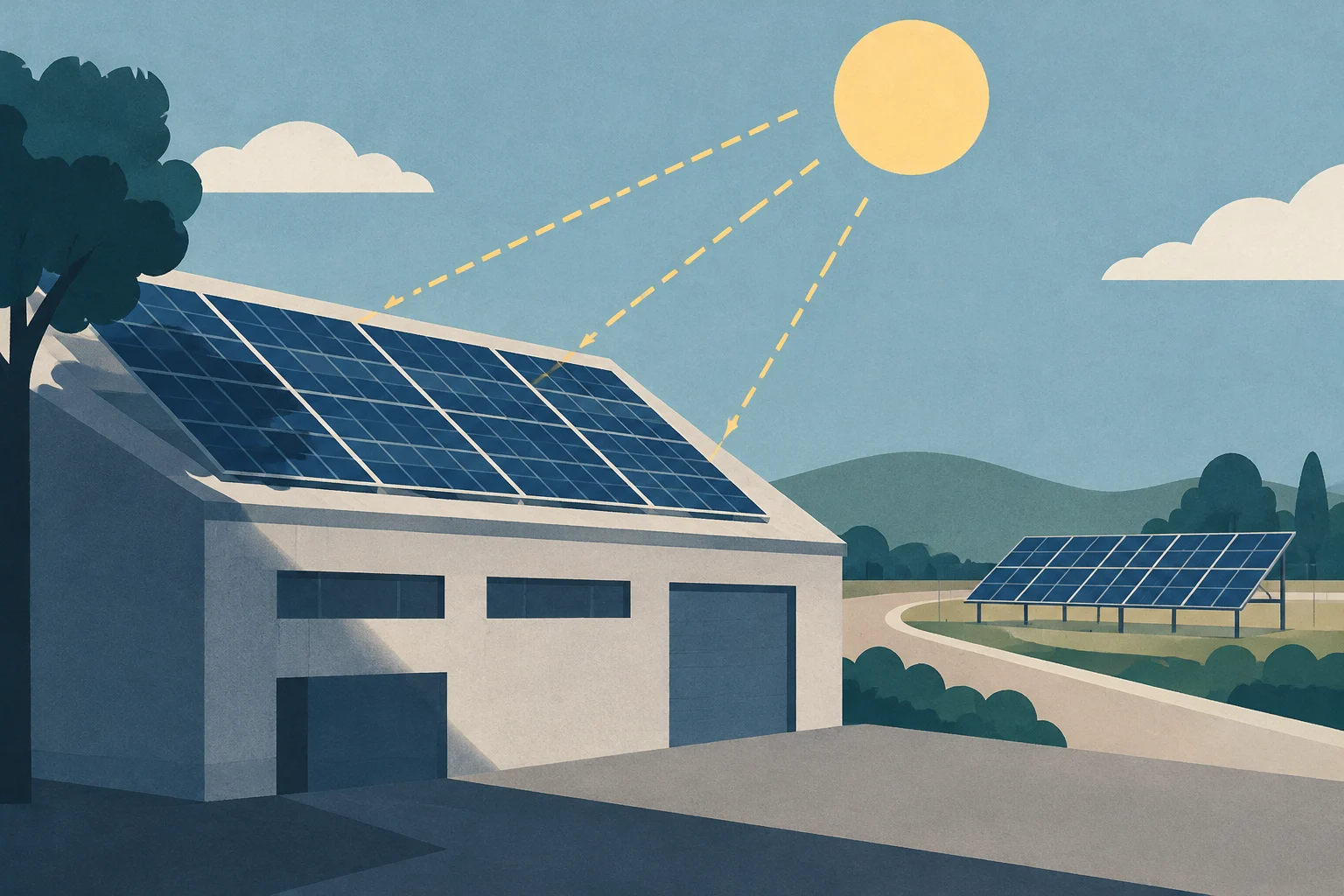
Technical feasibility depends on the free space with access to the sun. For a photovoltaic installation, SOUTH orientation is preferable to maximize performance, although other orientations are viable. The absence of shadows is crucial, as obstructions can drastically reduce production.
If the building does not have adequate space, self-consumption can be carried out on nearby land. According to the IDAE, the maximum allowed distance is 500 meters for most technologies. However, if the installation is photovoltaic and is located on industrial land or on roofs/artificial structures dedicated to another main use, this distance can be extended up to 2,000 meters. This detail is relevant for SMEs with industrial warehouses or parking lots that can house the infrastructure.
Estimated production and location factors
Estimated production varies according to geographical location and the availability of the solar resource. Generation capacity is directly influenced by the solar radiation of the area. A preliminary study carried out by a specialized installation company must provide production estimates based on historical data and the specific characteristics of the site.
It is important to distinguish between generated energy and self-consumed energy. The former depends on installed power and irradiation, while the latter depends on the company's consumption profile. The useful life of these installations can reach 30 years, allowing the company to protect itself from long-term energy price variation.
Investment, financing and aid
The initial investment includes panels, inverters, cabling, protections and, optionally, batteries. The total cost must be compared with the estimated annual savings to calculate the payback period. In a context of high energy prices, savings are greater, but the evaluation must consider market volatility.
Self-consumption aid under RD 477/2021 is an opportunity to reduce the financial burden. These subsidies are managed at the regional level, so the SME must consult the current calls in its community. Direct aid can represent a significant percentage of the investment, improving the profitability of the project. In addition, there are financing options through energy service companies (ESCOs) or suppliers, which can offer payment models based on the savings generated.
Surplus treatment: compensation or sale
When the installation generates more energy than the company consumes instantaneously, the surplus can be managed in two ways:
Simplified compensation: The unconsumed energy is delivered to the grid and compensated in the electricity bill. The value of the surplus depends on the type of supply contract. If the company is in the regulated market (PVPC), the price is regulated (daily market price minus deviations). If it is in the free market, the price is agreed with the supplier. The discount in the monthly bill cannot be negative.
Sale to grid: The surplus is sold in the electricity market. In this case, the producer receives no payment for surplus energy not self-consumed at any given moment. The producer must have a representative in the electricity market (or use another sale arrangement) and take charge of the applicable fiscal and tax obligations. This option requires more complex management and may not be profitable for small SMEs.
The choice between these modalities must be based on the volume of surplus and the company's management capacity. Simplified compensation is generally simpler and suitable for most SMEs.
Editorial illustration · Edition Business
Operation and maintenance costs
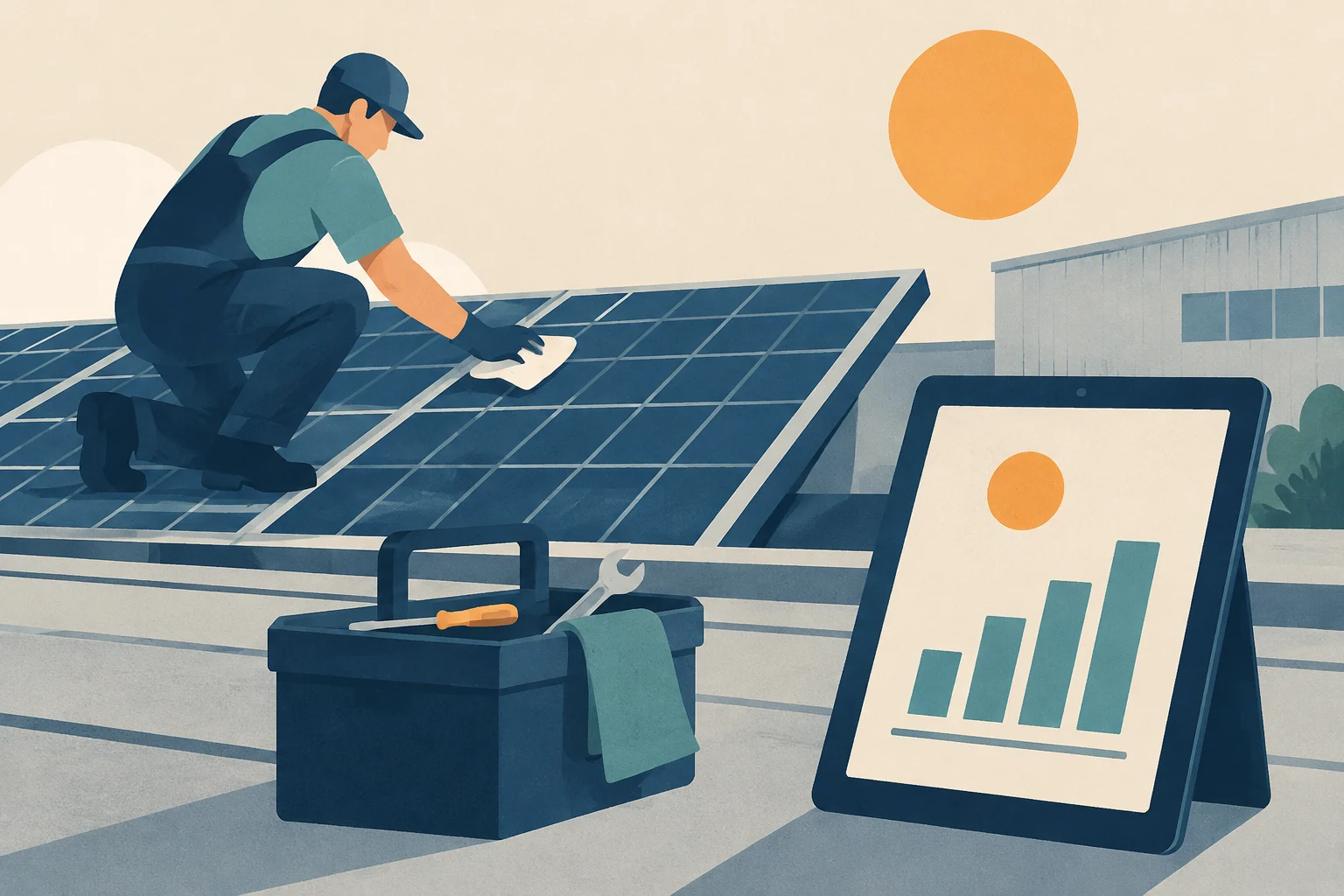
In addition to the initial investment, operation costs over the useful life of the installation must be considered. These include panel maintenance, cleaning, monitoring and possible repairs. The IDAE points out that residential installations are usually carried out in one or two days and generate hardly any waste, but industrial installations may require more attention.
Monitoring via a mobile app or web page allows controlling the performance of the installation and detecting possible failures. An efficient management system can optimize self-consumption and reduce operational costs. The company must budget these annual expenses to evaluate the net profitability of the project.
Administrative procedures and permits
Administrative procedures vary according to the power of the installation and the presence of surplus. Installations less than 100 kW do not require prior administrative authorization from the autonomous community. Installations without surplus and those with surplus less than 15 kW located on urbanized land do not need access and connection permission, so it is not necessary to contact the distributor in advance.
In other cases, the installation company must manage the access and connection procedure with the distributor. In addition, it is necessary to obtain the building permit or license from the town hall, which in many cases is done through a responsible declaration and requires payment of the Construction and Works Tax (ICIO). The installation company must submit the necessary documentation to the autonomous community to authorize the installation once it has been carried out.
Steps for evaluation and decision
To structure the evaluation, it is recommended to follow these steps:
Review the consumption profile: Analyze the electricity bills from the last 12 months to identify consumption peaks and activity schedules.
Evaluate available space: Measure the useful surface of the roof or land, considering orientation and shadows.
Request preliminary studies: Contact several specialized installation companies to obtain estimates of production, investment and savings.
Analyze available aid: Consult the current regional calls to determine the applicable subsidy.
Calculate profitability: Compare the net investment (after aid) with the estimated annual savings, considering operation costs and the useful life of the installation.
Choose the surplus modality: Decide between simplified compensation or sale to grid, according to the volume of surplus and management capacity.
Manage procedures: Ensure that the installation company manages the necessary permits and authorizations.
Conclusion
The evaluation of the feasibility of a solar self-consumption project in an SME requires a comprehensive analysis that combines technical, economic and regulatory data. The coincidence between consumption and production, location and orientation are key factors to maximize savings. Regional aid and the elimination of the "sun tax" have improved profitability, but the final decision must be based on a rigorous study of the investment, operation costs and surplus management. By following these steps, the SME can make an informed decision that allows it to reduce its dependence on the electrical grid and protect itself from long-term energy price variation.
Operating in Latin America requires adapting cash flows to local realities: from the use of **PIX** and **SPEI** to managing exchange rate risk and bank reconciliation. This guide details how to structure an efficient collection and payment process, minimizing fees and avoiding margin erosion.
The ECB confirms that the digital euro has not yet been issued. We analyze the technical and legal differences between central bank money, bank deposits, and private tokens, and what retailers should anticipate regarding the 2027 pilot and the potential issuance in 2029.
There is no universally superior option between operating an owned fleet or outsourcing transport. The decision depends on demand volume, seasonality, and the required level of control. This analysis provides a framework to compare direct costs, capacity, variability, and operational risks, highlighting the trend toward hybrid models that optimize resilience and total cost.