Guide to implementing shipment traceability with consistent data and processes
How to define milestones, assign responsibilities, and manage incidents so that SMEs can provide reliable visibility to their customers and optimize their logistics operations.
Logistics traceability has ceased to be a simple tracking number to become the digital passport of each product. In an environment where supply chains are global and fragmented, companies need to reconstruct the journey and conditions of each shipment. This guide explains how to implement a robust traceability system that integrates internal and external data, reduces operational costs, and improves the end-customer experience.
Differentiating internal and external traceability
To build a solid foundation, it is fundamental to distinguish between the two levels of traceability that operate simultaneously in any organization:
Internal traceability: Collects the history within the organization. It includes manufacturing, batches, materials used, internal processes, order preparation, and quality controls. Its main objective is to enable precise actions, such as recalling only a contaminated batch without affecting the rest of the inventory.
External traceability: Records the journey outside the organization during transport and distribution. It covers location changes, transshipments, incidents, and storage conditions. This layer is what provides visibility to the customer and allows verifying the authenticity of the product against counterfeits.
The combination of both offers a comprehensive view that facilitates operational supervision, regulatory compliance, and risk management.
Definition of milestones and key events
Standardization of information is the first step to avoid data silos. The systems of different agents (postal operators, couriers, carriers) must be able to consume and publish data in the same schema.
Standard events to monitor
To achieve effective interoperability, the following key events must be defined and coded:
Pickup: Confirmation that the carrier has taken possession of the goods.
In transit: Periodic updates of location and status.
Delivery: Confirmation of receipt by the recipient.
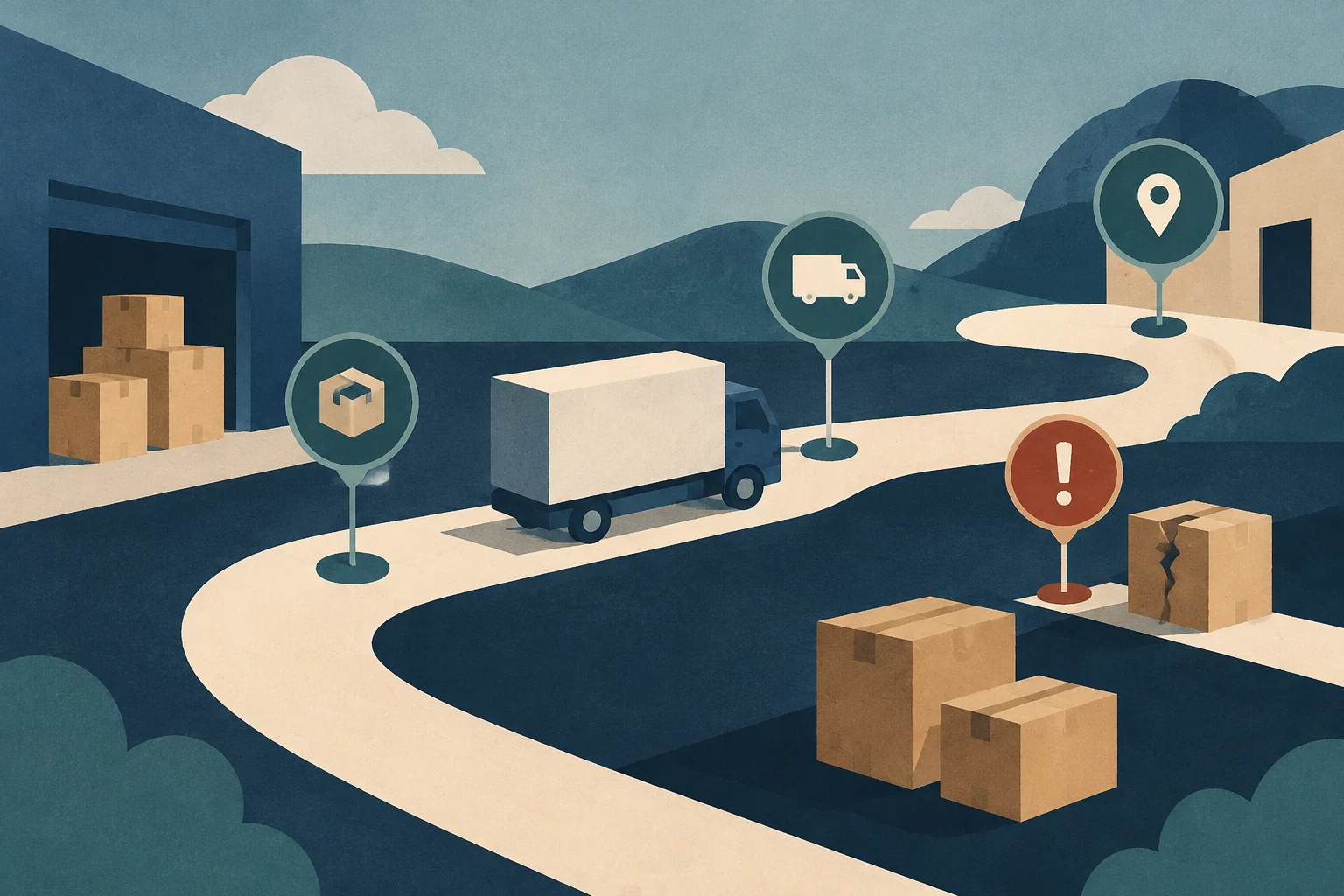
Exceptions: Delays, damages, diversions, or failed delivery attempts.
Adopting common formats, such as standardized JSON or XML, and using RESTful APIs with clear documentation accelerates integrations. Homogeneity in shipment identifiers (tracking numbers) and event coding is crucial for e-commerce platforms and warehouse management systems to process information without manual errors.
Editorial illustration · Edition Business
Assignment of responsibilities in data capture
A common error in SMEs is assuming that traceability is the exclusive responsibility of the carrier. In reality, the company must act as the orchestrator of the data.
Integration of multiple carriers
Companies usually work with several operators. To avoid fragmentation of information, it is necessary to integrate these sources through:
Multicarrier platforms: Solutions that unify communication with different carriers under a single interface.
Integration APIs: Direct connections that allow the automatic transfer of tracking events.
This integration allows better coordination between the central hub and the last mile, decreasing the average time to locate lost packages and optimizing routes based on real events.
The role of IoT technology
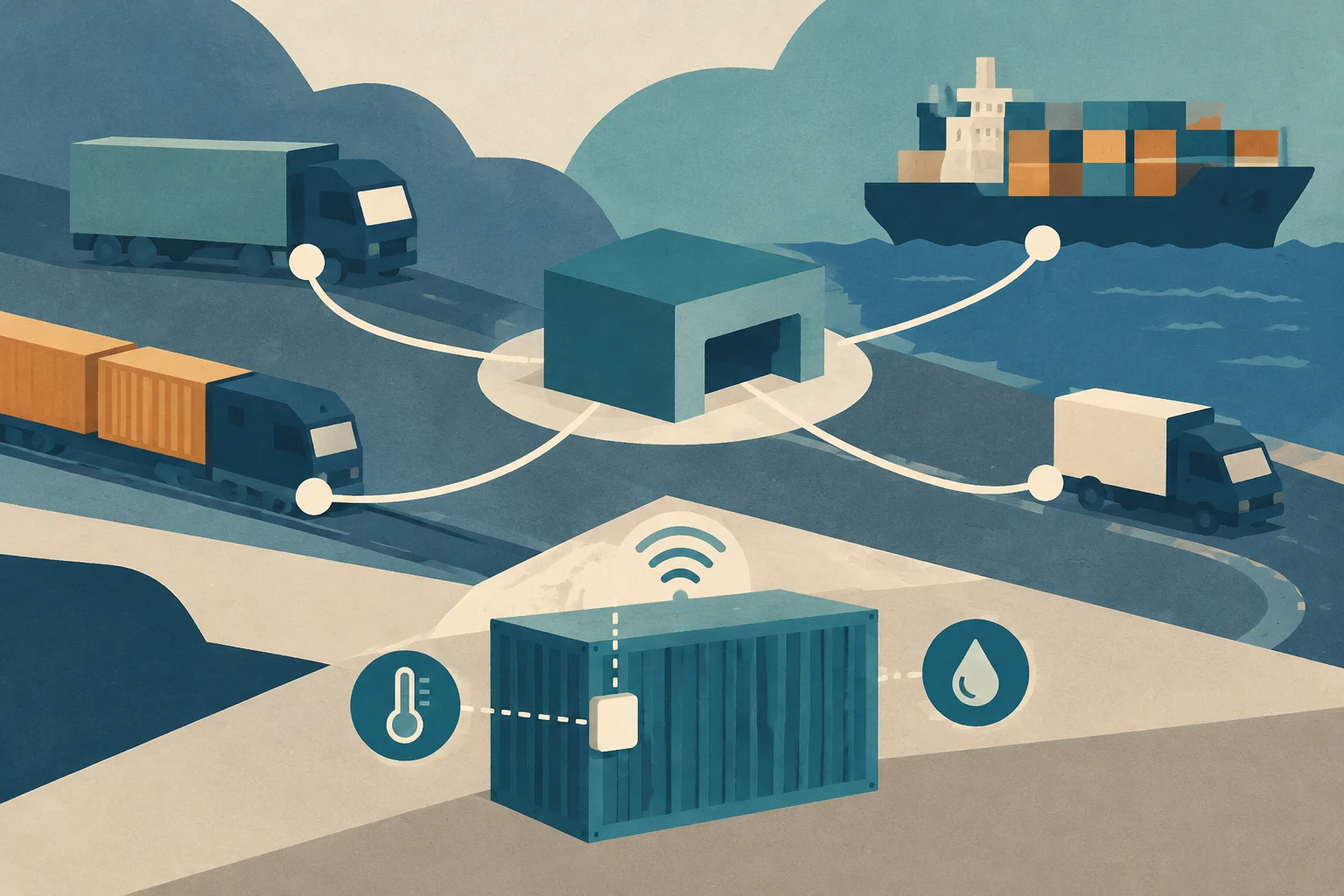
In the transport of containers and sensitive loads, IoT (Internet of Things) technology plays a central role. Sensors allow monitoring not only location but also variables such as temperature and humidity. According to industry data, in early 2024, more than 50% of the global dry container fleet already included tracking capabilities compatible with the standards of the Digital Container Shipping Association (DCSA). These standards facilitate interoperability between carriers, allowing unified visibility even if the shipment changes route, ship, or provider.
Incident management and proactive communication
The value of traceability does not lie only in knowing where the package is, but in how one reacts to problems. Real-time traceability allows anticipating delays and managing incidents proactively.
Operational benefits of real-time visibility
Reduction of calls to the support center: With consolidated information, the support team can offer precise answers instead of generic ones.
Improvement of first-attempt delivery rate: Detecting problems before they occur allows adjusting delivery schedules or addresses on the fly.
Resource optimization: Better visibility allows adjusting routes and reducing idle times, which translates into a direct reduction in operational costs.
Compliance and data security
The exchange of information between carriers must be protected through encryption and strong authentication. Furthermore, the implementation must comply with data protection regulations, establishing retention policies, anonymization where appropriate, and ensuring secure international transfers. Providers must be prepared for technical audits that verify the integrity of the data flow and the traceability of events supporting user claims.
How to apply traceability in an SME
Implementing a traceability system does not require a huge initial investment, but it does require strategic planning. Below are the key steps for an effective implementation:
Audit of current processes: Identify what data is captured today and where it is lost. Clearly distinguish between internal data (warehouse) and external data (transport).
Selection of data standards: Define the exchange format (JSON/XML) and the minimum events to be shared with customers and carriers.
Technological integration: Connect the ERP or WMS with the APIs of the main carriers. For SMEs, multicarrier platforms are usually the most efficient option to avoid costly custom developments.
Definition of exception protocols: Establish business rules for when an automatic alert is sent to the customer and when an internal resolution protocol is activated.
Team training: Ensure that logistics and customer service staff understand how to interpret real-time data and how to act on alerts.
Frequently asked questions
Is it mandatory to use IoT to have traceability?
No. Basic traceability is achieved through the capture of tracking events (pickup, delivery) via APIs. IoT adds value by monitoring environmental conditions (temperature, humidity), which is critical for sectors such as pharmaceuticals or food, but it is not a requirement for general logistics traceability.
What is the difference between tracking and traceability?
Tracking is the ability to locate a shipment at a given moment. Traceability is broader: it implies the ability to reconstruct the complete history of the product, including its origin, the processes it has undergone, and the conditions in which it has been maintained, both inside and outside the organization.
How does interoperability affect costs?
Interoperability reduces costs by minimizing manual errors, redeliveries, and customer service time. By automating the data flow between platforms, it eliminates information silos that require human intervention for reconciliation, improving overall operational efficiency.
The choice between local infrastructure, public cloud, or a hybrid model should not be based on technology trends, but on the nature of the workload, compliance requirements, and internal management capacity. This guide analyzes the advantages and limitations of each model to help SMEs optimize costs, security, and scalability.
A shared technical and business vocabulary is essential for SMEs managing their infrastructure with service providers. This glossary explains concepts such as SLAs, RPO/RTO, backups, cloud, and security, distinguishing technical capabilities, contractual commitments, and data protection requirements.
Assess bandwidth, latency, jitter, and actual throughput; compare residential and business connections, and plan for symmetry and redundancy based on your company’s critical operations.