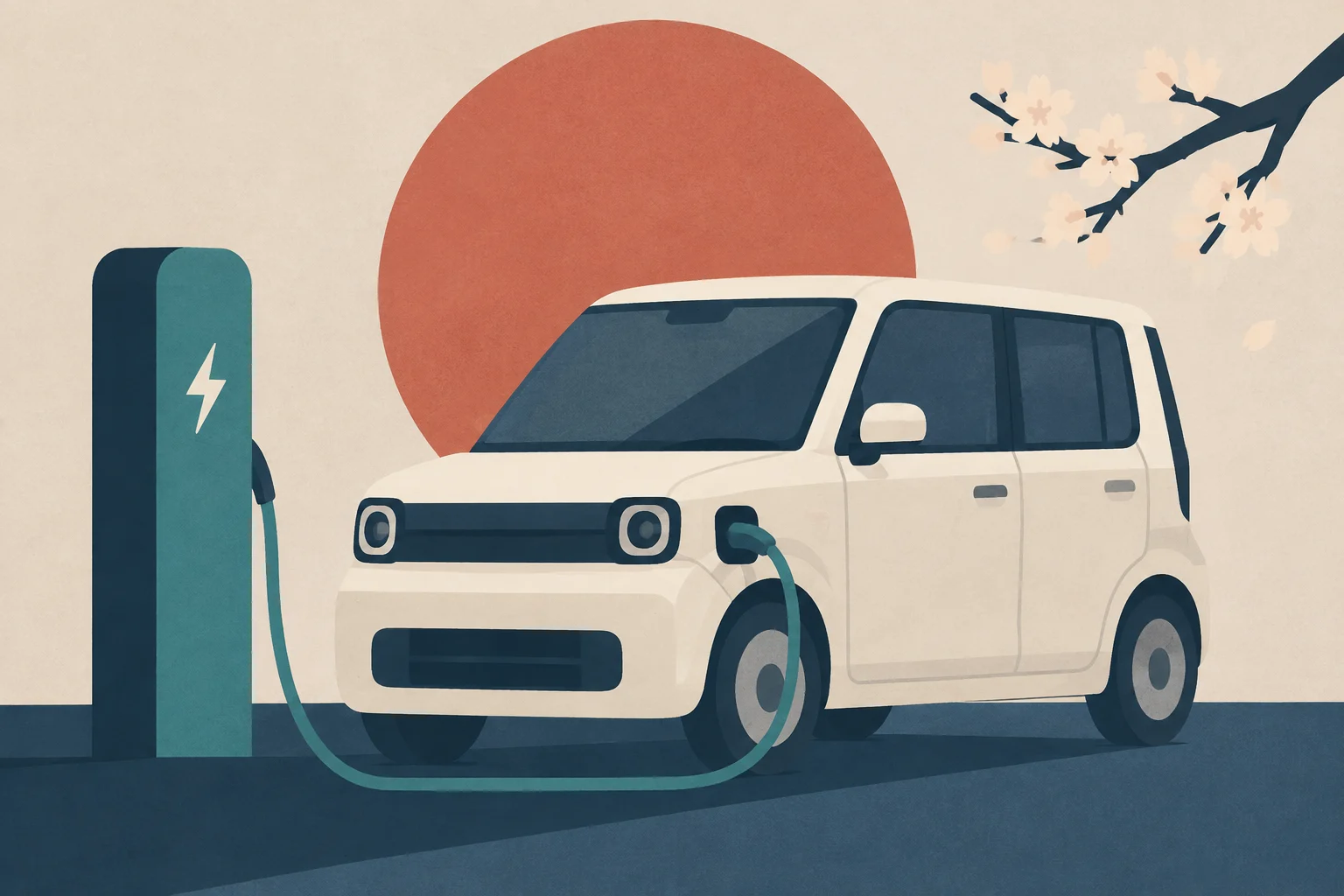
Suzuki's first electric kei car arrives in November
Suzuki will begin commercial sales of the e-Sky in Japan on November 16, 2026, marking its first entry into the local segment of electric passenger microcars. The brand targets 1,000 units per month and presents the model as an option for those considering switching from a gasoline kei car to an electric one.
Kei cars are compact vehicles subject to a specific category in Japan and hold a prominent place in the market: they represent more than a third of the country's car sales. For Suzuki, a manufacturer with a long history in this type of car, the launch means bringing its experience in small vehicles to electric propulsion.
Range, battery, and efficiency
The e-Sky is built on the Heartect-e architecture and incorporates an eAxle and regenerative braking. Suzuki declares a range of 310 kilometers per charge. The battery is 26 kWh and uses LFP chemistry, according to available information on the model.
Japan's Ministry of Land, Infrastructure, Transport and Tourism certified an AC electric consumption of 97 Wh/km under the WLTC homologation cycle. Suzuki claims that this efficiency is the best in its class, a comparison based on an internal review conducted in October 2026. Homologated range and consumption do not guarantee the same result in all real-world uses.
Price and public subsidies
The announced base price is 2.1 million yen. Federal subsidies can reduce this by around 500,000 yen, bringing the approximate amount to 1.6 million yen. The effective amount depends on the applicable subsidies; the figures in yen are references for the Japanese market and do not necessarily equate to the final cost for each buyer.
The difference between the base price and the subsidized price is important for comparing offers: the latter incorporates public support and does not represent the vehicle's list price. Available sources do not detail the individual requirements for obtaining the aid here.
Competition in the Japanese market
The most direct rival cited is the BYD Racco, the electric kei car presented by the Chinese firm. Bloomberg Línea reports an announced minimum range of 210 kilometers and a price below 2 million yen, including subsidies. Based on those figures, the e-Sky declares more range and starts from a base price of 2.1 million yen; comparisons should consider that the same type of price is not being contrasted.
The launch takes place in a market where electric kei models from Japanese manufacturers, such as Nissan, Honda, and Daihatsu, also compete. National brands control, in total, around 80% of the market, according to Bloomberg Línea. Suzuki's entry expands the alternatives in a category relevant to the local industry, although its projected sales are still a company target, not a confirmed result.
Tomoyuki Tsubata, chief engineer of the e-Sky, explained to journalists in Tokyo that Suzuki sought to create a product capable of convincing kei drivers to switch to an electric vehicle. The market response from November onwards will allow verifying whether the combination of range, price, and subsidies is attractive to that audience.