Samsung Electronics expects operating profit of 107.4 trillion won—about $80.17 billion—in the third quarter of 2026. The estimate, for the July-to-September period, is nearly nine times the result for the same quarter a year earlier and would surpass the company’s previous record. If confirmed, it would be the first time a technology company has exceeded 100 trillion won in quarterly operating profit.
The figure also exceeds the analyst consensus of 106.1 trillion won compiled by LSEG. Samsung estimates revenue of 195 trillion won, up 127% year over year. These are preliminary estimates: the company will publish a full breakdown of its results on October 29.
Memory is driving the artificial intelligence boom
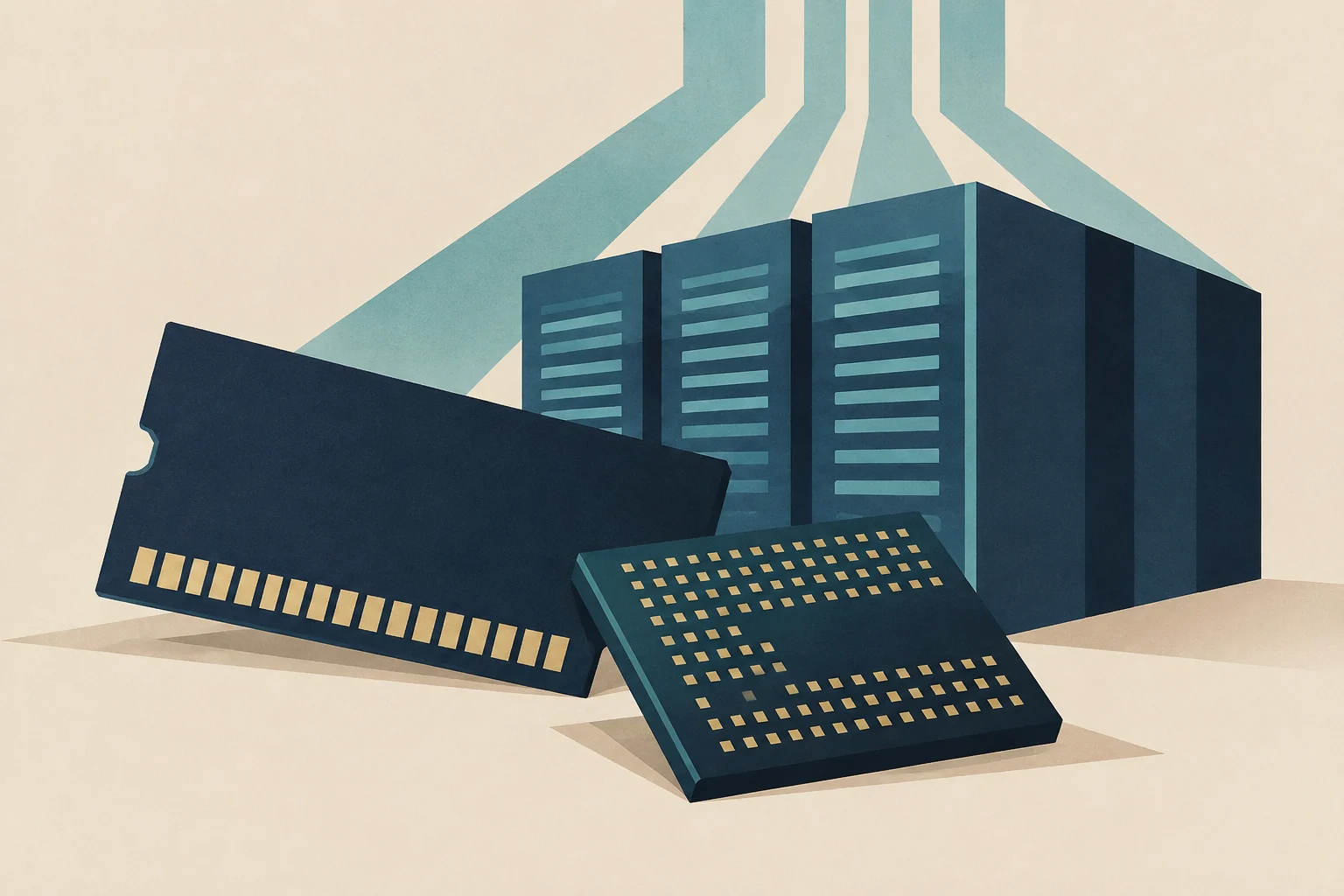
The main engine of the increase is expected to be the semiconductor business. The expansion of artificial intelligence data centers is driving orders for high-bandwidth memory (HBM), which supplies data to AI processors. At the same time, limited supplies of DRAM and NAND memory have helped push prices higher.
The boom is not benefiting all of Samsung’s businesses equally. According to estimates cited in news coverage, the mobile division could report operating losses, while the foundry division would remain in the red. The projected record therefore reflects the strength of memory in particular, not necessarily uniform improvement across the group.
A market with strong demand and restricted supply
Samsung and Micron have said they expect the gap between memory supply and demand to continue through 2028. This outlook suggests that market tightness could persist, though it does not guarantee that prices or profits will maintain their trajectory: they will depend on how demand for AI infrastructure, production capacity, and costs evolve.
The initial stock-market reaction was moderately negative. Samsung shares fell at the open despite the record forecast. That move shows that a high estimate does not, by itself, determine share-price performance: expectations already reflected in the price and questions about how long the AI investment cycle will last also play a role.
For companies that buy components, the key information will be the breakdown by division and the supply outlook Samsung presents alongside its full results. Until then, the profit and revenue figures should be understood as preliminary estimates, not definitive results or a forecast applicable to all semiconductor manufacturers.