ECB raises rates to 2.50% amid energy inflation and revises growth upward
The European Central Bank decided on 10 September 2026 to raise interest rates by 25 basis points, setting the deposit facility at 2.50%. The measure, adopted unanimously, responds to the inflation rebound to 3.3% driven by energy, while GDP growth forecasts are raised to 0.9% for 2026.
Unanimous decision amid the persistence of the energy shock
The European Central Bank (ECB) decided to raise its official interest rates by 25 basis points at its meeting on 10 September 2026. With this measure, the deposit facility was set at 2.50%, the main refinancing operations rate (MRO) at 2.65%, and the marginal lending facility at 2.90%, with effect from 16 September. The decision was adopted by unanimity by the Governing Council, breaking the July pause and confirming the second hike of the year after the June increase.
The main driver of this monetary tightening was year-over-year inflation, which reached 3.3% in August, its highest level in three years. This rebound was due almost exclusively to the rise in energy prices, whose component contributed 1.3 percentage points to overall inflation, driven by the conflict in the Middle East. In contrast, underlying inflation (excluding energy and food) remained at 2.4%, a level similar to that recorded before the outbreak of the conflict, suggesting that second-round effects on wages and price expectations remained limited.
Upward revision of growth and asymmetric risks
Despite inflationary pressure, the ECB revised upward its gross domestic product (GDP) growth forecasts for the euro area. The institution estimated growth of 0.9% in 2026, 1.4% in 2027, and 1.5% in 2028. This improvement was due to a more resilient-than-expected economy, driven by private consumption and public spending, which maintained positive momentum during the second and third quarters.
Macroeconomic data supported this resilience: GDP advanced 0.4% quarter-over-quarter in the second quarter, exceeding expectations, with positive contributions from Germany, Italy, and Spain. The labor market also showed strength, with a historically low unemployment rate of 6.4% in July and an improvement in business sentiment indicators, such as the composite PMI, which rose to 52.0 points in August.
However, the Governing Council identified asymmetric risks: upside for inflation and downside for growth. The uncertainty lay in the duration and intensity of the energy stress. If the conflict in the Middle East prolonged, there was a risk that high energy inflation would spill over to other goods and services, anchoring price expectations above the 2% target for a prolonged period.
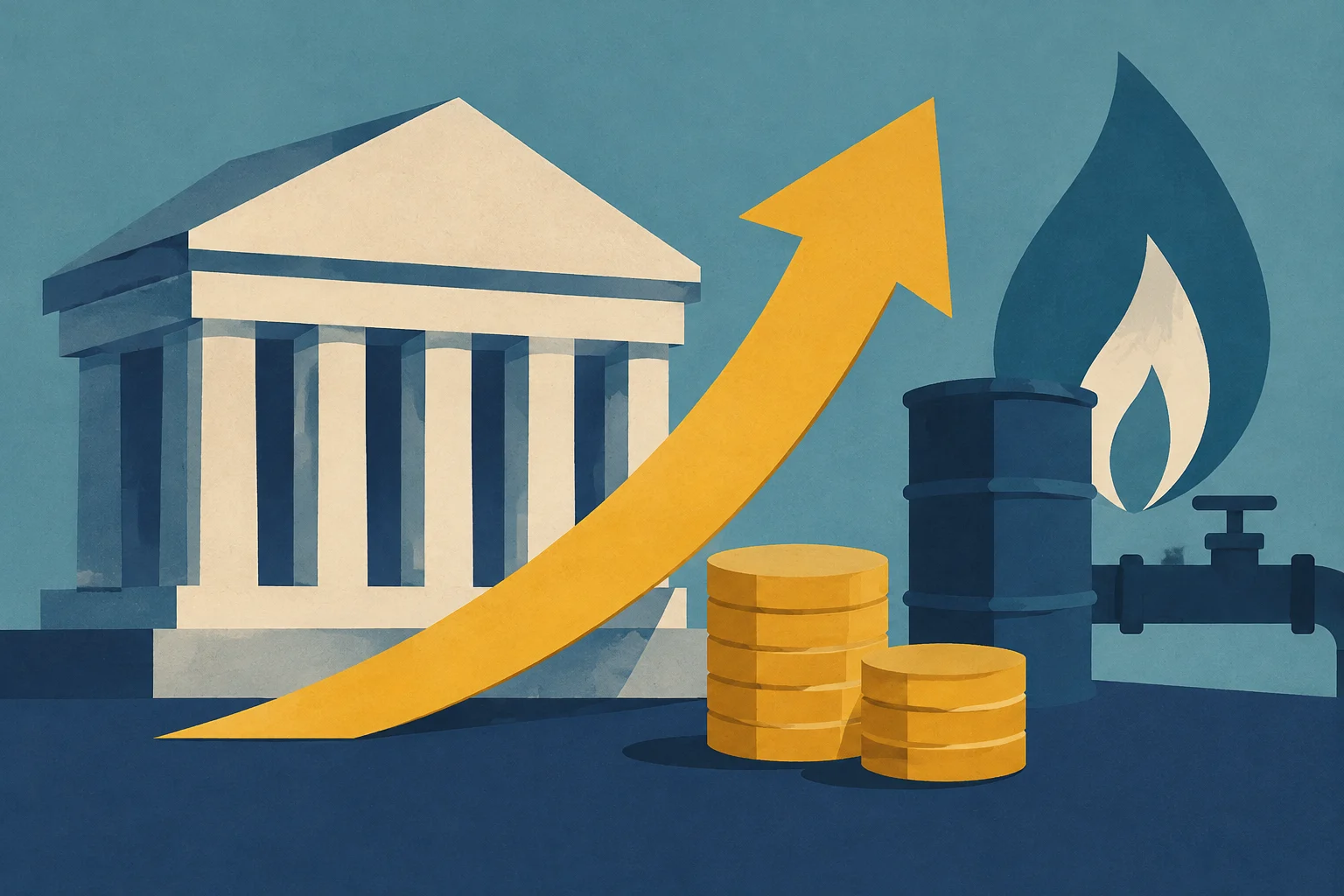
Editorial illustration · Edition Business
Christine Lagarde's stance: "meeting by meeting"
In the press conference following the decision, ECB President Christine Lagarde avoided committing to a future path for interest rates. She reiterated that decisions would be taken in a "data-dependent and meeting by meeting" manner, a line set at the Sintra Symposium in June, where the ECB definitively abandoned traditional forward guidance (forward guidance).
Lagarde downplayed the fact that the 2.50% deposit rate coincided with the upper limit of the range that the ECB estimated as the neutral interest rate (2.00%-2.50%). She stated that "in the current circumstances, we do not attach great importance to the neutral rate" and did not rule out the possibility of further hikes above that level if economic activity slowed, prioritizing price stability over short-term growth.
Market expectations and divergences among asset managers
The September hike was fully priced in by markets, which anticipated it with a probability close to 100%. Attention then shifted to the possibility of a third hike before the end of the year, which would set the deposit facility at 2.75%.
Asset managers showed divided opinions on the next step:
Manager / Entity
Position on the third hike (December 2026)
Main argument
Cristina Gavín (Ibercaja Gestión)
Possible
Unless prices improve substantially, it is not ruled out.
Germán García Mellado (A&G Global Investors)
Possible but debated
Restrictive members defend it; moderates resist.
Roger Rüegg (Zürcher Kantonalbank)
Prolonged pause
Two additional hikes are "too ambitious".
Konstantin Veit (PIMCO)
Cautious pause
Expects a pause, but does not rule out reactivation if there are risks to expectations.
The bond market priced in tightening that could take the deposit rate to 3.00% in 2027, although this scenario was highly sensitive to geopolitical developments. The 12-month Euribor stood slightly above 3.0% at the end of August, reflecting these expectations of higher rates for longer.
Impact on financial conditions and credit
Monetary tightening and the rise in energy prices had a direct impact on financial conditions in the euro area:
Sovereign yields: They rebounded sharply, with increases close to 50 basis points in the short and long segments of Germany and other major economies.
Risk premiums: They remained contained, with Spain and Portugal below 50 and 40 basis points, respectively.
Credit to businesses and households: Interest rates on loans increased moderately (around 20 basis points year-over-year), standing at 3.8% for businesses and 3.5% for households in July. Nevertheless, private sector credit volume accelerated to 4.1% year-over-year, indicating that access to credit remained fluid.
For businesses, this implied a higher cost of financing variable-rate debt and greater pressure on margins if they could not pass energy costs through to final prices. The resilience of private consumption had mitigated the impact so far, but a prolongation of the hiking cycle could erode demand in 2027.
Frequently asked questions
Why does the ECB raise rates if underlying inflation is near the target?
The ECB prioritizes overall price stability. Although underlying inflation is at 2.4%, overall inflation is at 3.3% due to energy. The risk is that high energy inflation anchors price expectations and spills over to wages and other prices, making it harder to return to the 2% target within the monetary policy horizon.
What is the neutral interest rate and why does it matter?
It is the level of rates that neither slows nor stimulates the economy. The ECB estimates it to be between 2.00% and 2.50%. By setting the deposit facility at 2.50%, the ECB is at the upper limit of its own neutrality estimate, implying that monetary policy begins to have a restrictive effect on economic activity.
Does this decision affect mortgages in Spain?
Yes, indirectly. Variable-rate mortgages in Spain are indexed to Euribor. As the ECB raised rates, the 12-month Euribor rose above 3.0% at the end of August. This means that variable-rate mortgage payments increased in the September annual reviews, increasing the debt burden of households.
In Burgos, the secretary-general of the PSOE in Castile and León attributed economic growth to the Government’s scope to raise the minimum wage and pensions. He also called for measures on housing and higher wages.
The HKMA spoke with HSBC after the bank announced a Singapore hub expected to hire more than 100 specialists. The discussion reflects competition to attract investment and technology talent, while the bank maintains AI teams and initiatives in Hong Kong.
The defense has appealed to the High Court of Justice of Extremadura against the nine-year disqualification from public employment or office imposed for administrative prevarication. It argues that fundamental rights were violated and that the judgment does not establish Sánchez’s specific involvement.