
Guide · 18.11.2026
How to submit and track a business registration in France
Prepare documents for France’s Guichet unique, check the signature and fees, and respond if the reviewing authority asks for a correction.
Read storyUseful journalism to understand, manage and grow a business.
SearchSupply chain planning in construction is essential to prevent work stoppages and protect margins. This guide explains how to align demand forecasting with procurement capacity, manage suppliers, and mitigate risks through diversification and real-time data.

In the construction sector, the supply chain is not just a logistics process but a direct determinant of project profitability. A disruption in the delivery of critical materials can bring work to a halt, generate labor downtime costs, and jeopardize delivery deadlines. Supply chain planning involves anticipating demand, coordinating resources, and ensuring that materials arrive at the right place and time, proactively balancing supply and demand.
Unlike other sectors, construction faces specific challenges: strict quality regulations, reliance on global suppliers, and the need for real-time visibility. Effective planning allows construction companies to reduce excess inventory, avoid costly stockouts, and maintain the flexibility needed to respond to changing market conditions.
To manage procurement effectively, it is essential to distinguish between the different time horizons of planning. This hierarchy helps align strategic decisions with day-to-day operations:
This distinction is crucial because it allows companies not only to react to unexpected events, but also to anticipate them. As the American Productivity & Quality Center (APQC) notes, organizations that fail to modernize their planning functions risk losing market share and jeopardizing their future sustainability.
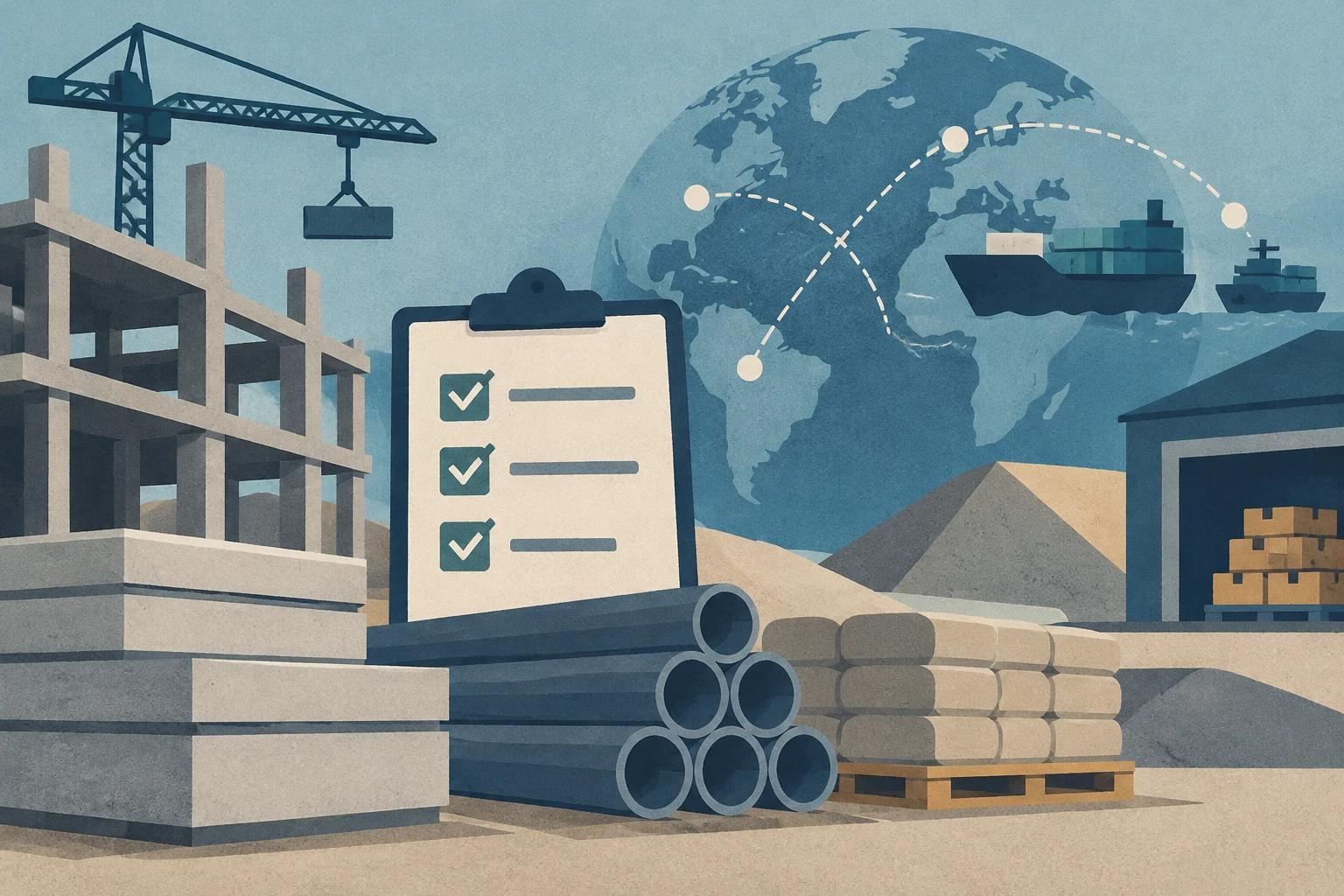
The construction environment presents challenges that require special attention in supply chain planning:
The sector is subject to strict regulations on safety, sustainability, and quality. To meet these standards, visibility and clear planning are essential. Planning tools make it possible to assess each decision in advance, ensuring that all regulatory requirements are met without compromising operational efficiency.
Supply disruptions can occur anywhere in the global network, and their effects can escalate quickly. Volatile raw material prices and geopolitical tensions complicate financial planning. Excessive reliance on particular suppliers can become a critical vulnerability when problems or restrictions arise.
Sound decision-making depends on knowing what is needed, where, and when. Without full real-time visibility, it is difficult to manage inventory efficiently. The fear of running out of stock can lead to unnecessary inventory accumulation, affecting margins and operational efficiency.
To protect profit margins and ensure work can continue, construction companies should implement specific strategies:
Managing a broad and diverse supplier portfolio makes it possible to remain flexible without losing control. This reduces the risk associated with dependence on a single supplier and enables a timely response to potential supply disruptions.
Forecasts based on Artificial Intelligence and real-time data help adjust stock levels to actual demand. This makes it possible to optimize the use of resources and capacity, reduce excess stock, and improve alignment between forecasts and inventory. The ability to adapt lead times and improve fulfillment is strengthened by more up-to-date supply information.
End-to-end visibility provides control over raw materials, components, work in progress, inventory, and transportation. Integrated, cloud-based solutions provide a single, unified view of inventory, using advanced analytics to deliver more accurate predictive recommendations. This encourages coordination among sales, production, procurement, logistics, and finance, strengthening internal collaboration.
Good supply chain planning in construction delivers tangible benefits:
Supply chain planning in construction is a strategic discipline that goes beyond logistics. It requires alignment between demand forecasting and procurement capacity, rigorous supplier management, and the use of technology tools to monitor inventory and anticipate disruptions. By balancing costs and availability, construction companies can protect their profit margins and ensure their projects are profitable.
Prepare documents for France’s Guichet unique, check the signature and fees, and respond if the reviewing authority asks for a correction.
Read story
A first guide to starting a business in Germany. Check which steps may apply, make a cash forecast and find advice in Mössingen and Unterallgäu.
Read story
A practical guide for site directors and prevention technicians on the drafting, approval, and updating of the Health and Safety Plan (HSP) in Spain. It analyzes the difference from the Safety Study, the legal requirements of Royal Decree 1627/1997, and protocols for serious risks.
Read story