Guide to Exporting Outside the EU: How to Use Access2Markets to Check Tariffs and Rules of Origin
Access2Markets centralizes the European Commission’s customs information to facilitate exports to more than 120 markets. This guide explains the workflow for identifying tariff codes, comparing preferential tariffs, and using the ROSA tool to validate the origin of goods.
Exporting goods outside the European Union involves navigating a complex web of customs regulations, tariffs, and technical requirements that vary by destination country. For small and medium-sized enterprises (SMEs), a lack of reliable information can be a significant obstacle. Access2Markets is the European Commission’s response to this challenge: a free, centralized portal that replaces the former Market Access Database and Trade Helpdesk, bringing together information for more than 120 export markets.
What Access2Markets is and why it is essential
The portal is designed to simplify access to international markets, especially smaller countries where information is often difficult to find. It covers more than 90% of the total value of EU exports to countries outside the bloc. The tool does not require registration and provides immediate access to critical data for business planning:
Tariffs and duties: Applied and preferential rates, and tariff quotas.
Rules of origin: Requirements for qualifying for tariff reductions.
Product requirements: Technical, sanitary, and labeling standards.
Customs formalities: Procedures and required documentation.
Trade barriers: Potential obstacles in the destination market.
Workflow: from identifying the product to choosing the destination market
To obtain accurate information, users should follow a structured process. The key is to correctly identify the goods using their tariff code.
1. Identify the tariff code (HS Code)
The first step is to determine the goods’ tariff code (also known as the HS Code or tariff number). It is essential to classify the goods down to the specific tariff line, which may require up to 10 digits, depending on the destination country. Using only the first four digits (the heading) is not enough to obtain accurate information about tariffs and rules of origin.
2. Select the destination market and country of origin
In the portal, users must specify:
Country of origin: This must be an EU member state, including for transit operations.
Destination country: The market to which the goods will be exported.
Once these parameters have been selected, the system displays third-country tariffs (standard rates) and preferential tariffs (reduced or zero rates that apply if the rules of origin under a trade agreement are met).
3. Check tariffs and quotas
The portal details not only percentage rates but also tariff quotas. These allow specific quantities of goods to be imported at a reduced or zero rate during a set period. It also shows whether trade defense measures, such as anti-dumping or countervailing duties, are in place and could affect the final cost of the goods.
Editorial illustration · Edition Business
Validate eligibility with ROSA
Knowing the preferential tariff does not guarantee that it will apply; it is necessary to prove that the goods meet the rules of origin under the applicable trade agreement. To help with this, Access2Markets incorporates ROSA (Rules of Origin Self-Assessment), an interactive self-assessment tool.
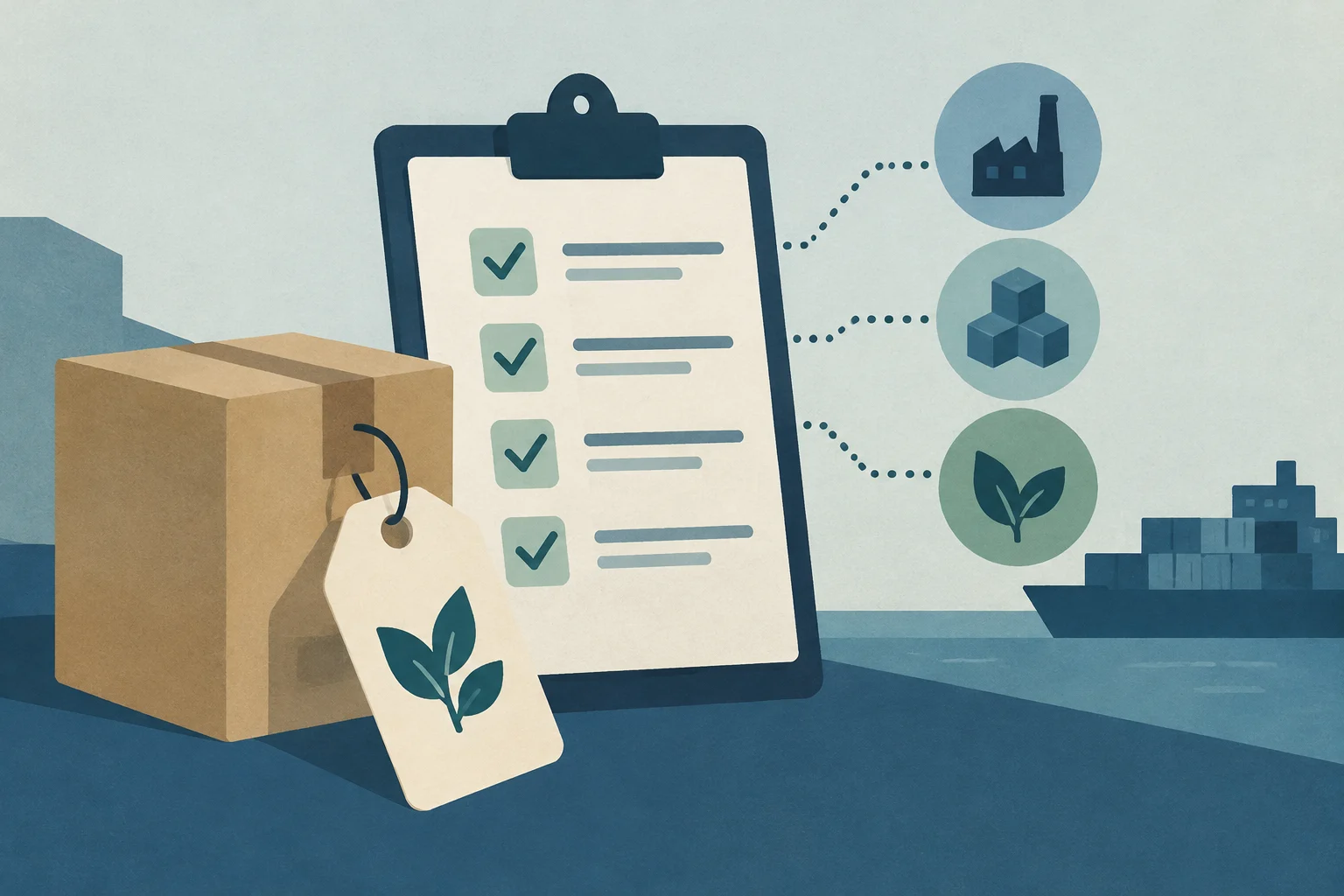
ROSA works as a guided checklist that helps a company determine whether its products meet the requirements for preferential origin. The tool helps users to:
Identify which rules of origin apply to a specific product.
Compare the rules of different trade agreements.
Document and export the assessment result, which is useful when preparing statements of origin.
Product requirements and formalities
Beyond tariffs, access to a foreign market depends on compliance with technical and sanitary standards. Access2Markets provides information about:
Product requirements: Safety, labeling, and composition standards, as well as mandatory certifications.
Import formalities: Required documents, inspection procedures, and the competent authorities in the destination country.
Domestic taxes: Information about consumption or sales taxes that may apply in the destination market.
This information is crucial for avoiding border rejections or being unable to market a product because it does not comply with local regulations.
Limitations and practical considerations
Although Access2Markets is a powerful tool, businesses should be aware of its limitations:
It does not replace official verification: The information provided is a guide for planning. In the event of customs disputes or inspections, the competent authority in the destination country has the final say. For critical operations, it is advisable to verify the information with a customs broker or specialist consultant.
Continuous updates: Information is updated periodically, but trade agreements and regulations may change. It is important to check the data before each transaction.
Geographic coverage: Although it covers more than 120 markets, it does not include every country in the world. For markets not covered, alternative sources should be consulted.
Frequently asked questions
Is Access2Markets free?
Yes, the portal is completely free, and registration is not required to access the information.
Can I use Access2Markets to import into the EU?
Yes, the portal also provides information about the rules and tariffs that apply to imports of goods from non-EU countries into the EU.
What should I do if my product does not have a clear tariff code?
If you have difficulty classifying your product, you can use the search function by description or consult a customs classification expert. Correct classification is essential to obtain accurate information.
Anticipate increases in construction activity with a practical checklist for reviewing forecasts, bottlenecks, materials, personnel, equipment, suppliers, quality, and safety before expanding capacity.
Learn how to verify a VAT identification number in the European Commission’s VIES system to correctly apply the VAT exemption to intra-Community transactions and avoid tax risks.
Learn to use free official tools to investigate prior art, verify inventions and analyze patent documents. This guide explains how to formulate effective searches in Espacenet, PATENTSCOPE and national registers such as INVENES and DEPATISnet.