Before the conversation: check what was expected
A conversation about underperformance should not begin with a label, but with clear facts and expectations. Review the agreed goal, the timeframe, the observed results, and the evidence that allows you to compare them. If the goals have changed or are no longer realistic, update them before evaluating the person: measuring against outdated objectives can lead to unfair and unhelpful conclusions.
It is useful to distinguish between results, behaviors, and context. An indicator can point to a discrepancy, but on its own it does not explain why it occurred. Nor does every measurable activity represent a valuable contribution: metrics should reflect relevant aspects of the work, such as quality, impact, and working conditions, not just volume.
Diagnose the cause before proposing solutions
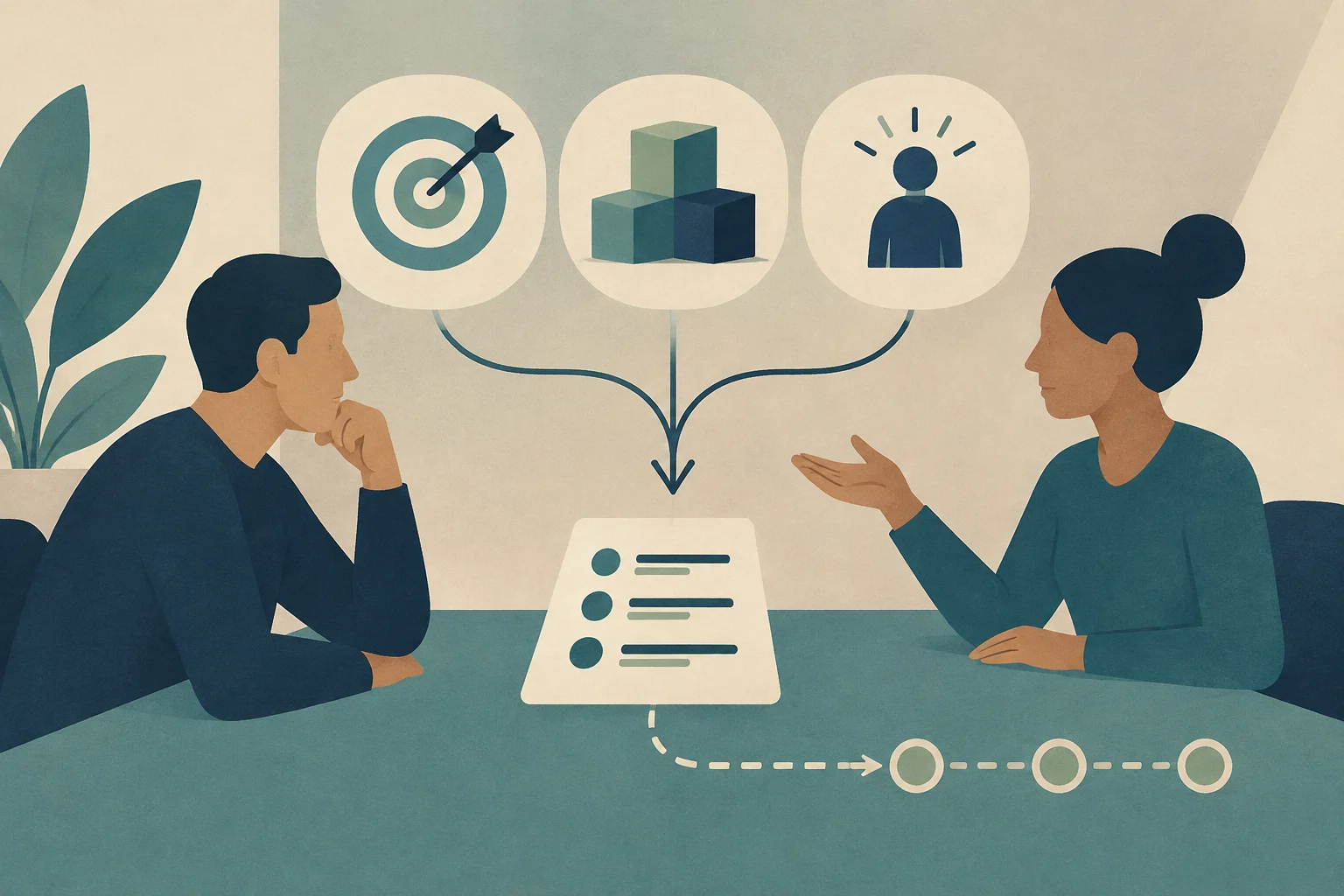
The initial purpose is to understand what is interfering with the result. Listen to the person’s perspective and explore three related areas:
- Objectives and priorities: Are they clearly defined, still relevant, and compatible with one another? Where appropriate, make goals specific, measurable, achievable, relevant, and time-bound—the SMART approach—and review them when priorities or circumstances change.
- Resources and conditions: Are enough time, tools, information, coordination, and support available to do the work? Ask about specific obstacles and distinguish those the person can resolve from those that require a response from the team or organization.
- Knowledge and capability: Does the task require skills that need development, guidance, or practice? Identify what support would make sense instead of assuming that every shortfall is due to a lack of effort.
These possibilities can overlap. The conversation does not have to reach a definitive diagnosis in a single meeting; it should make clear what is known, what still needs to be investigated, and who will take care of it.
Lead the conversation with clarity and attentive listening
Choose a private setting and allow enough time. Explain the difference between the expected and observed result using specific examples, without attributing intentions or turning one incident into a general judgment about the person. Then invite them to respond with open-ended questions: What difficulties did they encounter? What would they change? What support do they need?
Listening does not remove responsibility for the agreed commitments. It helps ensure that responsibility is based on understood circumstances and shared expectations. Avoid mixing this development conversation with other matters that could distract from it; if compensation decisions or other formal processes are involved, clarify how they relate to the conversation and which procedures apply within the organization.
Where appropriate, feedback from other people—for example, colleagues, collaborators, or internal clients—can complement the manager’s observations. 360-degree feedback is more useful for identifying patterns and development opportunities than as a means of punishment. It should be handled judiciously and confidentially, and it does not replace direct conversation or evidence about results.
Turn the diagnosis into observable agreements
Close with a straightforward, shared plan. Record what needs to change, how progress will be recognized, when it will be reviewed, and what support each party will provide. Objectives should be concrete enough to guide the work, but adjustable if priorities or conditions change.
| Agreement |
What to specify |
| Expected result |
Goal or standard, relevant indicator, and timeframe |
| Actions |
Work changes or practices to be tested |
| Support |
Resources, training, guidance, or decisions the organization should provide |
| Responsibility |
What is the person’s responsibility and what falls to the manager or other teams |
| Review |
Date to assess progress, obstacles, and adjustments |
There is no need to accumulate indicators. Choose those that help explain the result and avoid measures that reward quantity at the expense of quality or ignore relevant differences in context. Recording objectives, evidence, and agreements helps maintain continuity and reduces reliance on memory or recent impressions.
Follow up and adjust the plan
Follow-up should be as frequent as the work and agreed timeframe require, not a series of meetings to score the person. At each review, compare the evidence with the goal, recognize progress, ask which obstacles remain, and agree on next steps. If priorities, workload, or resources have changed, review the plan before interpreting the discrepancy as a lack of commitment or capability.
Ongoing conversations make it possible to correct course while there is still room to act, instead of postponing all feedback until an annual review. They also help identify whether support measures are working. If there is no progress, revisit the diagnosis and agreements; do not automatically repeat the same intervention.
What should be clear at the end
The person and their manager should be able to explain, in concrete terms, what result is expected, which factors have an impact, what actions have been agreed, and when they will be reviewed. The aim is to combine clear expectations, relevant data, and regular dialogue, without confusing a metric with an explanation or an improvement plan with a definitive judgment.