Checklist for Auditing Energy Efficiency and Reducing Costs in an Industrial Plant
Prepare documentation, review equipment and processes, and turn consumption data into improvement priorities. This checklist helps organize an energy audit without confusing the diagnosis with subsequent actions.
A useful energy audit does more than review bills: it combines consumption data with inspections of equipment, facilities, and processes. Careful preparation makes the diagnosis more complete and helps prioritize improvement opportunities using verifiable information.
This checklist is intended for industrial plants. Its scope should be adapted to each facility and the type of energy being analyzed; it does not replace a technical assessment or verification of the legal obligations that apply to each company.
1. Gather information before the visit
Prepare a folder—digital or physical—with up-to-date documents organized by area. As a starting point, check that you have:
Electricity, gas, and other energy supply bills for the last 12 months.
Supply contracts, contracted capacity, and historical consumption records.
Available load curves and demand data, together with meter information.
Current electrical and thermal plans and, if available, an energy map of the plant.
An inventory of the main energy-consuming equipment, with technical specifications and operating data.
Maintenance, breakdown, and incident records, as well as reports from previous audits.
Information about control systems or energy management software, if used.
Check that the bills, contracts, and measurements correspond to the same periods and supply points. Note any documents that are missing or out of date: these limitations may reduce the level of detail in the analysis and should be communicated from the outset.
2. Clarify the scope and obligations
Before starting the work, define whether the review will focus on electricity, thermal energy, or other consumption, and which areas, processes, and equipment will be included in the analysis. Audits can vary in depth; detailed assessments usually require measurements and a broader examination of saving opportunities.
In Spain, Royal Decree 56/2016 establishes energy audit obligations for certain large companies. The frequency and specific conditions depend on the provisions of the regulations; it should not be assumed that the obligation applies in the same way to every organization. Check the company’s situation and the requirements in force before planning compliance.
ISO 50001 provides a framework for establishing and improving an energy management system. Directive 2012/27/EU forms part of the European energy efficiency framework. These are related references, but neither, by itself, is equivalent to an audit or automatically determines which measures a plant must adopt.
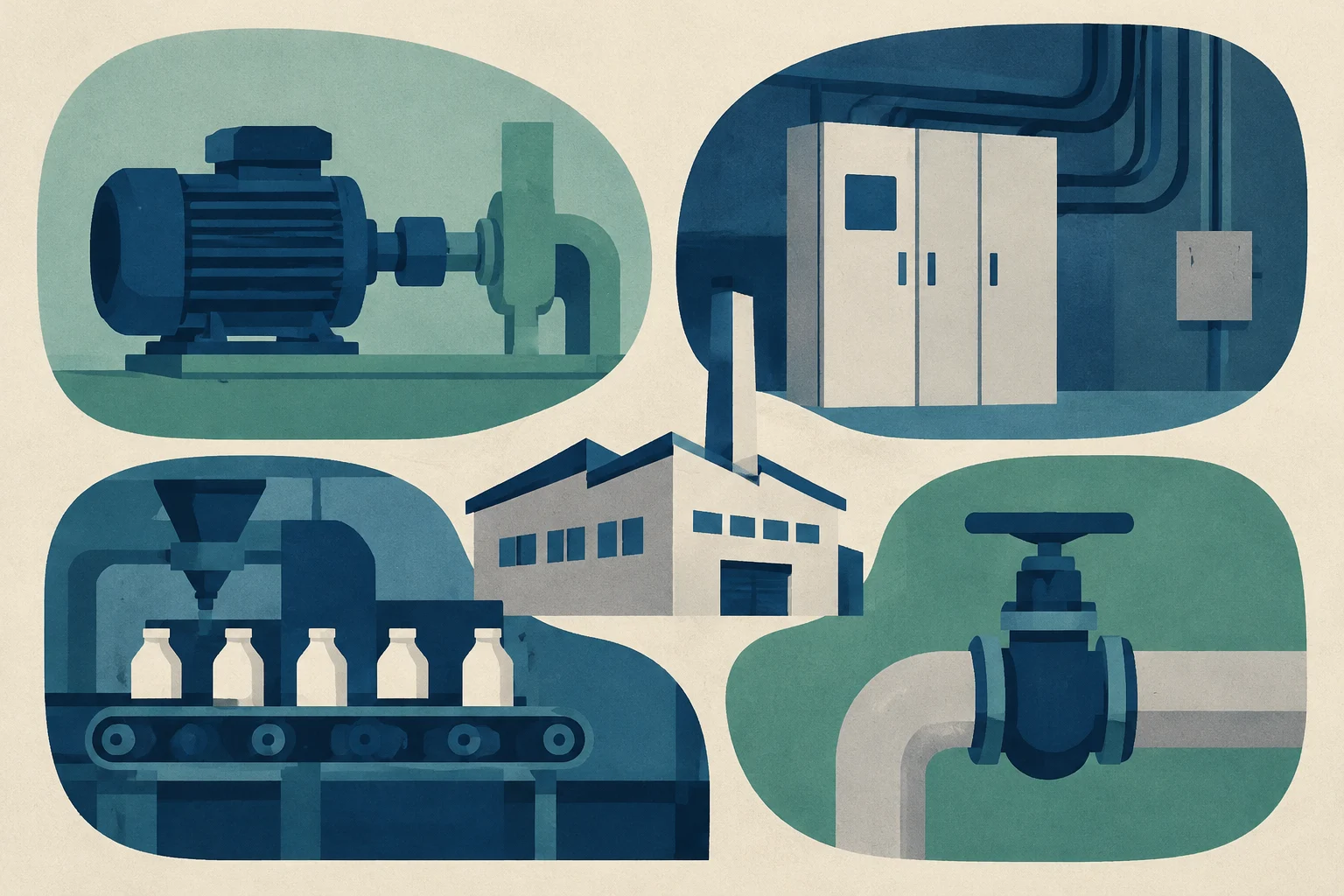
AI-generated conceptual illustration · Edition Business
3. Review four areas of the diagnosis
An industrial diagnosis should consider more than the isolated performance of machines. The methodology described in a study applied to the plastics sector organizes data collection and analysis around four areas, which can serve as a guide for structuring the inspection:
Industrial equipment
Identify the highest-consuming equipment and compare its technical characteristics with its actual operating conditions.
Look for signs of oversizing, operation outside expected parameters, or settings that should be checked.
Review maintenance status and incidents that may be related to consumption.
Electrical installations and power quality
Check that the plans, meters, and current configuration of the installation are consistent.
Review available data on demand and power quality; determine whether specific measurements are needed.
Consider reactive power and other parameters when they fall within the technical scope of the audit.
Production processes
Relate consumption to operations, shifts, and production conditions.
Identify processes with significant variations and ask which operational factors might explain them.
Avoid comparing consumption without taking differences in production or periods of activity into account.
Operating habits and practices
Compare established procedures with how the equipment is actually operated.
Review start-up, shutdown, and facility-use practices outside production periods.
Gather information from staff who know how the plant operates day to day.
An on-site inspection is essential for validating documentary data and understanding how systems work under real conditions. An inventory or a bill, on its own, does not always explain which process generates the consumption or why it varies.
4. Turn findings into an improvement plan
At the end of the diagnosis, record each opportunity along with its supporting evidence, the affected area, and any data that still needs to be verified. Group actions—for example, into operational adjustments, maintenance, control and monitoring, and potential equipment or facility changes.
When comparing proposals, consider estimated savings, the required investment, and the payback period, stating the assumptions used. Do not present estimates as guaranteed results: actual performance will depend on operating conditions and on whether the measures are implemented correctly.
Where possible, establish a baseline and define which indicators and measurements will be used to check the results. Continuous monitoring can help detect deviations and distinguish a sustained improvement from a temporary variation in consumption.
What this approach can identify
An audit helps locate losses or consumption that warrant further analysis, but it does not, by itself, guarantee a specific reduction in costs. A published case study about a Colombian plastic packaging company identified a significant concentration of consumption in three molding machines and reported improvements after measures were implemented at that facility. Those results belong to a specific case and should not be extrapolated as an expectation for other plants.
The checklist is useful because it helps ensure the work proceeds in an orderly way: first gather and cross-check data, then understand consumption in its operational context, and finally evaluate improvements using clear criteria.
A practical framework for inventorying and protecting customer data, assigning responsibilities, and coordinating privacy, security, and regulatory compliance across telecommunications operations.
Difference between contingency, continuity, and recovery plans. Step-by-step methodology to define RTO/RPO, assign roles, and test operational resilience.
Using data to anticipate demand, adjusting shifts, and coordinating purchasing help restaurants handle seasonal peaks without sacrificing service or tying up excessive resources.