Checklist for documenting the customer lifecycle, from first contact to repeat purchase
A practical guide to recording touchpoints, owners, data, and metrics at each stage, and turning that map into coordinated improvements across marketing, sales, and service.
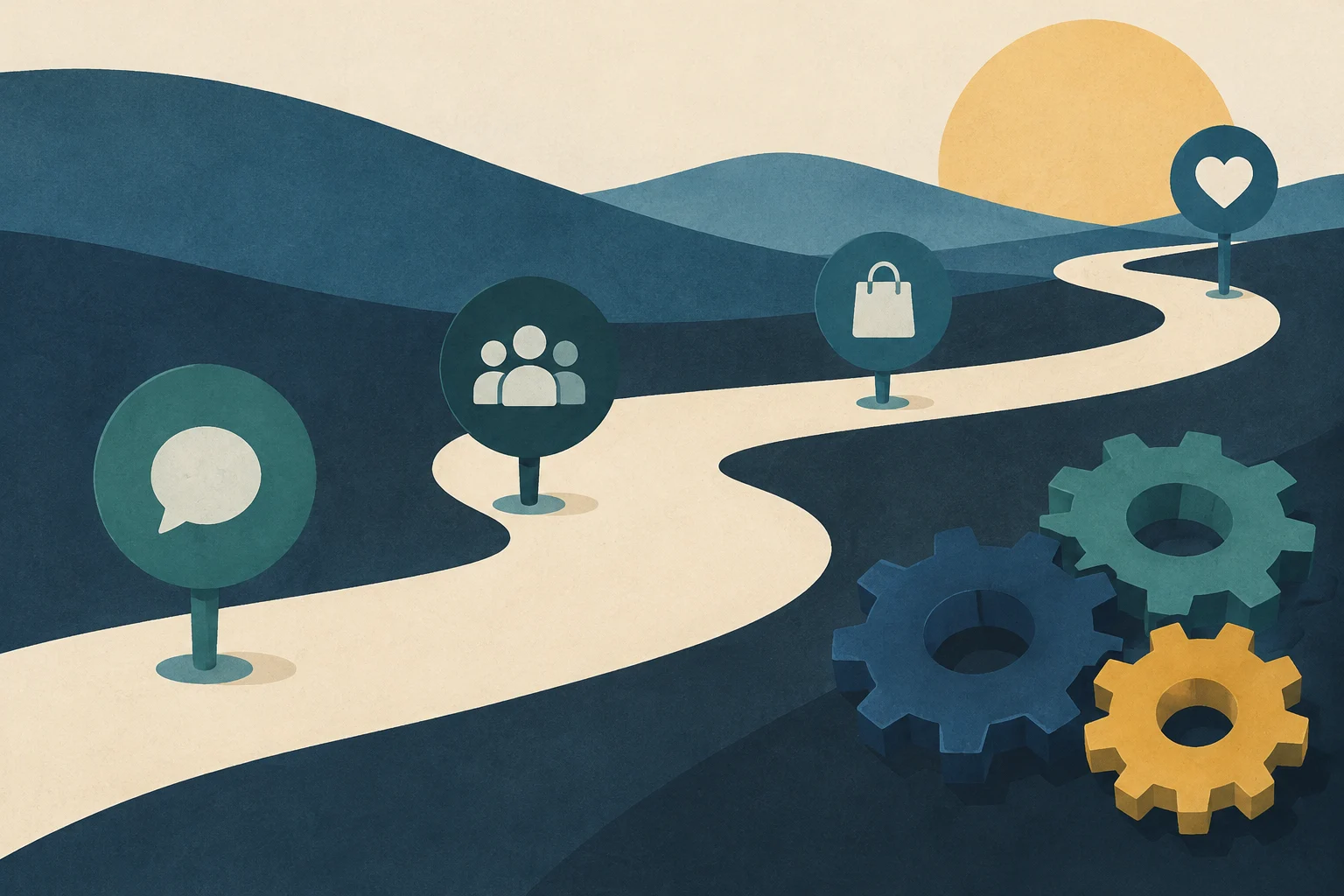
The customer lifecycle describes the relationship with a company from the moment someone discovers its offering until they buy, use the product or service, and decide whether to return or recommend it. Documenting it helps identify gaps between teams, understand what customers need at each moment, and check whether the experience remains consistent across channels.
The stages are not identical for every company: some separate acquisition and conversion, while others include growth or relationship management. What matters is defining a model that reflects how customers buy and use the offering in the business, and recording what happens before and after the first sale. This checklist provides an adaptable starting point for small and midsize businesses and marketing, sales, and customer service teams.
1. Define the scope of the map
Before collecting interactions, agree on which journey you will document. You can start with a product or service, a customer segment, or a sales channel. Avoid trying to map every case at once if the processes vary significantly: a clear, focused journey will be more useful than a broad outline that is difficult to maintain.
Define the journey’s boundaries: specify which product, customer type, and channels it covers.
Define the beginning and end: for example, from first contact through repeat purchase, recommendation, or customer loss.
Use shared stage names: such as awareness, acquisition, conversion, retention, and loyalty. Add growth or relationship management if they help describe the actual process.
Assign owners: identify who maintains each stage and who coordinates handoffs between marketing, sales, and service.
Choose where it will be documented: use a tool accessible to the teams involved and define who can update it.
Editorial illustration · Edition Business
2. Record every touchpoint
A touchpoint is an interaction between a customer and a company. It could be an ad, a web page, a sales conversation, a payment, a delivery, or a request for help. Listing touchpoints is not enough; it is useful to describe what the customer is trying to do, what response they receive, and what information is available to the next team.
For each interaction, record at least:
Stage and customer goal: what the customer needs to resolve or decide at that moment.
Channel and action: where the interaction takes place and what the customer does.
Company response: the content, process, or service they receive.
Owner and expected timeframe: who acts and when the next step should happen, if an internal timeframe has been defined.
Data collected: what information is gathered, how it is used, and where it is recorded.
Observable outcome: for example, an inquiry handled, a purchase completed, or an issue resolved.
Potential friction: frequent questions, confusing steps, delays, or requests that go unanswered.
Do not collect data out of habit: document only the information needed to serve the customer and analyze the process, in line with the company’s applicable policies.
3. Stage-by-stage checklist
Awareness: how prospective customers find you
At this stage, people learn about the company or look for alternatives to meet a need. Content, a presence on relevant channels, and information about the offering can help them find and understand the value proposition.
Have you identified the channels through which prospective customers arrive, such as search engines, social media, recommendations, or advertising?
Does the content address questions and needs that the audience commonly has before buying?
Is the value proposition explained clearly and consistently across channels?
Do you record which channel or content generated the contact, when that information is available?
Do you measure an appropriate signal for this stage, such as relevant visits or inquiries received, rather than confusing reach with sales?
Acquisition: from interest to a conversation
Acquisition begins when someone shows identifiable interest, for example, by completing a form, requesting information, or contacting the team. The record should make clear what happens to the inquiry and whether it reaches the right person.
Have you defined what action counts as a new contact or prospective customer?
Do you record the contact’s source and the information needed to respond?
Is a person or team responsible for each incoming channel?
Do you document the follow-up and the inquiry’s status?
Does the response explain the value of the offering and the next step, without promising conditions that have not been confirmed?
Conversion: from evaluation to purchase
During conversion, customers compare options and decide whether to buy. The sales process and user experience should make it possible to understand the offering, resolve questions, and complete the transaction clearly.
Are the steps required to buy, sign up, or register documented?
Have you identified the points where customers abandon the process or ask for help?
Are prices, terms, availability, and payment steps presented clearly?
Do you record reasons for buying or not buying when customers share them?
Do you measure conversion using a consistent definition, such as completed purchases relative to identified opportunities?
Is the transaction confirmed, and is the customer told what will happen next?
Retention: after the first purchase
The relationship does not end with payment. Delivery, use, support, and issue management affect the experience and can reveal opportunities to improve the service. Documenting these interactions helps prevent customers from having to repeat their situation when they switch channels or contacts.
Do you record what the customer bought and when, with the information needed to provide the service?
Is the delivery, onboarding, or setup process described, as applicable?
Are inquiries, issues, and solutions stored so authorized teams can follow up?
Do you collect customer feedback through appropriate methods, such as a survey or follow-up conversation?
Do you review relevant signals for the relationship, such as recurring problems, support requests, or renewals, when they apply to the business?
Is there a process for sharing updates or following up without overwhelming the customer?
Loyalty and repeat purchases: a valuable ongoing relationship
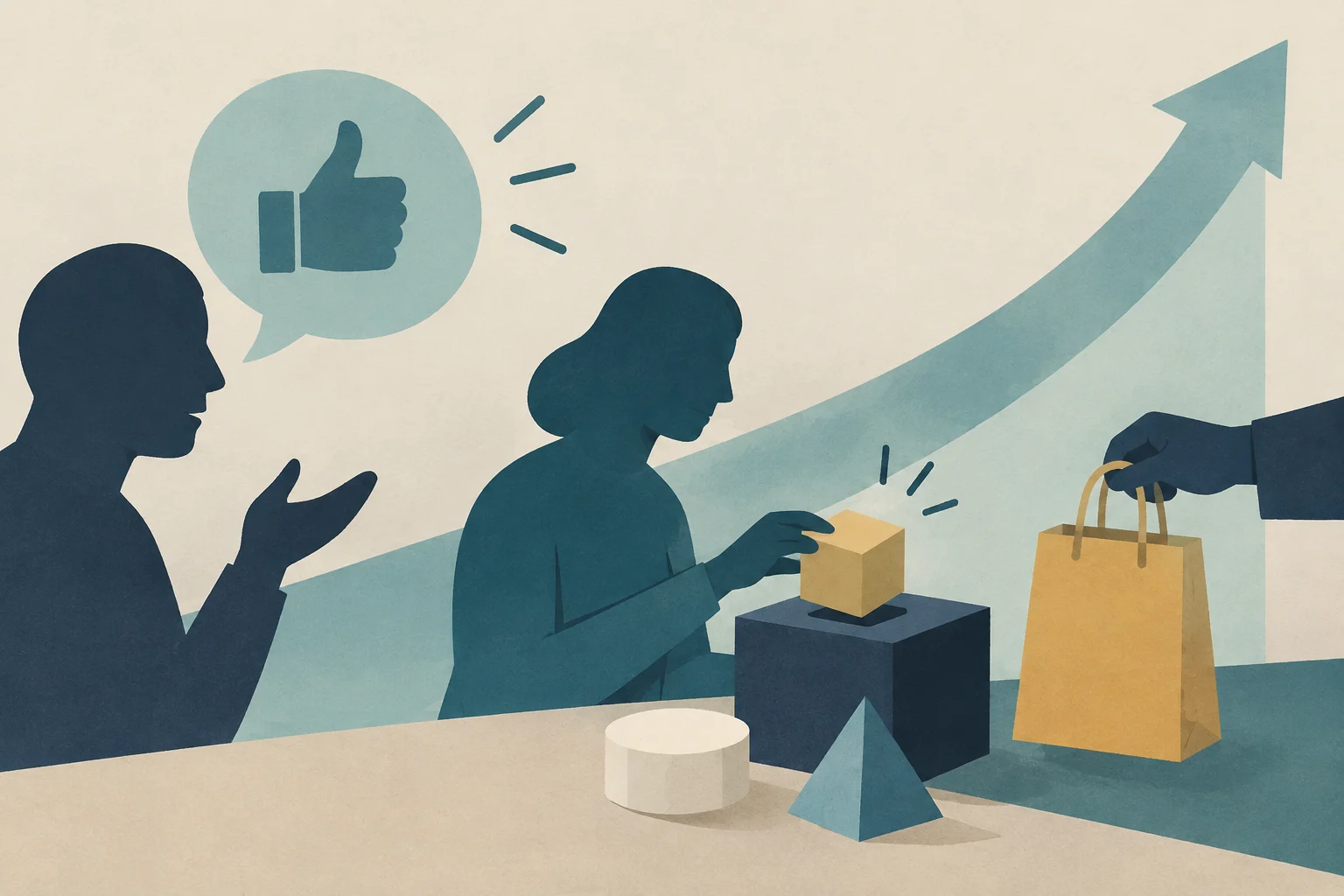
Loyalty can be observed through an ongoing relationship, repeat purchases, or recommendations, but it should not be assumed simply because someone has bought several times. It is useful to understand what keeps the offering relevant and how customer interest is expressed.
Do you identify when a repeat purchase is possible and what conditions must be met?
Do you record subsequent purchases and associated products or services, if that information is needed to serve the customer better?
Do you explain how benefits or loyalty programs work, if any exist?
Do you document recommendations or positive comments without mistaking them for a complete measure of loyalty?
Do you review why some customers stop buying or do not renew, when that information is available?
Do subsequent communications have a clear purpose and remain relevant to the customer?
Editorial illustration · Edition Business
4. Connect information across teams
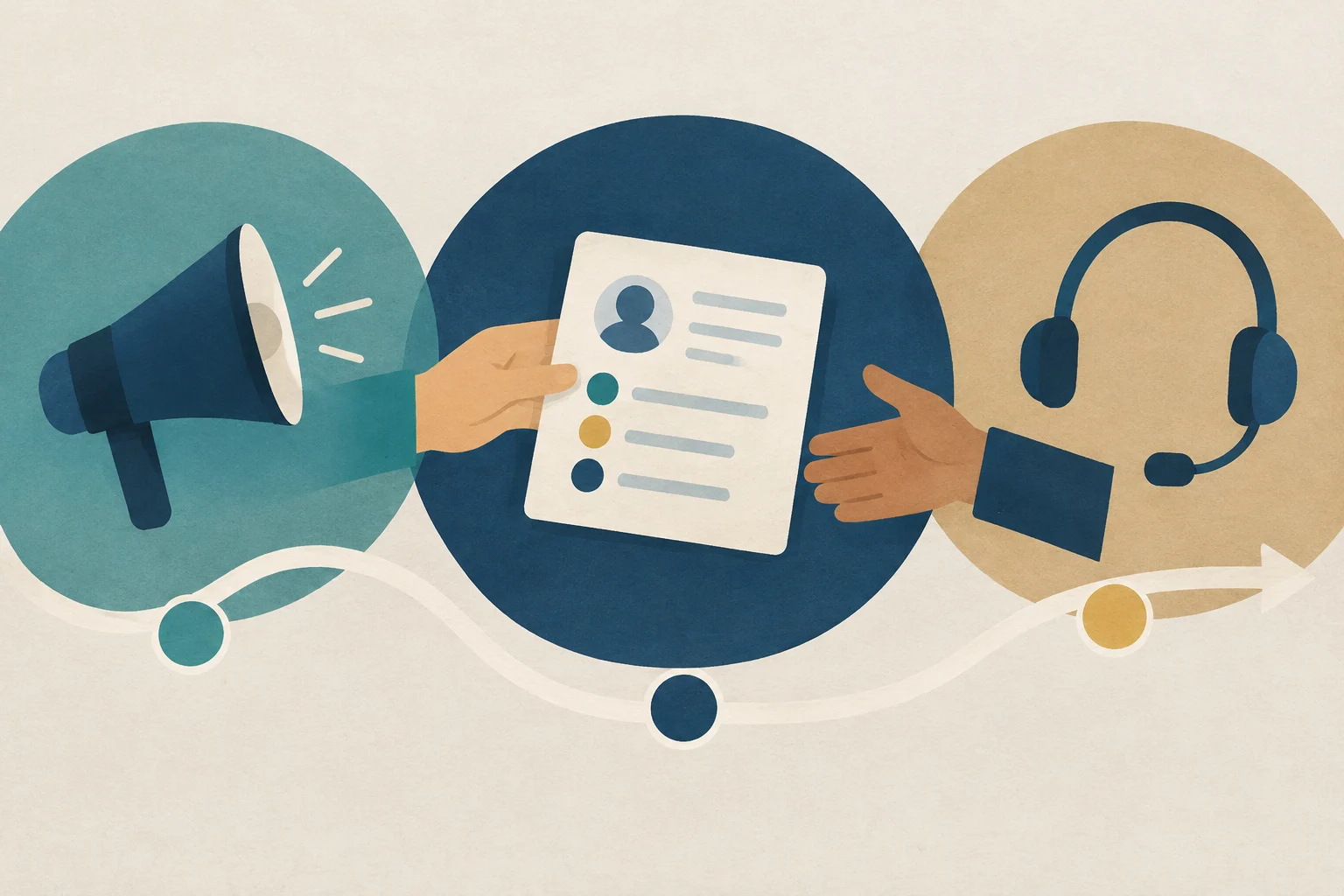
A map loses value if each department records contacts differently or if information does not follow the customer during handoffs. Documentation should enable the next team to understand the context without reconstructing it from scratch.
Define fields and statuses with shared meanings for marketing, sales, and service.
Clarify which team updates each data point and when.
Record handoffs: what is passed along, to whom, and what action is still pending.
Periodically check that records are understandable, up to date, and do not duplicate information unnecessarily.
Distinguish between observed data, opinions expressed by customers, and internal interpretations.
5. Choose metrics that support improvement
Measuring each stage helps identify where the journey gets stuck, but a metric on its own does not explain the cause. Combine progress indicators with qualitative information, and ensure every measure has a consistent definition, time period, and data source.
Stage
Examples of signals to document
Management question
Awareness
Relevant visits, inquiries, or engagement with content
Are the right people finding and understanding the offering?
Acquisition
Contacts received and follow-up completed
Are inquiries reaching the right team and receiving a response?
Conversion
Completed purchases and identified abandonments
Which steps make the decision or purchase more difficult?
Retention
Issues, renewals, or continued use, depending on the business model
Does the post-purchase experience address customer needs?
Loyalty and repeat purchases
Recorded repeat purchases, renewals, or recommendations
What signals show that the relationship continues to provide value?
Not every metric works for every sector. For example, a business with frequent purchases can track repeat buying, while a service contracted for set periods can track renewals. The indicator should match the behavior that can actually occur in that business.
6. Turn the checklist into a review routine
Documentation is the starting point; the map needs to be reviewed when channels, the offering, or the service process change. To keep the work sustainable, start with touchpoints that have the most volume, the most friction, or the greatest impact on service continuity.
Review records and listen to the teams that serve customers at each stage.
Compare the documented journey with the actual journey and identify duplicated, missing, or unclear steps.
Prioritize one specific improvement, assign an owner, and define how to tell whether the change helps.
Update the map and communicate the change to the teams involved in the process.
Measure again using the same criteria to compare results over time.
The result does not have to be a complex system. A shared document can be a good starting point if it shows what the customer needs, what the company does, who responds, and what information guides the next step. The map’s value depends on keeping it connected to operations and using it to resolve friction, not just describe it.
Praise and verbal interest can help explore an idea, but they do not equal demand. Combining interviews, real-world use, and purchasing commitments helps identify what early customers value and what to adjust before investing in growth.
A well-structured onboarding process helps each client understand what to expect, start getting value, and move toward independent use. These seven stages help organize the process without losing the personal touch.
Women’s Business Centers provide training and advising for small businesses in the United States. Learn how to find one, confirm its terms, and arrive at your first appointment with clear questions and goals.