AI Checklist for Spanish SMEs: Governance, Data, and Compliance
A practical guide to inventorying AI tools, assigning responsibilities, protecting data, and retaining evidence, with attention to the obligations of the European AI Regulation and its application dates.
An SME may incorporate artificial intelligence through a formal decision—for example, integrating an assistant into the CRM—or through tools that the team starts using on their own. Therefore, the first step is to create an inventory of AI systems and tools that includes both cases.
For each item, record its purpose, provider, responsible area, data processed, people who could be affected, and whether the result reaches clients or is used to make decisions. Also note the date of incorporation and the review status. A shared spreadsheet can serve as a starting point if there is a person responsible for keeping it updated.
Assign internal responsibility and establish usage rules
Designate in writing a person to coordinate the inventory, resolve doubts, and channel incidents. This does not have to be a legal role, but the person must have authority and time to maintain the policy and consult specialists when necessary. In companies with numerous or high-impact uses, several areas may participate—for example, technology, operations, human resources, and data protection—without necessarily requiring the creation of a formal committee.
The internal policy must indicate which tools are authorized, for what tasks, and with what restrictions. It is especially important to establish which data cannot be entered into unapproved services: for example, personal data, credentials, financial information, or confidential documents. The rule must distinguish between tools and configurations; privacy and processing conditions may vary depending on the provider and the contracted service.
It is also advisable to define which results require human review before being sent to clients, published, or used to make decisions. The review must be adequate to the use: checking a text proposal is not the same as validating a decision that affects a person.
Classify each use and review applicable obligations
The Regulation (EU) 2024/1689, known as the AI Act, establishes different obligations depending on the system, its purpose, and the role the company plays. Using a provider's tool does not by itself eliminate the responsibilities that may correspond to the SME as the entity using it. First, the specific use must be identified, and then a reasoned classification must be documented.
As an initial control, check if the use could fit into a prohibited practice or a high-risk category. Pay attention to areas such as personnel selection, labor management, access to essential services, or decisions that may significantly affect people. If there is doubt, record it and request a competent review; a preliminary label does not replace the legal or technical analysis that the case may require.
For systems subject to specific obligations, additional controls may be necessary, such as documentation, human supervision, logs, or evaluations. Not all SMEs or all uses have to comply with the same set of requirements. The classification depends on the characteristics and purpose of the system, not just the size of the company.
Editorial illustration · Edition Business
Train the team and keep evidence
Article 4 of the Regulation requires that providers and deployers adopt measures to ensure, as far as possible, a sufficient level of AI literacy among the people who operate or use AI systems on their behalf. This obligation applies from February 2, 2025. Training must take into account the knowledge, experience, and usage context of the people; it is not necessarily resolved with an identical session for the entire staff.
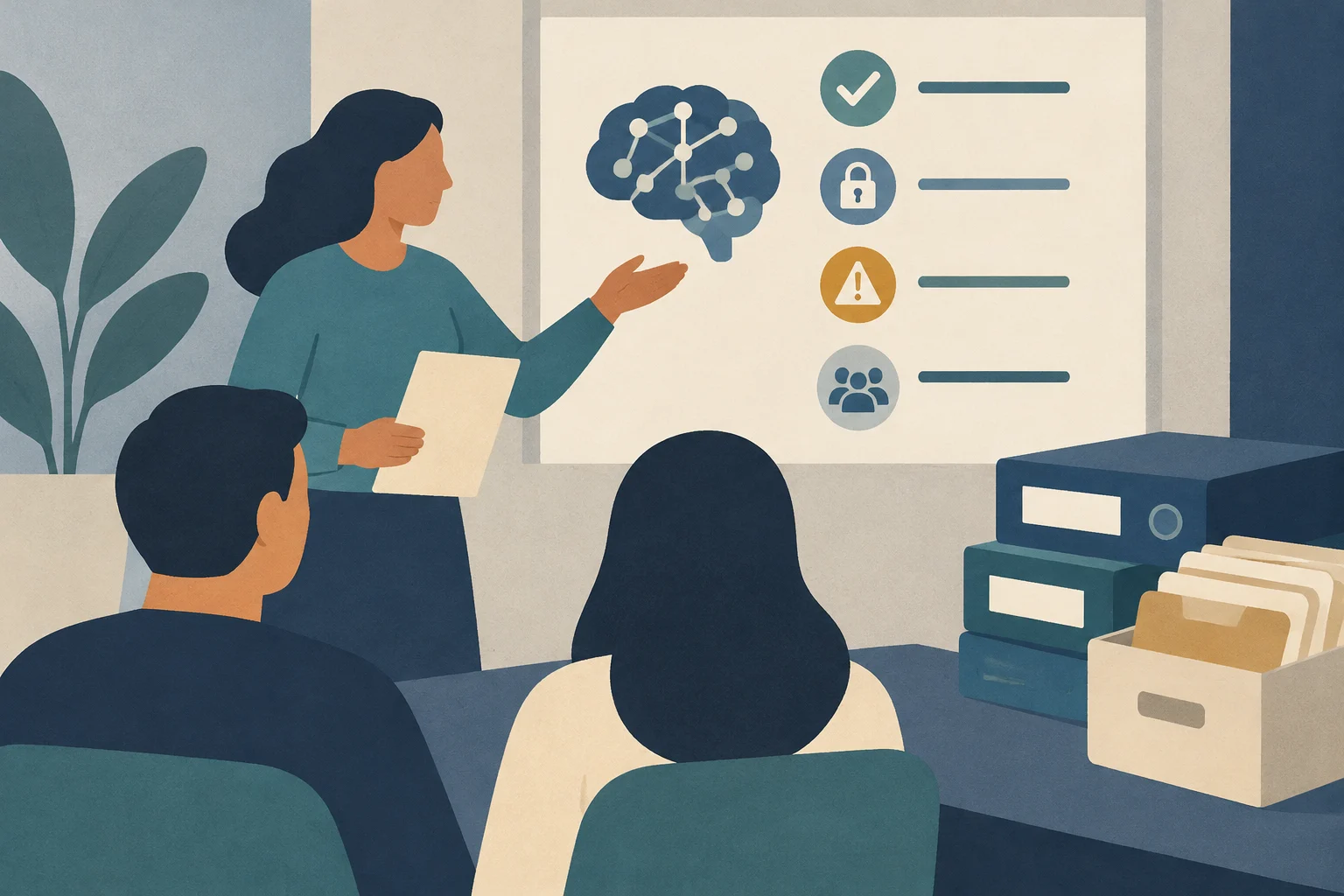
Explain, at a minimum, the authorized uses, the data that must be protected, the limitations of the tools, and when to request a review or escalate a problem. Keep materials, dates, and participation records. The evidence allows demonstrating what measures were adopted, but it does not by itself certify that a specific practice complies with all obligations.
Also record classification decisions, approvals, configuration changes, and incidents. If a system is modified or starts to be used for a new purpose, review whether the risk analysis and planned measures remain valid.
Protect personal data and review providers
When a tool processes personal data, the GDPR remains relevant alongside the AI Regulation. Identify what data is sent, for what purpose, and who can access it. Review the legal basis and the information provided to people, and determine if a data protection impact assessment is needed. The latter is not automatic for any use: it depends on the processing and the level of risk.
Before adopting a tool, check the provider's conditions: data processing, instructions, sub-processors, retention, security measures, and possible international transfers. Formalize the corresponding agreements and avoid loading confidential or personal data into services whose configuration and conditions have not been reviewed. If an incident occurs, apply the relevant security and data protection procedures.
Check transparency and timeline
Article 50 of the Regulation establishes transparency obligations for certain systems and content, including some interactions with AI systems and certain artificially generated or manipulated content. Its general application is scheduled from August 2, 2026, with conditions and exceptions depending on the case. The SME must review if it offers chatbots, publishes generated content, or uses systems that must inform people; not every image or text created with AI is automatically subject to the same obligation.
The timeline may be affected by regulatory changes and transitional provisions. The materials consulted mention adjustments associated with the so-called "Digital Omnibus," but they do not provide sufficient basis to present all modified deadlines and the scope of each change as definitive. Before planning a high-risk obligation, verify the current text and the dates applicable to the specific system.
In Spain, the AESIA is listed as the reference authority in the sources consulted. The available information also indicates that the Spanish AI bill expired in October 2026. This does not eliminate the directly applicable obligations of the European Regulation nor allow concluding, by itself, that there are no other relevant rules or competent authorities.
Checklist for the SME
Inventory AI tools, including those incorporated in software and those used spontaneously by the team.
Record purpose, provider, data, affected people, and responsible person for each use.
Designate a coordinating person and define how new uses are approved.
Publish a policy of authorized tools and allowed or prohibited data.
Review if any use may be prohibited or high-risk; document the assessment and pending doubts.
Train people according to their functions and keep evidence of the measures adopted.
Establish proportional human review before disseminating results or using them in relevant decisions.
Evaluate data protection and contractual conditions of providers when applicable.
Check the transparency obligations applicable to chatbots and generated or manipulated content.
Record approvals, changes, incidents, and periodic reviews.
This checklist helps organize an initial internal review, but it does not replace the specific analysis of each system or legal advice when the use, data, or affected people pose relevant risks.
A practical map to unify technical and business language. Understand key terms like LLM, Agentic AI, and bias to evaluate providers, manage risks, and clearly communicate the capabilities and limits of artificial intelligence in your company.
AI adoption in SMEs has outpaced their ability to measure it. This guide provides a framework to establish baselines, define specific KPIs, and calculate Total Cost of Ownership (TCO), allowing you to distinguish between actual savings and perceived agility.
A good choice starts with the process, not the brand: measure manual work, compare solutions by what they do, and test a small automation before expanding it.