NASA selects PRIMA to fill the far-infrared gap in space
PRIMA, NASA’s new space telescope, will observe the far-infrared (25–260 microns) with sensitivity ten times greater than current capabilities. With a budget of $1.2 billion and a launch planned for 2033, it aims to study the formation of planets and supermassive black holes.
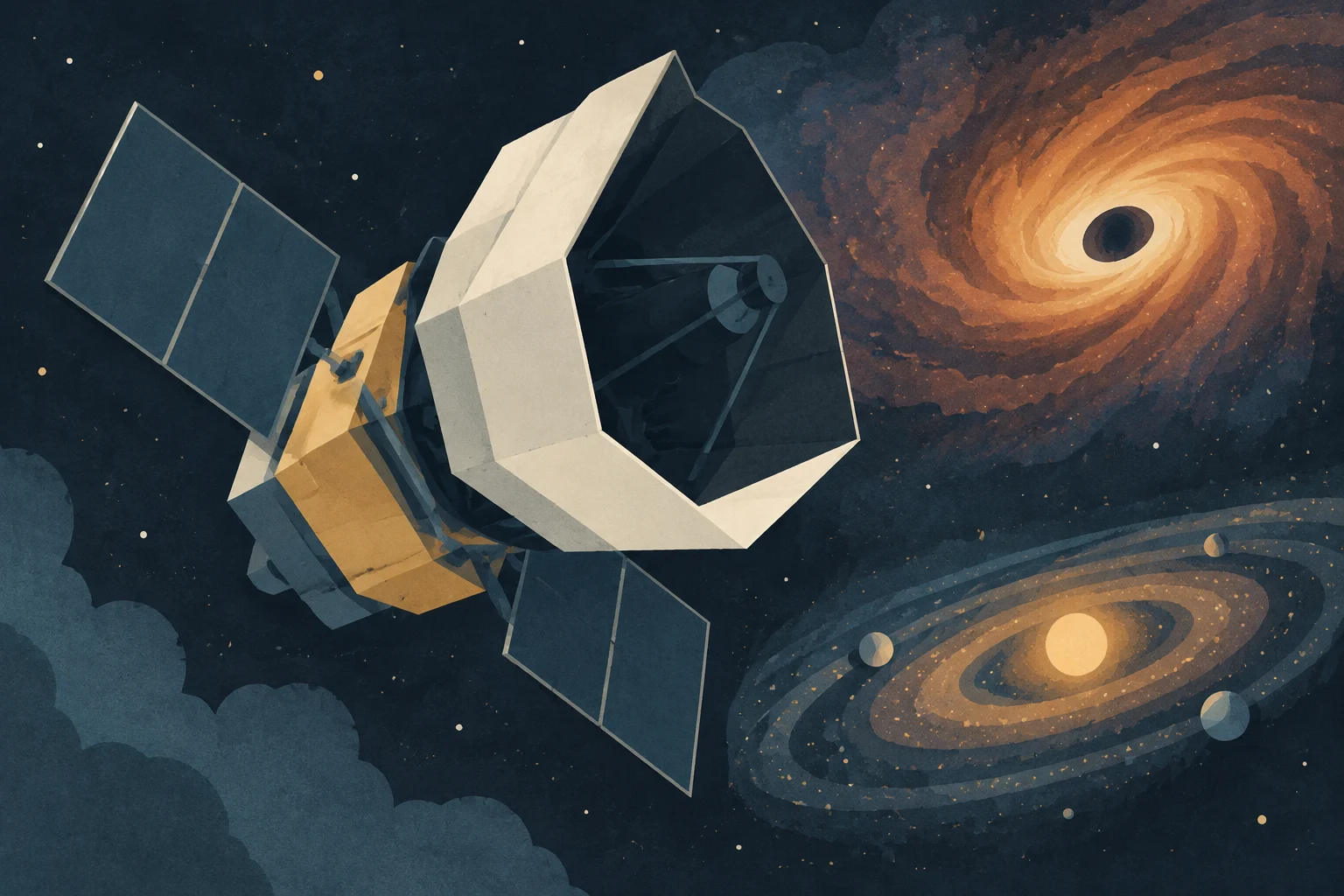
NASA has selected PRIMA (Probe far-Infrared Mission for Astrophysics) as its next medium-class astrophysics mission. This space observatory is designed to fill a critical gap in astronomy: wide-ranging observations of the far-infrared, a region of the electromagnetic spectrum that current telescopes such as James Webb and Hubble do not cover extensively.
A bridge between infrared and radio astronomy
Cosmic dust absorbs the visible and ultraviolet radiation emitted by stars and galaxies, then re-emits that energy at far-infrared wavelengths. According to George Helou, a researcher at Caltech, without instruments capable of measuring this band, “the Universe is a book with half its pages missing.” PRIMA will act as a bridge between space-based infrared observatories and ground-based radio telescopes, enabling scientists to study phenomena hidden by large amounts of matter, such as star formation and the growth of supermassive black holes.
Technical specifications and record sensitivity
PRIMA will use a 1.8-meter-diameter primary mirror and operate in a halo orbit around Lagrange point L2, the same destination as James Webb and the recently launched Nancy Grace Roman telescope. The spacecraft, weighing about 3.4 tonnes, will be cooled to 4.5 kelvin using passive thermal insulation and a cryogenic refrigerator that will use liquid helium-3.
The heart of the mission lies in its kinetic inductance detectors (KIDs), cooled to 0.1 K. This technology will give PRIMA at least ten times greater sensitivity than current infrared detectors, setting a record for the coldest sensors in space. The mission will include two main instruments:
PRIMAger: A spectrophotometric camera and polarimeter that will observe between 25 and 235 microns, with hyperspectral observation capabilities and polarimetry in four bands.
FIRESS: A spectrometer that will operate in the 24-to-235-micron range, designed for deep-sky surveys.
Scientific goals and international collaboration
The mission has three fundamental scientific pillars:
Planet formation: Understand how planets’ atmospheres form and evolve.
Galaxy evolution: Analyze the relationship between the growth of galaxies and the supermassive black holes at their centers.
Dust and heavy elements: Trace the accumulation of dust and metals throughout cosmic history, essential ingredients for the formation of complex molecules.
The project is led by NASA’s JPL, with contributions from the Goddard and Marshall centers. Space agencies from France (CNES), Italy (ASI), Germany (DLR), South Korea (KARI), Canada (CSA), the United Kingdom (UKSA), and Japan (JAXA) are also participating.
Project status and next steps
PRIMA has just entered Phase B of development, focused on preliminary design and technology development. The mission must pass a confirmation review before moving on to full implementation. If all goes according to plan, NASA is targeting a 2033 launch and five years of science operations.
The mission’s budget is capped at $1.2 billion, excluding launch costs. This puts it below flagship missions such as James Webb ($10.8 billion) and Roman ($4.2 billion), placing it within NASA’s Astrophysics Division’s new Probe Explorers class of missions, created to bring together intermediate-cost projects.
Announced on October 8, 2026, the deal enables Duetto to add Flyr Hospitality’s AI pricing engine to its platform. The aim is to give hoteliers the flexibility to choose between manual control and full automation while advancing a comprehensive profitability strategy.
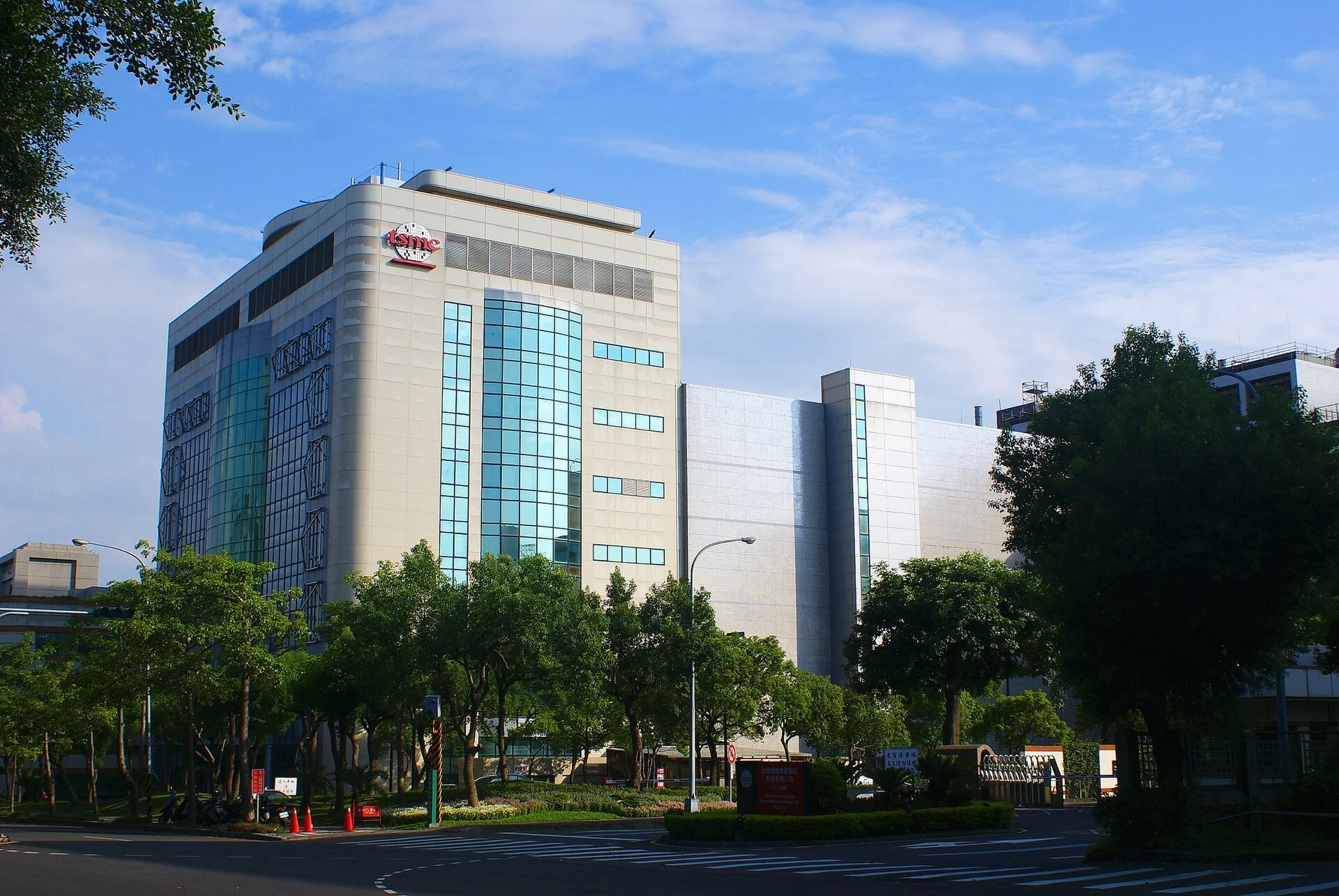
The world's largest contract chipmaker reported a net profit of 763.06 billion New Taiwan Dollars and revenues of 1.494 trillion NT$, driven by strong demand for artificial intelligence chips and advanced nodes.
The Balearic Government, along with the four island councils and 15 entities from the productive fabric, has signed the adhesion protocol to IGCAT to compete for the title of '2030 European Region of Gastronomy'. The initiative, coordinated by AETIB and funded with Next Generation EU funds, culminates two years of work that resulted in the 2025-2035 Enogastronomic Tourism Strategic Plan. The strategy relies on four pillars (territory, product, people, and experience) and seeks to raise the economic value of local products, promoting generational renewal in agriculture and fishing. Menorca, recognized in 2022, serves as a reference for this joint candidacy, which aims to unify the destination's image and link the tourist offer with Mediterranean identity.