How to Win Back Inactive Customers with a Strategy Based on Value and Reasons for Leaving
An effective win-back campaign starts by identifying who stopped buying, why they left, and how much it makes sense to invest in recovering them. This makes it possible to tailor actions and measure profitability without resorting to blanket discounts.
Winning back customers is not about sending the same discount to your entire customer base
A win-back campaign aims to reactivate customers who have stopped buying or canceled a service. Its effectiveness depends less on the volume of messages than on the ability to identify what happened and whether there is still a profitable opportunity to rebuild the relationship.
Inactivity does not always mean that someone has decided to leave. It may reflect a long purchase cycle, a seasonal need, or a temporary interruption. By contrast, an explicit cancellation is a clearer sign of departure. Distinguishing between these situations helps avoid contacting people too soon, following up without a reason, or treating customers with different histories as if they were the same.
Step 1: Define when a customer is considered inactive
There is no universal timeframe for declaring a customer inactive. The criteria should match the normal purchase, usage, or renewal patterns of each business. A store selling frequently replenished products might detect a pause sooner than a company whose customers buy occasionally; for a subscription service, a cancellation may unambiguously signal churn.
To set the threshold, it is useful to examine transaction histories and the usual interval between purchases. RFM segmentation—recency, frequency, and monetary value—helps organize this information: when the customer last purchased, how often they bought, and how much value they contributed. It is a prioritization tool, not conclusive proof that someone will return.
When a company has enough data, behavioral models such as BG/NBD or Pareto/NBD can estimate the probability that a customer is still active despite not having purchased recently. This helps distinguish a pause consistent with their habits from a more likely loss. These estimates depend on the quality and suitability of the data; they do not replace an understanding of the business context.
Step 2: Find out why the relationship was interrupted
A last purchase, cancellation, or drop in usage shows what happened, but not necessarily why. To guide a useful response, a company can combine exit surveys, customer-service feedback, complaints, usage data, and behavioral signals. NPS can provide information about customer perceptions when collected at a relevant moment, but on its own it does not explain the reason for churn.
An initial classification can group reasons into practical categories:
Price or terms: The cost no longer matched the budget or expectations.
Poor experience: Failures, delivery problems, unsatisfactory support, or friction in the service.
Lack of fit or value: The product no longer meets the need, or the customer does not perceive enough utility.
Competition or switching providers: The customer chose an alternative.
Inactivity with no confirmed reason: There is not enough information to attribute a cause.
Do not turn an assumption into a fact. If the reason has not been recorded, it is better to treat it as unknown and design an initial contact that helps you learn, rather than sending an offer aimed at a problem that may not exist.
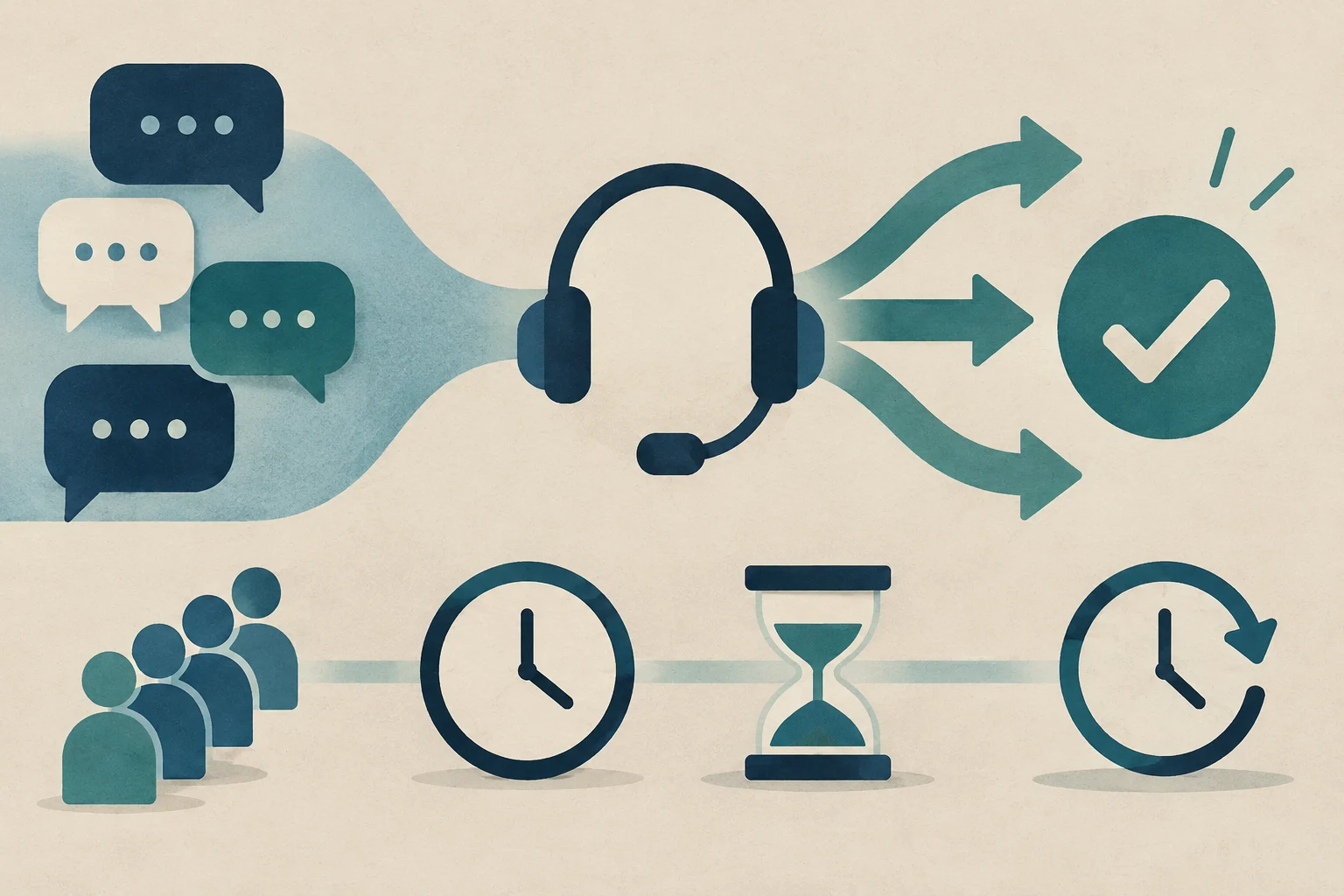
AI-generated conceptual illustration · Edition Business
Step 3: Prioritize based on value and likelihood of recovery
Historical value matters, but it is not enough to decide how much to invest. A customer who generated significant revenue may have left for a structural reason the company cannot address; another with lower past value may have a simple, current reason to return. Prioritization should consider customer lifetime value (CLV) or margin, the likelihood of recovery, and the cost of intervention together.
One practical way to organize the work is to separate high-value cases that warrant personal attention, mid-tier segments that can receive a tailored sequence, and lower-priority customers who could be handled through light automation or left out of the campaign. The thresholds between groups depend on each company’s economics and capacity: there are no universal cutoffs.
The time elapsed since the last activity also matters. The possibility of winning someone back may change over time, but its progression need not be linear and is not the same across all industries. Timing should be based on the business’s own purchase cycle, recent signals, and specific changes that make it relevant to get back in touch.
Step 4: Choose an action that addresses the reason
The communication should explain why it makes sense to talk with that customer again. If there was a problem, the priority is to acknowledge it and clarify what has been done to resolve it. If the product was not a good fit, presenting a different option or use case may be more helpful than repeating the previous offer. If the customer simply stopped interacting, a relevant reminder or update can help determine whether they are still interested.
Discounts should not be the automatic response. They can help when price was a genuine barrier and the offer remains profitable, but giving away margin to people who would have returned anyway reduces the campaign’s results. In addition, indiscriminate discounting may teach some active customers to wait for a promotion or cancel to receive one.
When offering an incentive, a company can test different alternatives and terms, provided they are based on clear criteria and are consistent with its margins. In all cases, contact should respect customer preferences and the rules applicable to each channel and territory; the available information does not make it possible to establish specific legal requirements for any particular jurisdiction.
Step 5: Measure reactivation and profitability
Before launching a campaign, define what will count as a recovery. Depending on the business model, this could be a purchase, a renewal, resumed usage, or an attended appointment. It is also useful to set the sequence’s duration and when it will stop—for example, after a negative response, an invalid address, or a request not to receive further communications.
Useful metrics include the reactivation rate, cost per recovered customer, and margin generated after deducting incentives and contact costs. The response rate, subsequent purchases, and retention after reactivation help determine whether the return was sustained or temporary. Measuring only opens or clicks does not prove that the campaign recovered economic value.
To estimate what would have happened without the campaign, a company can reserve a comparable group of customers who do not receive the outreach. This comparison helps distinguish reactivations attributable to the intervention from those that would have happened anyway. Results should be analyzed by segment, reason, channel, and incentive—not just as one overall figure.
A cycle of improvement, not a one-off campaign
Reasons for leaving can also point to problems worth addressing in the product, service, onboarding, or communication of expectations. If many customers cite the same point of friction, increasing win-back outreach will not fix the underlying cause.
The process works best as a cycle: detect inactivity using criteria tailored to the business, record what is known—and what is not—prioritize based on value and likelihood of return, take relevant action, and measure incremental margin. Profitable customer recovery is not about chasing every lost customer, but about investing differently according to the reason they left and the real opportunity to deliver value again.
The choice of international entry channel depends on the balance between control, investment, and local knowledge. Direct sales offer maximum control over brand and price but require high investment in structure and logistics management. Using sales agents (2-15% commission) allows testing the market with low risk and no stock, ideal for high-value products or B2B. Local distributors (30-60% margin) assume stock and logistics, accelerating penetration in markets with short delivery times, but reduce control over the customer experience and margin. A wholly-owned subsidiary maximizes control and long-term profitability but requires the highest investment and assumption of legal and tax risks. Before deciding, the SME must assess economic viability (cost breakdown), local regulatory compliance, and the partner's ability to cover the desired geographic area.
NPS, CSAT, CES, and retention offer different perspectives on customer experience and loyalty. Learn what each metric measures, how to interpret it, and how to combine it with operational metrics to identify concrete improvements.