U.S. Consumer Confidence Falls to a Five-Month Low Amid Inflation
The University of Michigan index fell to 46.3 points in October 2026, its lowest level since May, driven by high energy prices and the cost of living. Perceptions of current conditions reached a record low, while inflation expectations rose to 4.7% for the coming year.
Consumer confidence in the United States fell significantly in early October 2026. The preliminary University of Michigan index stood at 46.3 points, its lowest level since May and below the average estimate of 47.6 among economists. The decline reflects growing household frustration with persistent inflation and the rising cost of everyday life, factors that have eroded the economic optimism built up over the previous months.
The component measuring current economic conditions fell sharply to 44.7 points, a record low since at least 1970. By contrast, the future expectations index edged up to 47.3 points, from 46.3 the previous month, marking its first increase since July. This divergence suggests that while consumers perceive their current situation as deteriorating, they remain moderately cautious about the near-term future, influenced by the relative stability of the labor and stock markets.
Key factors behind the decline
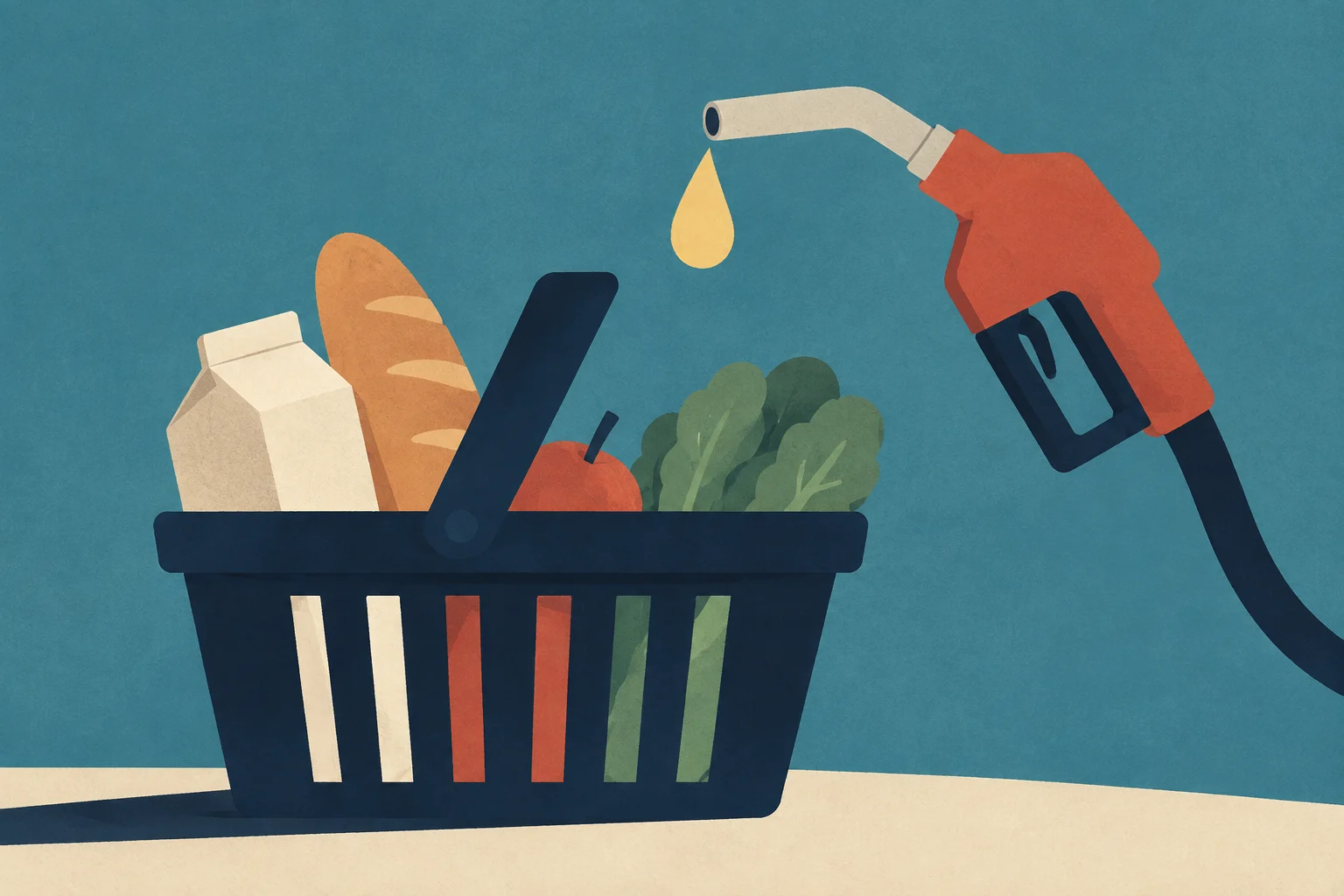
The main driver of the decline is the price of gasoline and energy costs, which have risen because of the conflict in the Middle East. According to Joanne Hsu, director of the survey, low-income consumers and those with smaller stock portfolios have seen their confidence fall sharply, as they have less capacity to absorb these price shocks. Hsu noted that despite political differences, consumers across all affiliations agree that the economic outlook has weakened since the start of the year, before the escalation of the conflict with Iran.
In addition to energy, other factors are putting pressure on household budgets:
Borrowing costs: Higher interest rates make loans and mortgages more expensive.
Slowing employment: Hiring has slowed, reducing perceived job security.
The wage gap: In recent months, overall price increases have outpaced wage growth, reducing real purchasing power.
Price expectations and spending behavior
U.S. consumers expect prices to rise 4.7% over the coming year, slightly above the 4.6% estimated in September. Over the five-to-ten-year horizon, the inflation forecast has risen to an annual rate of 3.5%, indicating that households expect inflationary pressures to persist beyond the short term.
Despite weak confidence, consumer spending has remained solid, supported by a stable labor market and strong stock-market performance. However, a special report published alongside the data reveals a change in consumption habits: only about 31% of respondents expect to maintain their usual level of spending over the coming year. Just over half said they would reduce spending in categories such as household products, automobiles, dining out, and vacations.
Perceptions of the conditions for buying durable goods fell to a record low, driven by concerns about high interest rates. This presents a challenge for companies that depend on discretionary spending, as households are prioritizing cost-cutting over investment in higher-value assets.
Political and economic context
The release of these data comes at a sensitive time, less than a month before the midterm elections in the United States. The rising cost of living, exacerbated by volatile energy prices, could influence the election outcome, given that household finances are a decisive factor in voting intentions. Analysts are watching how the gap between perceptions of current conditions and future expectations could shape voters’ responses to the different parties’ economic proposals.
For businesses, this environment calls for a communications and pricing strategy that recognizes consumers’ price sensitivity. Transparency about costs and offering lower-priced alternatives may be key to retaining the customer base most vulnerable to inflationary shocks. Monitoring inflation expectations is also crucial for financial planning and operational risk management in the coming quarters.
Apollo Go began testing its RT6 vehicles in Brent alongside Freenow, the Lyft platform. Commercial service is targeted for 2027, but depends on regulatory approvals.
Hilton shares will stop trading on the New York Stock Exchange after the close on November 4, 2026, and begin trading on Nasdaq the following morning. The company says shareholders do not need to take any action and that the move does not change its strategy.
The IGAE rose 3.5% year over year on a seasonally adjusted basis, driven by construction, manufacturing and wholesale trade. The result improves the short-term outlook, although slower growth in services and weakness in some activities point to an uneven picture.