NESO confirms resilience of the British electricity system for winter despite operational tensions
The British grid operator assures that electricity supply will be guaranteed during the cold months, although it warns of possible tight days. This assessment follows an investigation that revealed high stress levels among control center engineers due to the complexity of managing renewable intermittency.
The National Energy System Operator (NESO), the body responsible for the UK electricity grid, has published its winter outlook report confirming that the system is prepared and resilient to face the challenges of the cold months. The entity assures that supply will remain safe throughout the winter, although it warns of the possibility of experiencing tight days that will require the activation of emergency mechanisms to request additional generation capacity.
Deborah Petterson, Director of Integrated Energy System Resilience at NESO, stated: "Although we never take resilience for granted, households and businesses can be assured that the Great Britain electricity system remains safe, reliable, and one of the most resilient in the world." The report highlights that these warnings are not a sign of imminent power cuts, but a routine operational tool to manage the balance between supply and demand.
Operational stress in the control center
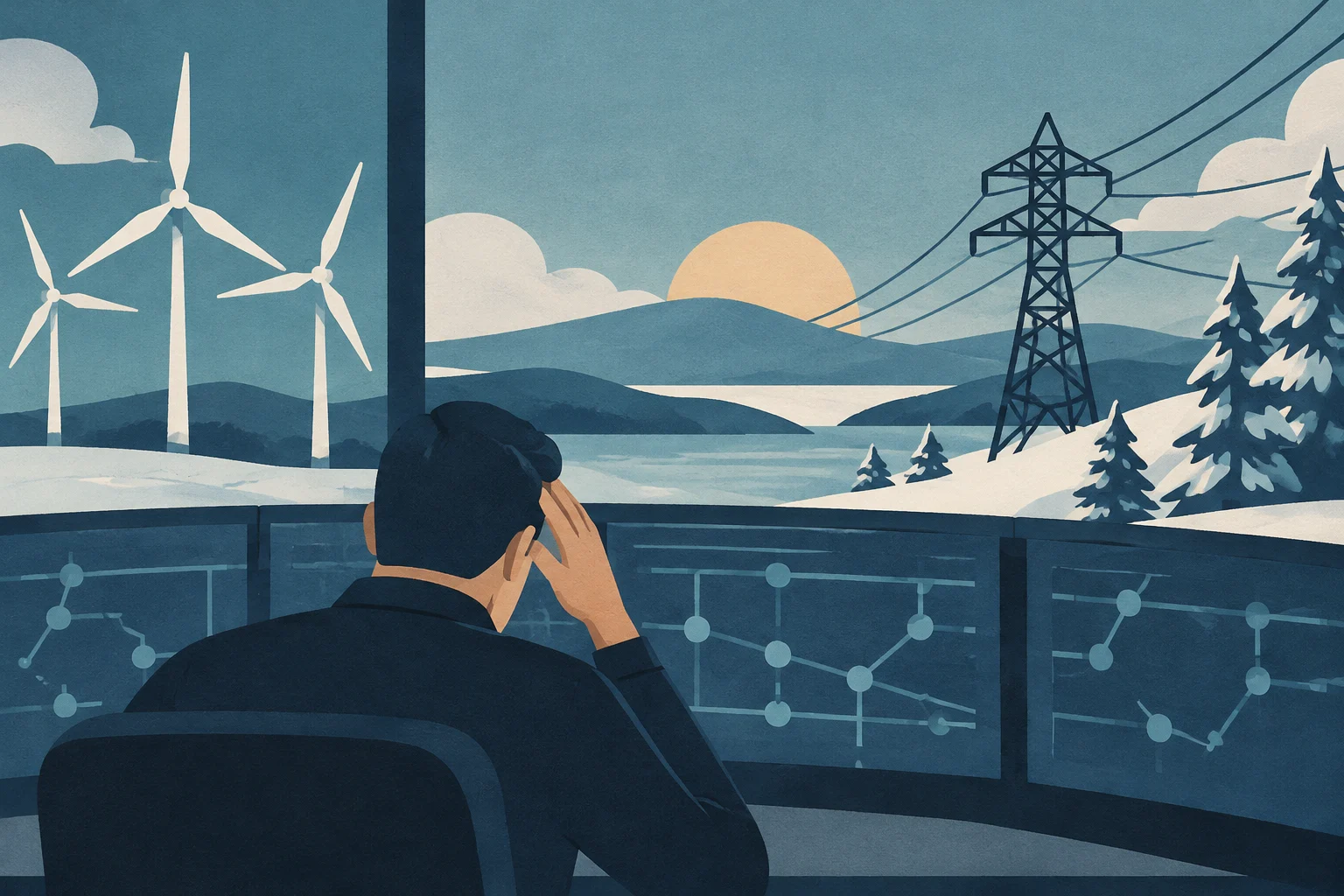
This statement of confidence comes in a context of growing scrutiny. An independent investigation commissioned by NESO and carried out by the law firm Eversheds Sutherland revealed high levels of stress and concern among the engineers at the National Electricity Control Centre. According to the report, this tension is due to the increasing difficulty of balancing the grid in the face of the intermittency of renewable energies, which are less flexible than traditional gas plants.
The investigation also identified a significant disconnect between the control room staff and NESO management. Several witnesses indicated that senior officials did not fully understand the reality of the pressures faced by first-line operators to maintain supply. Although the probe did not confirm a whistleblower's allegations about the concealment of records, it did point to cultural, governance, and control problems that, according to the report, are significant findings in themselves.
Fintan Slye, Chief Executive of NESO, responded to these findings by committing to act on the recommendations to improve how employee concerns are managed, working closely with trade unions.
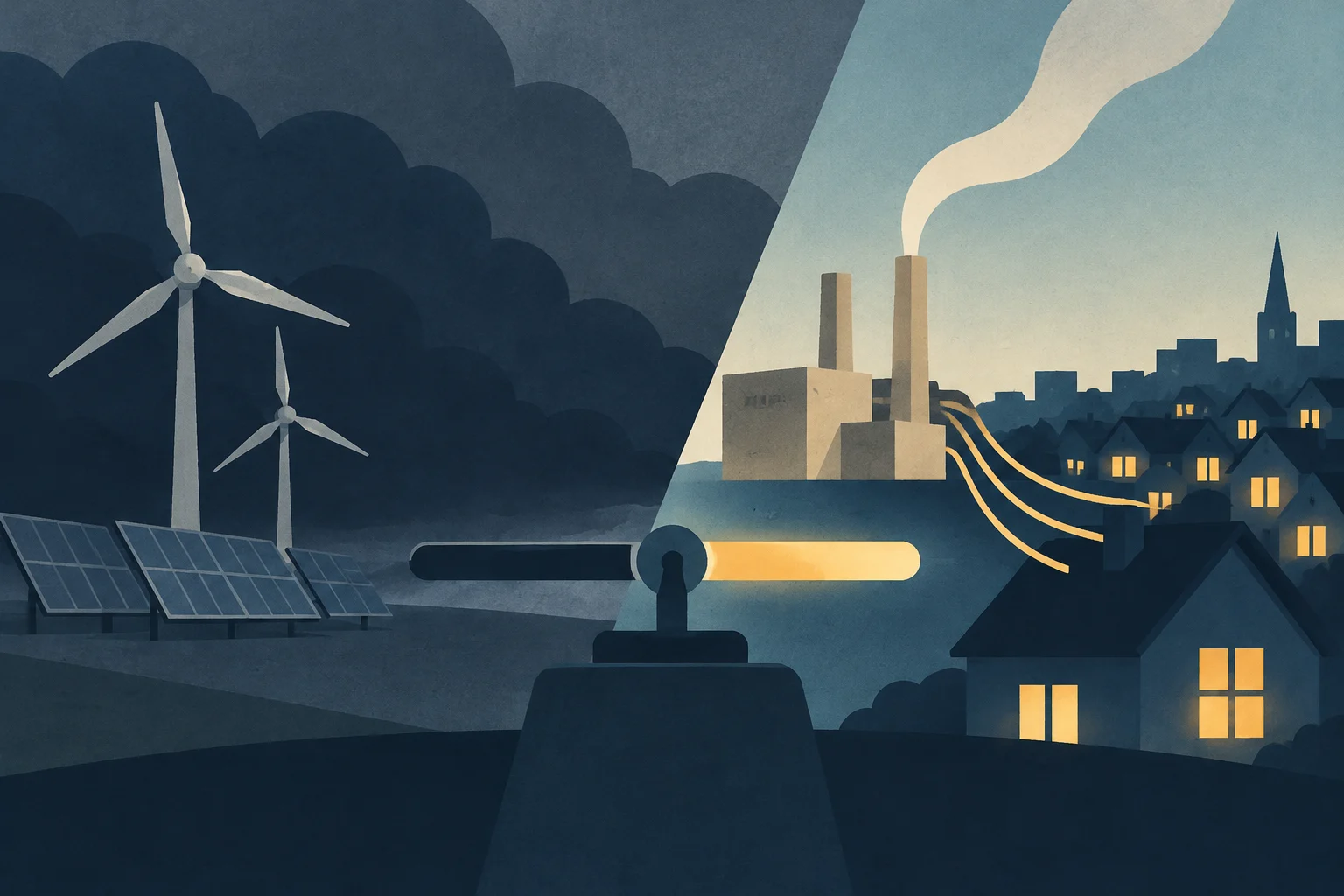
AI-generated conceptual illustration · Edition Business
The Dunkelflaute phenomenon and peak management
The central technical challenge facing the British system is the management of extreme weather phenomena, known as Dunkelflaute (dark calm), where wind and solar generation drops drastically just when demand is high. This summer, NESO issued five Emergency Market Notices (EMN) to request additional capacity, an unusual frequency outside of extreme seasons.
The latest of these notices, issued on September 28, sought to cover a marginal deficit of 1.4 gigawatts during peak demand hours. This episode occurred without a heatwave or the start of winter, underscoring the complexity of the new electricity market. The regulator Ofgem has opened an investigation into the events that led to the first emergency request in June, when extreme heat, low wind, and grid constraints combined.
Capacity outlook and gas supply
NESO's preliminary report for winter 2026/27 estimates a safety margin of 5.5 gigawatts, which equates to 8.8% of peak demand under average cold snap conditions. Although this percentage is lower than the 10% estimated for the previous season, the expected Loss of Load Expectancy (LOLE) is calculated at less than 0.1 hours, well below the 3-hour reliability standard.
In parallel, National Gas, the private company that manages the gas network, has forecast that there will be sufficient supply to cover winter demand. However, it anticipates increased gas use for electricity generation during demand peaks due to the intermittent nature of renewables. This reliance on combined cycle gas as a quick backup contrasts with the storage capacity of gas, which allows for facing complete seasons, unlike electricity, which requires an immediate response.
Implications for energy management
The current situation marks a change from the 2022 crisis, where the main fear was scheduled blackouts. Today, the challenge is operational: managing a more complex market with a higher participation of renewables, which reached 52.5% of total generation in 2025. The British parliamentary debate has begun to address electricity demand coverage from 2030 onwards, questioning whether the current strategy is sufficient to cope with extreme weather phenomena with greater frequency.
The creation of a public entity, Great British Grid (GB Grid), recently announced, seeks to "regain control" of the electricity grid to accelerate the integration of renewables and reduce the electricity bill. This move reflects a trend to strengthen the public role in supply guarantee and transmission network development, a model that contrasts with the more fragmented structures of other European markets.
Apollo Go began testing its RT6 vehicles in Brent alongside Freenow, the Lyft platform. Commercial service is targeted for 2027, but depends on regulatory approvals.
Hilton shares will stop trading on the New York Stock Exchange after the close on November 4, 2026, and begin trading on Nasdaq the following morning. The company says shareholders do not need to take any action and that the move does not change its strategy.
The IGAE rose 3.5% year over year on a seasonally adjusted basis, driven by construction, manufacturing and wholesale trade. The result improves the short-term outlook, although slower growth in services and weakness in some activities point to an uneven picture.