Berkeley Energy shares jump 45% on stock exchange due to expectations of unblocking its uranium mine after election call
Shares of the Australian mining company have appreciated by 45% in four sessions, anticipating that a change in government could reactivate its project in Retortillo, although the mine remains administratively blocked and the company has no revenue from extraction.
The market anticipates a political shift in the nuclear sector
Shares of Berkeley Energy have experienced a revaluation of 45% in just four stock market sessions, placing them at the forefront of gains on the Continuous Market. This movement occurred following the call for general elections on November 29, 2026, leading investors to speculate that a change in the Spanish Executive could facilitate the processing of its mining project in Retortillo (Salamanca).
The surge began on Friday, October 2, when the stock advanced 16.03% to 0.304 euros, following the rejection of housing decrees in Congress. The reaction intensified on Monday, October 5, with the official announcement of the early election, and culminated on Wednesday, October 7, with a rise of 13.43% that placed the price at 0.380 euros. With approximately 446 million shares issued, this jump represents an increase of more than 50 million euros in the company's market capitalization.
The administrative status of the Retortillo mine
Despite market euphoria, the regulatory situation of the project has not de facto changed. The central piece of Berkeley's strategy is the uranium mine and concentrate plant planned for Retortillo, a project that suffered a decisive setback in November 2021. On that date, the Ministry for Ecological Transition denied the construction authorization for the uranium concentrate manufacturing plant.
This administrative decision was based on an unfavorable and binding report issued by the Nuclear Safety Council (CSN) in July 2021. The regulator identified "numerous deficiencies" and "low reliability" in the safety analyses of the radioactive facility, pointing to uncertainties in geotechnical, hydrogeological aspects, and in the final storage of very low-level radioactive waste.
Berkeley has maintained a critical position regarding the process followed by Spanish authorities since then, defending the technical viability of its project. However, any eventual reactivation would require overcoming a complex administrative, technical, and nuclear safety path again. Furthermore, the company needs to obtain or recover permits that depend on other administrations, such as the Castilla and León Regional Government and the Retortillo city council; in fact, two prior authorizations were judicially annulled in 2023.
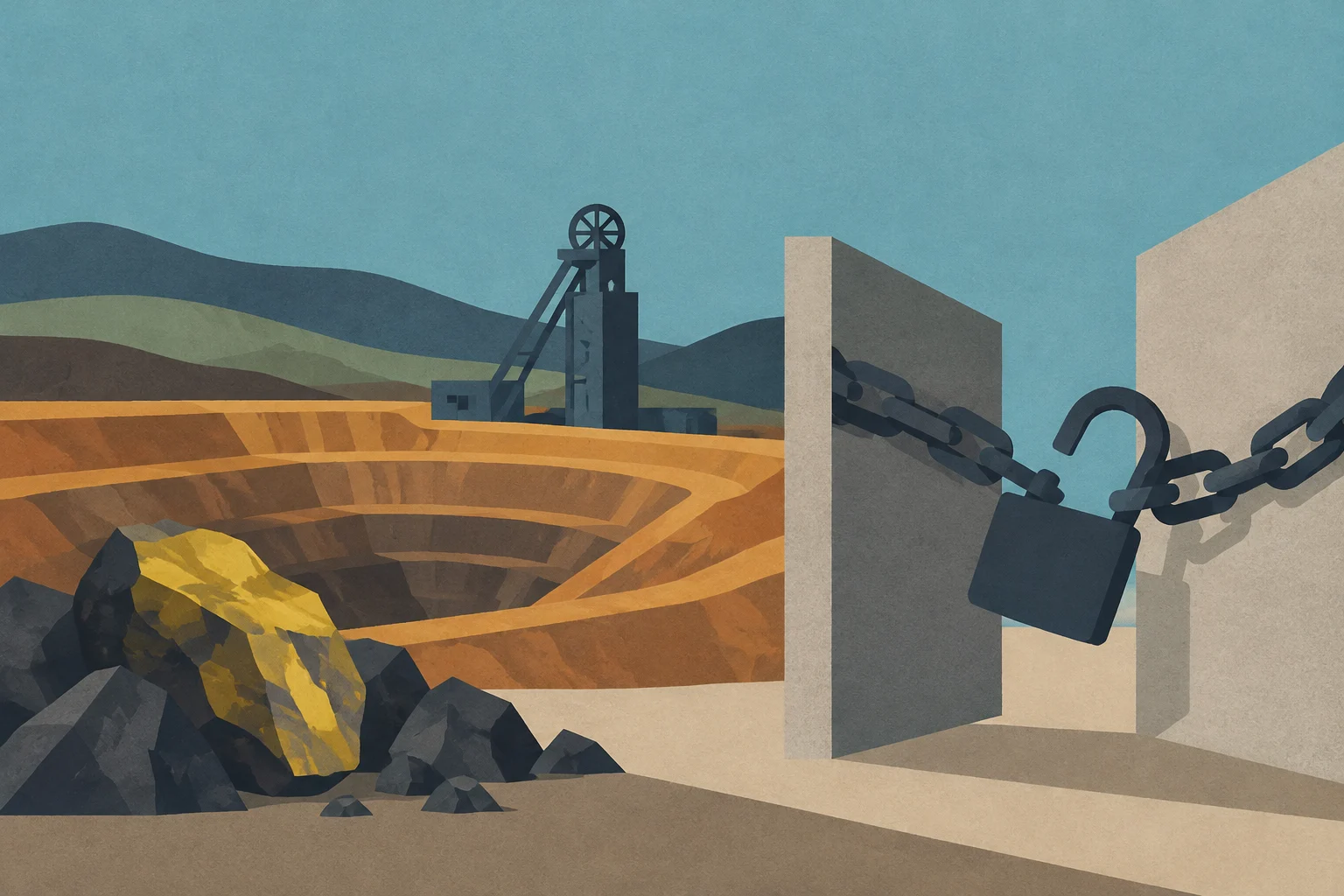
Editorial illustration · Edition Business
A 1.25 billion dollar international arbitration
The conflict between Berkeley and the Spanish State has transcended the administrative sphere to move to the international arena. In May 2024, the subsidiary Berkeley Exploration initiated an arbitration procedure against Spain before the International Centre for Settlement of Investment Disputes (ICSID), an organization linked to the World Bank.
In February 2026, the company submitted its statement of claim and raised the requested compensation to approximately 1.25 billion dollars (around 1.14 billion euros). The company argues that the actions taken in relation to its investments in Spain and the Salamanca Project violated several provisions of the Energy Charter Treaty.
This arbitration adds a second dimension to the company's future: on the one hand, the possibility that the political context reopens expectations regarding Retortillo; on the other, the economic claim against the State derived from the project's blockage. The current share price therefore reflects a combination of political expectations and the legal uncertainty associated with this international litigation.
Financial situation: losses and reliance on cash reserves
Unlike other mining companies that are already operating, Berkeley Energy does not have revenue from the sale of minerals. The company cannot extract, process, or market uranium, so its main income is financial. In its last fiscal year, ended on June 30, 2026, it recorded losses of 8.7 million Australian dollars, compared to 5.4 million in the previous year.
During that period, the company accounted for approximately 2.1 million Australian dollars in interest from its cash reserves. It closed June with 62.4 million Australian dollars in cash, a figure lower than the 73.6 million from the previous year. This cash is what allows it to sustain its activity while it attempts to unblock its investments and litigate against the State.
Financial indicator
Fiscal Year 2025
Fiscal Year 2026
Net result
-5.4 M AUD
-8.7 M AUD
Interest income
Not specified
2.1 M AUD
Cash at closing
73.6 M AUD
62.4 M AUD
Production expectations and other projects
Berkeley has argued that the Retortillo mine could produce more than four million pounds annually of uranium, becoming an important producer for the European market in a context of renewed interest in nuclear energy. According to an estimate published in 2016, the entire project contains mineral resources of approximately 89.3 million pounds of uranium. However, these figures remain theoretical until the necessary authorizations are obtained.
The company is not inactive on other fronts. In addition to defending the Retortillo project, it continues to explore other critical mineral deposits. Notably, the Conchas project, also in the province of Salamanca, where in July 2026 it communicated a first estimate of lithium and rubidium, although these are works in initial phases.
Market reaction and sector comparisons
Berkeley's volatility has led the Australian Stock Exchange to request explanations from the company regarding the increase in trading volume. In a communication sent to the market, Berkeley responded that it "has no knowledge of any information that has not been communicated to the market and that, if known, could explain the recent stock market activity of its shares," pointing only to the announcement of the early election as a relevant factor.
To put this movement in perspective, it is worth comparing the reaction of other mining companies. Atalaya Mining, a company that does have productive mining activity, recently announced that its Touro (Galicia) copper project has received the designation of strategic project by the European Commission. Despite this positive news, its stock market reaction was much more moderate, with a drop of 0.93% the day after the announcement and a cumulative rise of only 3.5% in five sessions. This highlights how the market is assigning a much higher speculative value to Berkeley's political expectations than to the specific regulatory milestones of other companies in the sector.
In Burgos, the secretary-general of the PSOE in Castile and León attributed economic growth to the Government’s scope to raise the minimum wage and pensions. He also called for measures on housing and higher wages.
The HKMA spoke with HSBC after the bank announced a Singapore hub expected to hire more than 100 specialists. The discussion reflects competition to attract investment and technology talent, while the bank maintains AI teams and initiatives in Hong Kong.
The defense has appealed to the High Court of Justice of Extremadura against the nine-year disqualification from public employment or office imposed for administrative prevarication. It argues that fundamental rights were violated and that the judgment does not establish Sánchez’s specific involvement.