Sitharaman: China's non-tariff barriers are the biggest obstacle to trade with India
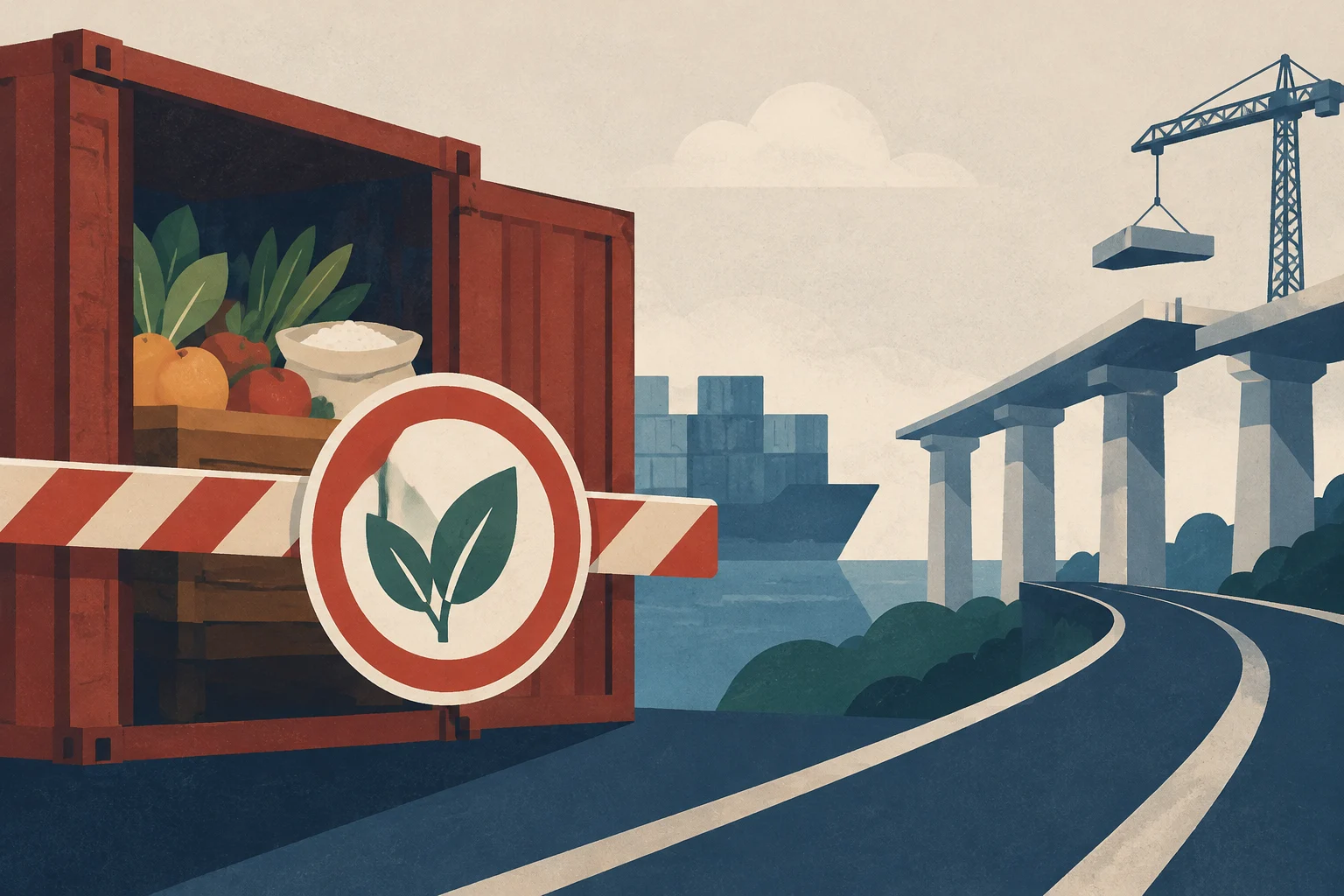
Indian Finance Minister Nirmala Sitharaman identified Chinese phytosanitary restrictions as the main cause of the growing trade imbalance. During her intervention at the IMF, she defended bilateral dialogue over punitive tariffs and highlighted the public spending strategy on infrastructure as a driver of economic growth.
Statements within the framework of the IMF and the World Bank
On October 16, 2026, Nirmala Sitharaman, India's Finance Minister, warned about the magnitude of the trade imbalance with China, describing it as a phenomenon growing "exponentially" to the detriment of the Indian economy. During an interaction organized by the Atlantic Council on the sidelines of the annual meeting of the IMF and the World Bank in Bangkok, the minister pointed out that the lack of access to Chinese markets for key Indian products is the main structural problem in the bilateral trade relationship.
Sitharaman attributed this situation to the non-tariff barriers imposed by Beijing, which she described as the "biggest obstacle" in trade between the two countries. Unlike traditional tariffs, these restrictions operate through technical and sanitary regulations that make it difficult for foreign goods to enter without directly increasing the import price.
Phytosanitary restrictions and affected sectors
The minister specifically cited phytosanitary measures—restrictions designed to protect against plant pests and diseases—as the main mechanism used by China to limit Indian exports. According to Sitharaman, India has sought access to Chinese markets for nearly a decade for products in which it is a global leader, including:
Generic medicines
Beef
Vegetables and perishable goods
"China uses non-tariff barriers without hesitation," the minister stated, highlighting that, despite the existence of mechanisms to investigate and resolve these disputes through dialogue, no significant progress has been made in the last decade. The persistence of these restrictions prevents India from exploiting the enormous market potential that China represents for these productive sectors.
Bilateral dialogue versus punitive tariffs
In the face of the global trend of using punitive tariffs to correct trade imbalances, Sitharaman defended India's stance of prioritizing bilateral negotiation and dialogue. "The global approach of countries imposing tariffs to correct the imbalance has never been adopted by us," she explained. The minister acknowledged that this process is "very exhausting," but insisted that it is New Delhi's preferred path to resolve trade frictions without escalating to retaliatory measures such as countervailing duties.
This strategy is part of a broader Indian policy that, while believing in multilateralism, is accelerating the signing of bilateral trade agreements to adapt to a global environment marked by an increase in the use of trade barriers. "The countries with whom we have negotiated for a long time have understood that the sooner the bilateral relationship is formalized, the more their populations will benefit," Sitharaman noted.
Outlook for the agreement with the U.S. and internal growth
In addition to the relationship with China, the minister expressed hope that the trade agreement between India and the U.S. would be concluded soon. Sitharaman recalled that Commerce Minister Piyush Goyal had indicated that the first phase of the pact was finalized and in the legal drafting stage. The rapid conclusion of this agreement is considered crucial for strengthening economic ties between the two countries and contributing to global trade.
Regarding the domestic economy, Sitharaman defended the strategy of public spending on infrastructure as the main driver of Indian economic growth. She affirmed that India has maintained its position as the fastest-growing economy among major powers for the last five or six years, attributing this success to fiscal prudence, skills development, and, above all, public investment in capital.
"Public investment in infrastructure generates a stronger multiplier effect than the direct transfer of equivalent amounts to people," the minister argued. This investment not only creates employment and economic activity in various sectors but also allows money to be channeled toward the creation of assets that benefit the economy in the long term, mitigating the pressure on the fiscal deficit that other forms of spending could generate.
With the mandatory conciliation in Buenos Aires expired without an agreement, the layoffs in three plants have become final. The company is in insolvency proceedings, and the court has requested explanations regarding deposits of nearly US$ 30 million, while workers claim unpaid wages and severance pay.
The Schwarz Group, parent company of Lidl, has launched Kaufland.es, its online sales platform in Spain. With over 10 million items and 3,100 sellers, the brand is betting on digital commerce to position itself against Amazon and AliExpress, relying on the solidity of its supermarket network in the country.
The executive, who had been with the company for 18 years, announced his resignation because he could not meet the requirement to work daily at the Redmond headquarters. His departure comes amid a debate about the impact of return-to-office policies on talent retention.