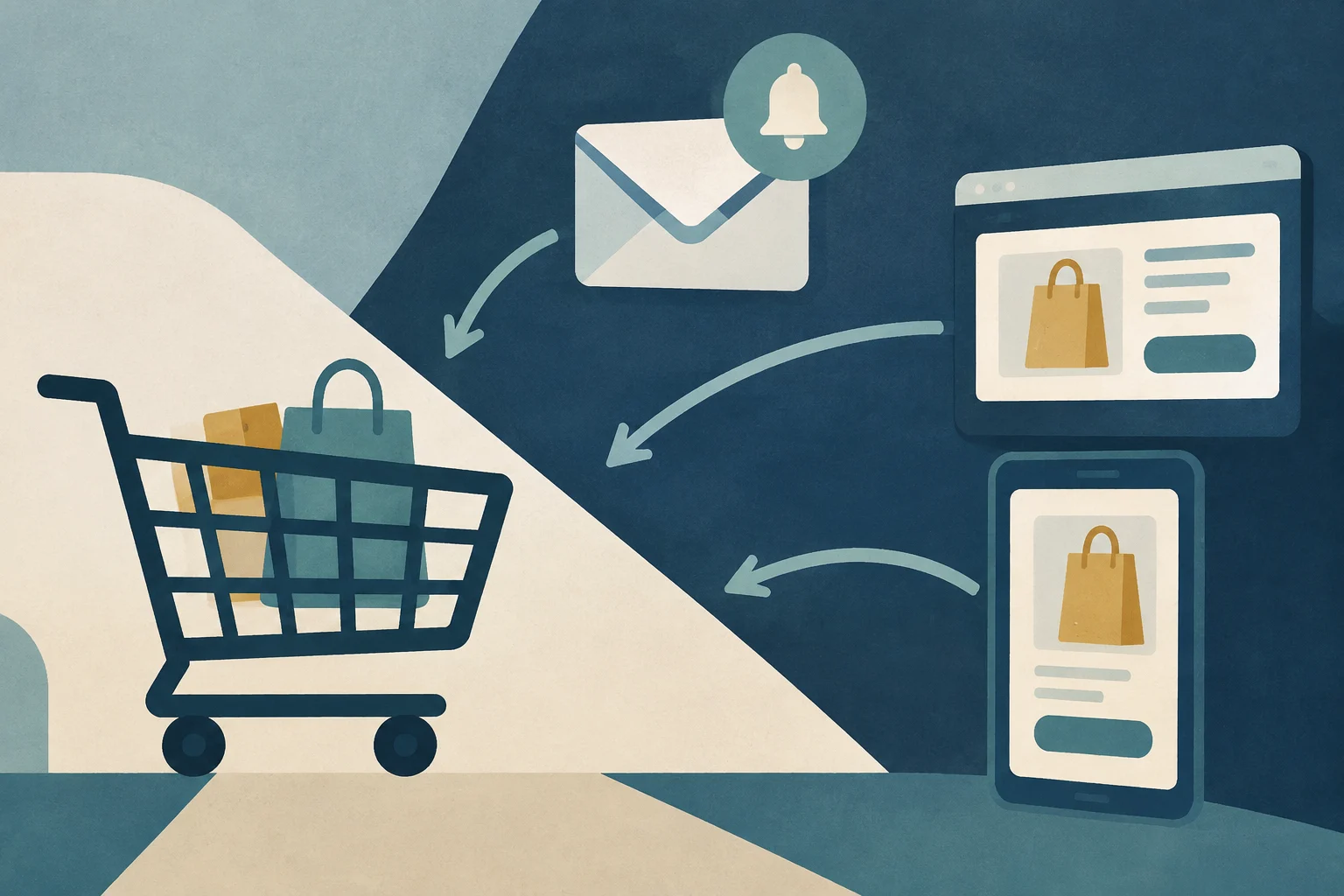
The conversion funnel in e-commerce does not end when the customer adds a product to the cart; in fact, it is in that phase where most revenue loss is concentrated. For SMEs, optimizing this digital journey is not just a matter of design, but a direct financial strategy: every percentage point recovered in the conversion rate translates into additional sales without the need to increase traffic acquisition spending.
The diagnosis: understanding cart abandonment
Cart abandonment occurs when a user shows a real purchase intention by selecting products but does not complete the transaction. According to the continuous data analysis by the Baymard Institute, the average global abandonment rate stands at around 70.19%. This means that almost seven out of every ten carts are emptied before reaching payment.
It is fundamental to distinguish this phenomenon from simple navigation bounce. While bounce indicates traffic or homepage issues, an abandoned cart signals specific friction in the closing process. Not all abandonments are definitively lost sales; many users use the cart as a temporary wishlist to compare prices or wait for discounts. However, most abandonments respond to specific barriers that can be eliminated.
Main causes of leakage
Sources identify four critical frictions that hold back the digital buyer:
Unexpected costs: The late appearance of shipping fees, taxes, or commissions generates a feeling of deception that stops the purchase instantly.
Registration friction: Requiring the creation of a mandatory account before showing the payment screen drives away users seeking immediacy.
Lack of modern payment methods: The absence of options like Bizum, Apple Pay, or Google Pay interrupts the transaction, especially in the Spanish market.
Perception of insecurity: The lack of trust seals, visible SSL certificates, or clear return policies generates distrust at the last moment.
Checkout optimization: eliminating friction
The checkout phase is the critical point where user experience (UX) decides whether the sale is closed or lost. The strategy should focus on transparency and simplification.
Radical transparency in pricing
The first rule is to show the total price, including taxes and shipping costs, from the product page or, at a minimum, on the first screen of the cart. Hiding costs until the end of the process is one of the main causes of abandonment. Offering options like free shipping above a certain amount can incentivize the completion of the purchase and reduce the perception of hidden costs.
Simplification of the payment process
An agile process increases the probability of conversion. Practical recommendations include:
Allow guest checkout: Eliminating the obligation to register reduces initial friction. Registration can be offered as a subsequent option to accumulate points or history, but never as a prerequisite for payment.
Minimal forms: Request only the essential information for shipping and payment. Avoid redundant fields or the repetition of data already entered.
Progress indicators: Showing a step-by-step visual of the purchase reduces customer anxiety and gives them control over the process.
Diversification of payment methods
In the Spanish market, the diversification of payment methods is a decisive conversion lever. Buyers expect to find:
Credit and debit cards.
Bizum and local transfers.
Apple Pay and Google Pay for quick mobile payments.
Deferred or financed payment options.
Offering these options satisfies the preferences of different customer profiles and reduces abandonment due to lack of compatibility with the preferred payment method.
Editorial illustration · Edition Business
Proactive recovery strategies
Although prevention is a priority, not all abandoned carts are immediately recoverable. This is where proactive recovery comes into play through multichannel automations.
Email sequences and remarketing
The implementation of retargeting and email marketing strategies allows capturing the user who has already demonstrated intention. Best practices include:
Immediate timing: Send the first reminder before 24 hours have passed since the abandonment.
Personalization: Include the specific products that were left in the cart.
Incentives: Offer small discounts or free shipping in the second or third reminder to motivate action.
Remarketing: Use ads on social networks and search engines to show the products to the user again while they browse other websites.
Metrics and tracking: the pulse of the funnel
To optimize the conversion funnel, it is necessary to instrument measurement correctly. The key metric is the cart abandonment rate, which is calculated using the standard formula:
Tracking this metric in tools like GA4 allows detecting sudden drops that may indicate technical errors, changes in the payment gateway, or performance issues on the website. A sudden increase in the abandonment rate should be treated as an emergency alert, as it may signal a technical failure preventing the completion of payment.
Conclusion
Reducing cart abandonment does not depend on an isolated trick, but on chaining coherent decisions regarding design, payments, and communication. For SMEs, investment in a fluid user experience and the automation of recovery offers a direct return on existing advertising investment. By eliminating the frictions that prevent conversion, the online store transforms visits into sales in a sustainable way, maximizing the value of each click received.
Set up a business page, plan its first month, and follow visits through to inquiries and bookings. A practical checklist and a hypothetical example are included.
A practical guide to understanding the technical terms of digital advertising. Learn what DSP, SSP, RTB, CPM, and CTR are to evaluate supplier proposals and optimize your campaigns.
Review strategy, messaging, design, and contact details to check that your online and offline ads express the same brand, adapting to each channel without losing their identity.